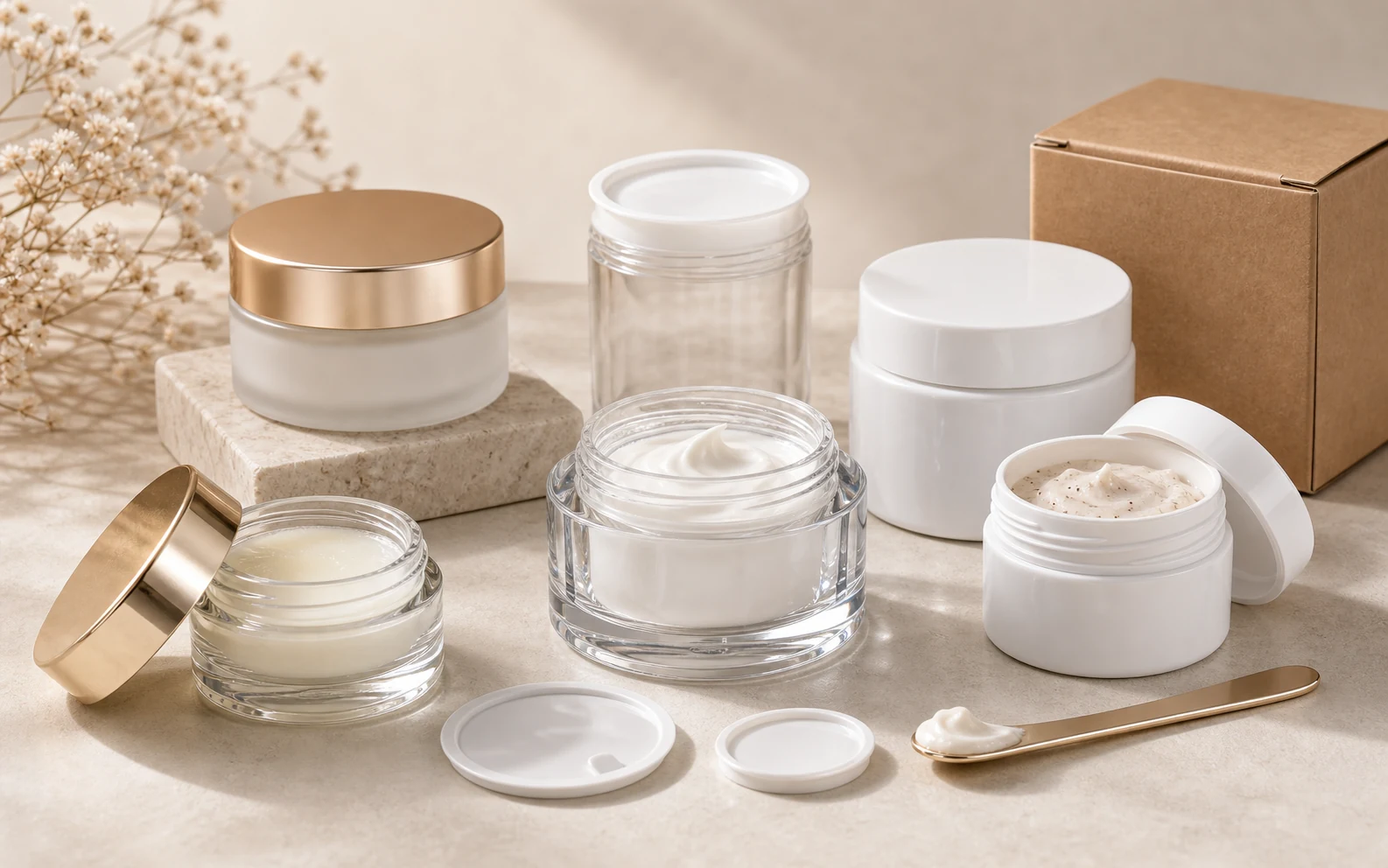
Plastic cosmetic jars are used when a beauty or personal-care formula needs wide-mouth access, easy filling, a lightweight package, and room for lids, liners, spatulas, labels, color matching, or premium double-wall effects. They are a strong fit for face creams, balms, masks, scrubs, body butter, hair masks, sample sizes, and many thicker skincare textures.
The practical choice is not just "plastic jar or glass jar." Packaging teams need to define the resin, wall structure, lid, liner, capacity, decoration route, formula compatibility checks, shipping checks, and RFQ details before approving bulk production.
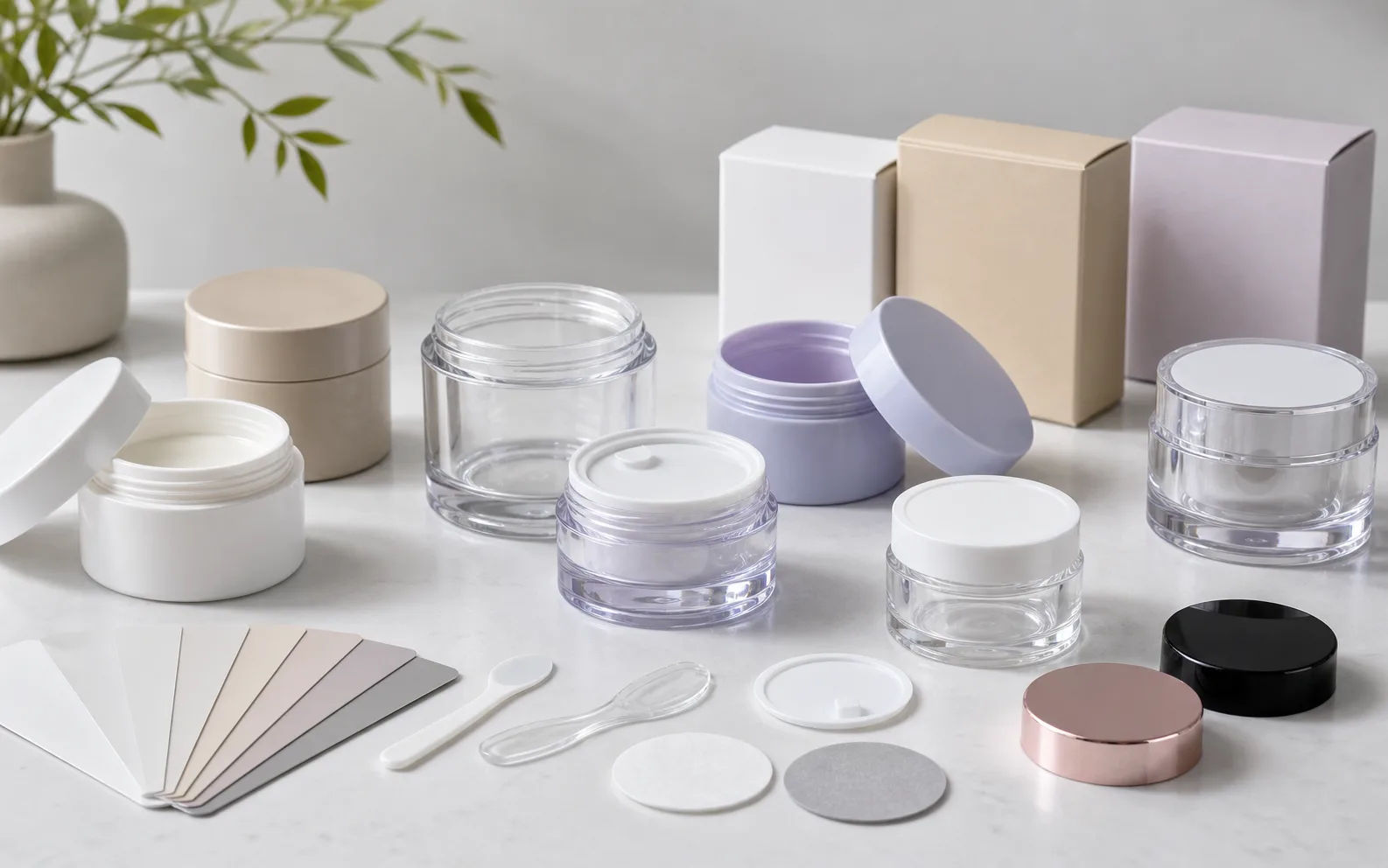
Plastic cosmetic jars should be reviewed as a complete package system: jar body, lid, liner, insert, decoration, carton, and filled sample.
Quick selection guide
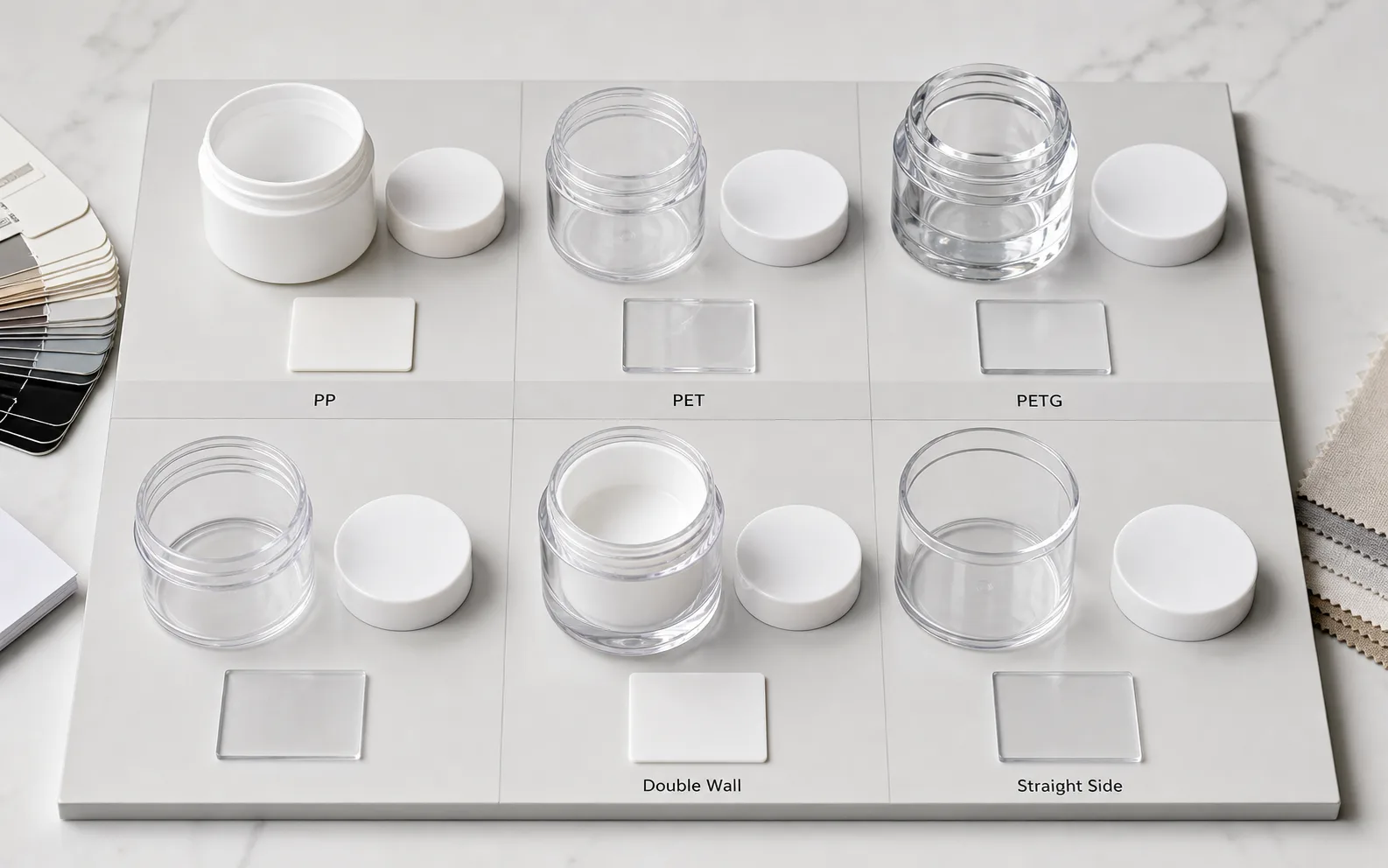
| Jar decision | Good fit when | Check before approval |
| PP jar | The project needs durability, opaque or color-matched parts, double-wall construction, or a practical jar for creams, masks, scrubs, and body butter. | Confirm formula compatibility, lid fit, liner choice, decoration, and sample appearance. |
| PET jar | The brand wants a clear or glossy jar with strong shelf visibility and a lighter alternative to glass. | Test the final formula, label adhesion, color stability, closure fit, and carton/shipping behavior. |
| PETG or acrylic-style jar | The pack needs a thick-wall, premium, glass-like look without moving to glass. | Confirm the actual resin, wall structure, recycling implications, decoration route, and MOQ. |
| Double-wall jar | The brand wants a more substantial premium feel from a plastic jar. | Review part nesting, lid match, decoration alignment, fill weight, and material use. |
| Straight-sided jar | The line needs clean label panels, wide-mouth access, and a simple shelf profile. | Confirm label area, cap diameter, liner/seal option, and e-commerce shipping checks. |
| Jar with spatula | The project needs a more complete skincare presentation or controlled product removal. | Avoid unsupported hygiene claims; check insert fit, carton fit, and user handling. |
Match the jar to the formula
Jars usually work best when the product is too thick, textured, or scoopable for a standard pump or bottle. Creams, masks, scrubs, balms, body butter, hair masks, and powder-style products often fit jar formats because the opening gives the user direct access to the product.
A bottle, pump, tube, tottle, or airless pack may be better if the formula needs cleaner dispensing, controlled dosage, squeeze behavior, or reduced open-jar contact. Use plastic jars when the formula, filling process, consumer use, and brand presentation all benefit from a wide-mouth container.
Before approving the jar, test it with the actual formula. Oils, fragrance, alcohol, surfactants, actives, pigments, exfoliants, waxes, and preservatives can affect the jar body, liner, seal, label, decoration, or closure. A sample that looks right empty still needs filled-sample review.
PP, PET, PETG, and acrylic-style options
PP plastic jars are common in cosmetic packaging because they can support durable, color-matched, opaque, and double-wall structures. They are often reviewed for creams, masks, scrubs, body butter, and daily-care lines where practical handling matters.
PET plastic jars are useful when the brand wants clarity, gloss, product visibility, or a lighter alternative to glass. They are often considered for clear or translucent jars, straight-sided jars, creams, balms, gels, and personal-care products where shelf appearance matters.
PETG and acrylic-style jars are usually chosen for a thicker, more premium visual effect. The phrase "acrylic-style" should be handled carefully: the actual resin and component structure should be confirmed on the SKU or sample record before the brand makes material, recycling, or sustainability claims.
Lids, liners, inner discs, and seals
The jar body is only one part of the package. The lid, liner, inner disc, seal, spatula, and carton can change the way the finished pack feels and performs.
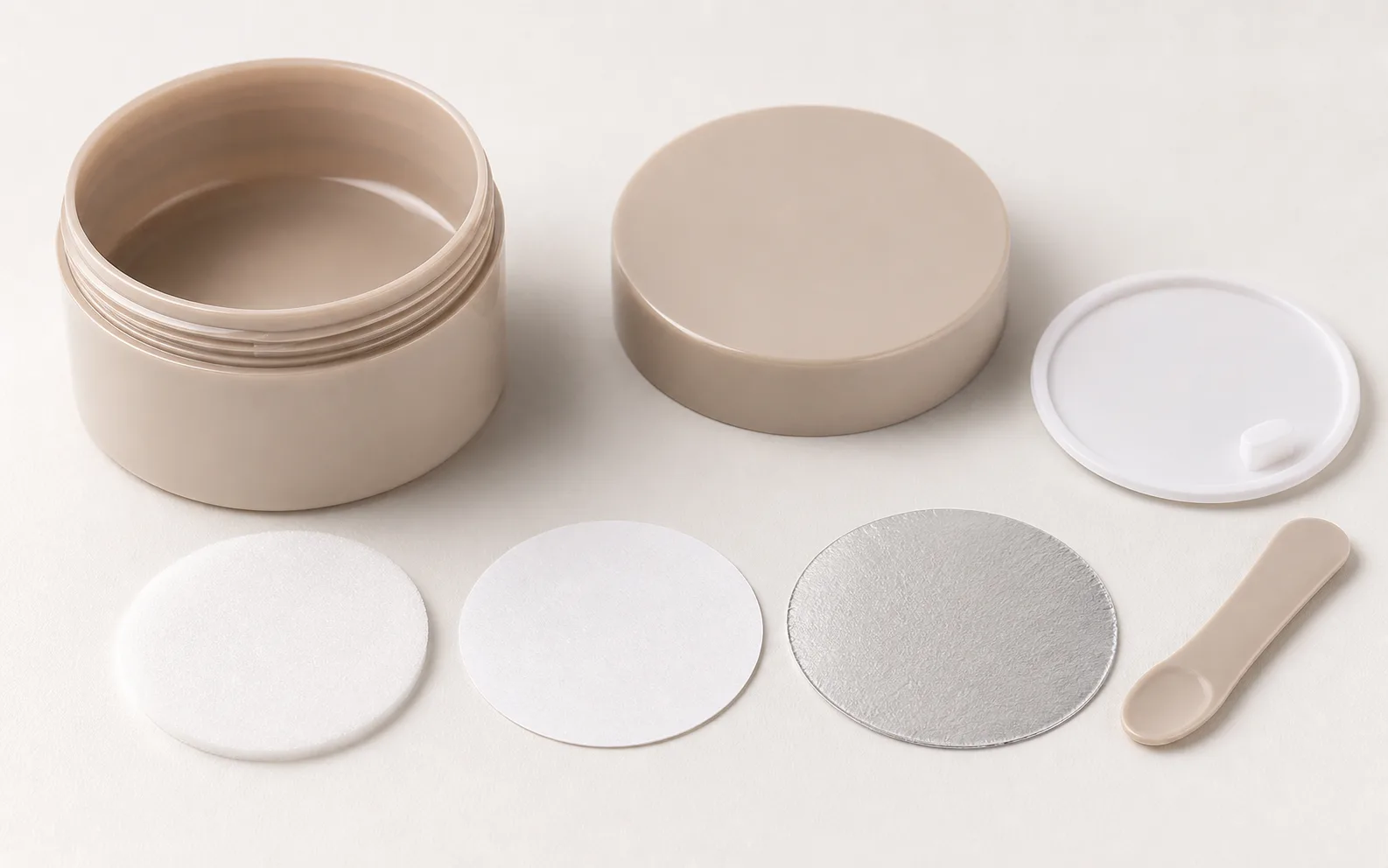
| Component | What it does | Buyer check |
| Screw lid | Closes the jar and sets much of the shelf look. | Confirm thread fit, torque feel, color match, finish, and decoration. |
| Foam liner | Can support sealing feel and moisture-barrier needs. | Check formula contact, compression, odor, and shipping behavior. |
| Pressure-sensitive liner | Can add a first-open experience for some projects. | Confirm substrate, adhesion, formula fit, and user expectations. |
| Heat induction seal | May be reviewed when stronger seal control is needed. | Confirm material compatibility, filling process, equipment, and buyer requirements. |
| Inner disc | Helps keep product inside the jar and can improve the opening experience. | Check fit, removal feel, spatula space, and carton fit. |
| Spatula or insert | Adds a more complete skincare presentation. | Check insert placement, carton dimensions, and whether the user experience supports the cost. |
Do not assume one liner solves every leakage or compatibility issue. Review the lid and liner with the formula, fill level, storage orientation, shipping route, and final carton.
Capacity and format planning
Capacity should be chosen from the product's actual use pattern, not only from a competitor package. A small eye cream, trial mask, body scrub, hair mask, and body butter do not need the same jar structure.
| Product type | Common planning direction | What to define |
| Sample or trial size | Small jars for kits, sampling, or promotional use. | Fill weight, label area, closure feel, and minimum order route. |
| Eye cream or treatment cream | Smaller premium jars with strong lid and decoration fit. | Inner disc, spatula, carton fit, and decoration accuracy. |
| Face cream or moisturizer | Mid-size jars where hand feel and shelf presence matter. | PP vs PET vs PETG/acrylic-style, liner, cap finish, and fill method. |
| Mask or scrub | Wider-mouth jars for thicker or textured products. | Mouth diameter, wall strength, seal, residue, and shipping checks. |
| Body butter or hair mask | Larger jars for richer daily-care or salon-style products. | Wall strength, lid torque, label area, carton strength, and freight handling. |
| Balm or solid formula | Compact jars where closure and liner fit matter. | Formula contact, heat exposure, lid finish, and alternative aluminum jar options. |
Decoration and brand presentation
Plastic cosmetic jars can support a wide range of decoration routes, including pressure-sensitive labels, screen printing, hot stamping, color matching, frosted effects, coatings, metallized-look caps, matching lids, and carton coordination.
The best decoration route depends on jar shape, resin, wall structure, cap material, label area, artwork complexity, order quantity, and sample approval. Decoration should be reviewed with filled samples when the formula may contact the surface, leave residue, create condensation, or change the way the package is handled.
For deeper artwork and supplier-handoff guidance, use the JPS Packaging guide to packaging decoration and labeling.
PCR, recyclability, and material claims
Plastic jar material claims should be handled at package level, not only resin level. The Association of Plastic Recyclers Design Guide explains that recyclability depends on package design, collection access, acceptance, markets, and features such as base resin, color, size, closures, labels, adhesives, inks, attachments, coatings, and additives.
FTC environmental-claim guidance also matters when a brand wants to say a package is recyclable, uses recycled content, or is environmentally preferable. A resin code is not the same thing as a recycling claim; ASTM has noted that the Resin Identification Code identifies resin content and has been separated from recyclability messaging.
For packaging teams, the safer path is to ask what can be supported for the exact jar assembly: jar resin and color, PCR availability, lid and liner material, label, ink, adhesive, decoration route, selling market, and supplier documents supporting the wording. For a broader claim framework, see the JPS Packaging guide to sustainable packaging materials.
Filled-sample checks before bulk sourcing
Run sample checks before approving production quantities. At minimum, review formula appearance after filling and storage; jar body changes such as stress marks, odor, discoloration, swelling, or clouding; lid fit, torque feel, liner compression, inner disc fit, and seal behavior; upright, side, and inverted storage checks where relevant; shake, mail, drop, carton, and compression checks for the expected sales channel; label adhesion, ink rub, hot stamping, coating, and cap decoration after handling; spatula, insert, carton, and shipper fit; and consumer opening feel and shelf appearance.
These checks reduce launch risk, but they are not the same as a universal compatibility or no-leak promise. The final test plan should match the formula, pack, market, channel, and brand requirements.
RFQ checklist for plastic cosmetic jars
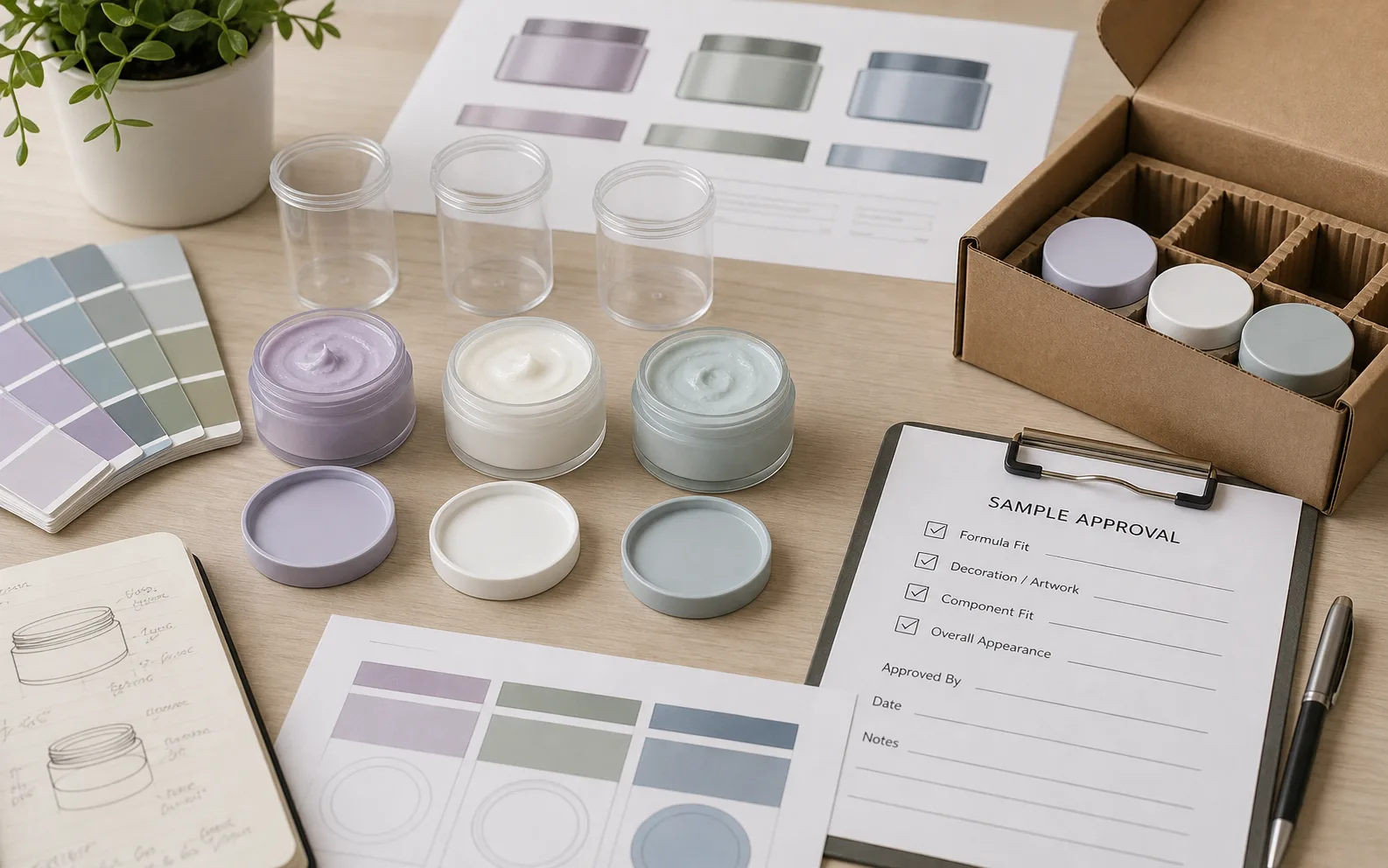
| RFQ detail | What to include |
| Formula type | Cream, balm, mask, scrub, body butter, hair mask, powder, or other texture. |
| Formula notes | Oil, fragrance, alcohol, surfactant, pigment, exfoliant, active-heavy, waxy, or heat-sensitive concerns. |
| Fill target | Net weight, overflow target, desired jar capacity, and fill method if known. |
| Jar direction | PP, PET, PETG/acrylic-style, single-wall, double-wall, straight-sided, clear, frosted, opaque, or color matched. |
| Closure needs | Lid style, liner, inner disc, seal, spatula, insert, or carton fit. |
| Decoration | Label, screen print, hot stamping, coating, frosted finish, cap decoration, or color matching. |
| Sustainability goals | PCR interest, simplified material route, recyclable claim review, or existing brand claim language. |
| Quantity and timing | Target quantity, sample deadline, launch date, destination market, and whether stock or custom tooling is acceptable. |
When the project is ready, share jar material, closure, decoration, sample, quantity, and launch details with JPS Packaging so the team can review practical options.
FAQ
What types of plastic are used for cosmetic jars?
Common cosmetic jar routes include PP, PET, PETG, acrylic-style structures, PCR-ready options, and mixed assemblies with separate lids, liners, seals, or inserts. The best route depends on formula, appearance, decoration, quantity, and claim requirements.
Is PP, PET, PETG, or acrylic-style packaging better for my formula?
There is no universal best material. PP is often reviewed for durable or double-wall structures; PET for clear, glossy shelf visibility; PETG or acrylic-style options for a premium thick-wall look. The final choice should be tested with the actual formula, closure, liner, label, and decoration.
What are double-wall cosmetic jars?
Double-wall jars use an inner and outer structure to create a thicker, more substantial appearance. They are often used when a plastic jar needs a more premium skincare feel, but the extra material, component fit, decoration, and sustainability claims still need review.
Do I need an inner disc, liner, or seal?
It depends on formula, channel, lid style, first-open experience, shipping route, and buyer requirements. Liners, inner discs, and seals can support performance, but they should be selected and tested with the exact jar and formula.
Can plastic cosmetic jars be custom colored or decorated?
Yes, many projects can review custom color, labels, screen printing, hot stamping, frosted effects, coatings, cap decoration, or carton matching. Availability depends on jar material, shape, surface, decoration method, MOQ, artwork, and sample approval.
Are plastic cosmetic jars recyclable or available with PCR?
Some projects can review PCR or recyclability-oriented designs, but the claim depends on the exact package system. Resin, color, closure, liner, label, adhesive, ink, coating, local collection access, and supplier documentation all matter.
How do I know whether the jar works with my formula?
Use filled samples. Check formula appearance, jar body changes, lid and liner fit, storage orientation, leakage risk, shipping behavior, label adhesion, and decoration durability before approving a bulk order.
What affects MOQ and lead time for custom plastic jars?
MOQ and timing depend on stock vs custom route, material, capacity, color, decoration, tooling, closure or liner sourcing, sample revisions, production schedule, and destination market. Share these details early so JPS Packaging can check realistic options.