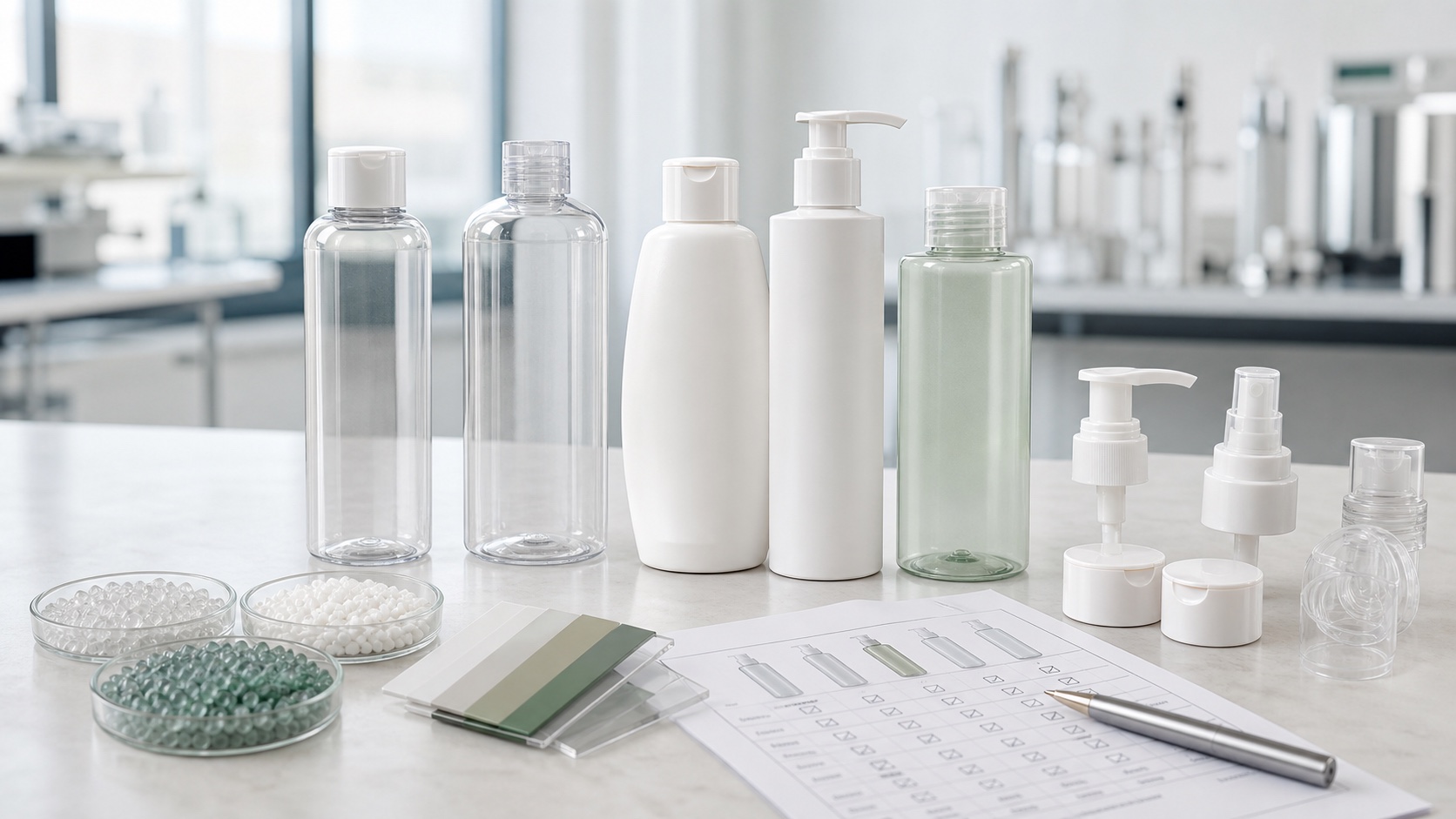
The benefits of plastic bottles for skincare are practical: lower breakage risk than glass, flexible closure choices, lighter shipping, clear or opaque material options, scalable MOQ routes, and strong compatibility with pumps, caps, and sprayers.
For B2B buyers, the value of plastic packaging depends on the formula and market position. PET, PP, PE, HDPE, PCR PET, and PCR PP each support different needs for clarity, squeezability, chemical resistance, recycled-content claims, and decoration.
JPS helps skincare brands decide when plastic bottles make sense, when glass or aluminum may be better, and how to test plastic bottle packaging before bulk production.
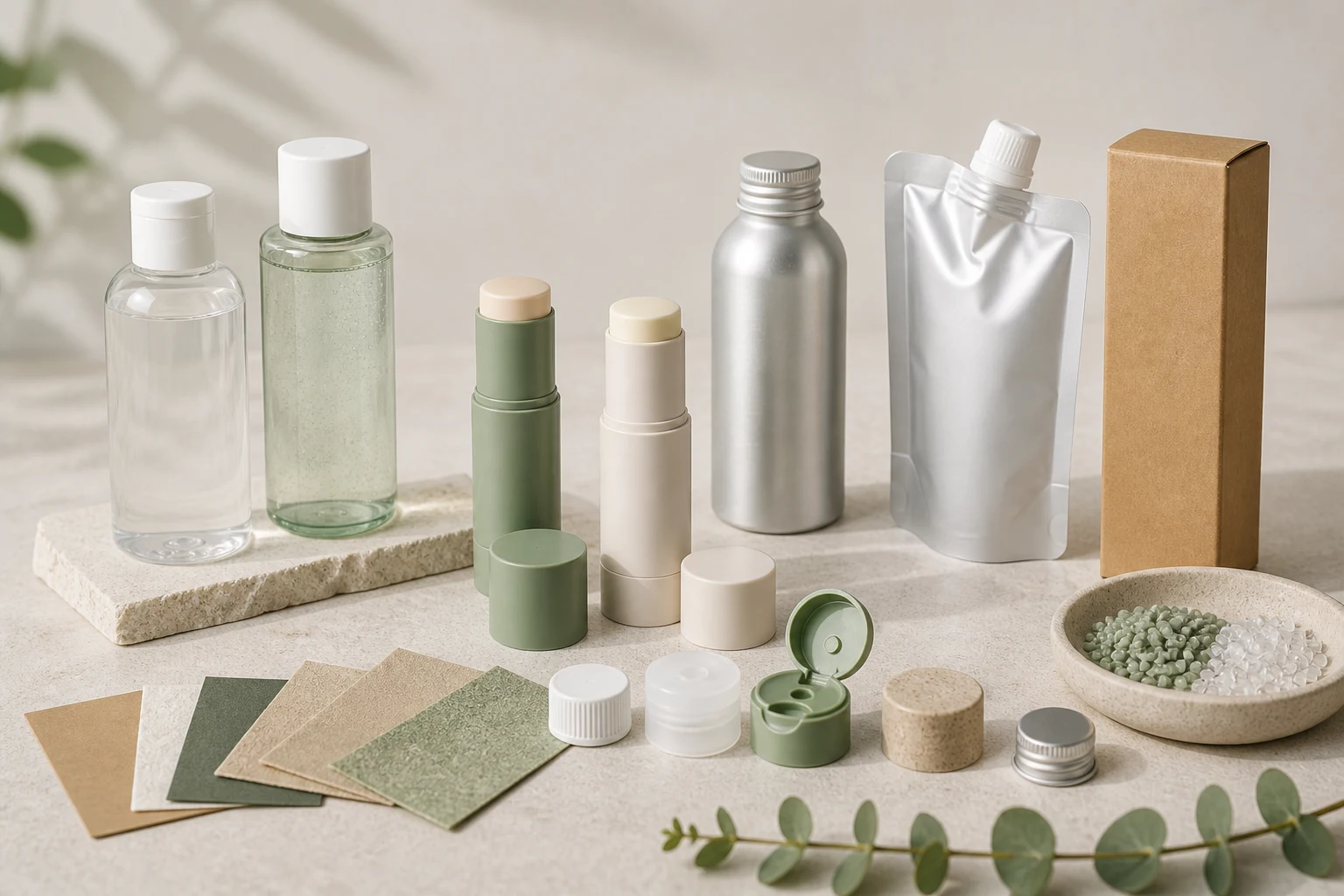
Quick Buyer Summary
| Buying question | Practical answer |
| Best fit | Daily skincare, cleanser, toner, lotion, shampoo, body care, travel size, refill and value-driven product lines. |
| Main benefits | Lightweight, durable, closure-friendly, scalable, decoration-ready, and flexible for multiple capacities. |
| Material routes | PET, PP, PE, HDPE, PCR PET, PCR PP, frosted or opaque finishes. |
| Quote value | The buyer can compare plastic bottle benefits against formula, MOQ, sustainability goals, and launch budget. |
Buyer Decision Points
| Project need | What to confirm before sampling |
| benefits of plastic bottle for skincare | This project needs practical reasons to choose plastic, not generic claims. |
| recyclable plastic bottle for skincare | This project needs to understand material, closure, and claim requirements. |
| PCR plastic bottle for skincare | This project is evaluating recycled-content packaging and needs color, odor, availability, and MOQ checks. |
| what is a plastic bottle for skincare | This project needs a clear definition tied to skincare formulas and packaging components. |
Plastic Bottle Benefit Table
| Benefit | Where it helps | Buyer check |
| Lower breakage risk | Travel, shower, body care, and shipping-heavy products | Check wall thickness and drop performance. |
| Closure flexibility | Pumps, sprayers, flip caps, disc caps, and screw caps | Match closure to viscosity and user dosage. |
| Lightweight shipping | Large orders, refill programs, and ecommerce-friendly lines | Confirm carton protection and cap retention. |
| Material variety | Clear PET, PP, PE, HDPE, PCR options | Match material to formula and claim. |
| Decoration flexibility | Labels, color matching, screen print, soft touch, frosted finish | Check rub, scratch, and filling-line handling. |
When Plastic Bottles Make Sense
| Use case | Plastic advantage | Testing focus |
| Cleanser and shampoo | Durable bottle with pump or flip cap options | Viscosity, dosage, and drop resistance. |
| Toner or mist | Clear or frosted bottle with cap or sprayer choices | Leakage, spray pattern, and material compatibility. |
| Lotion and body care | Lightweight bottle with pump or disc cap | Pump output, dip tube, and cap retention. |
| PCR or recyclable program | Supports sustainability positioning when component choices align | PCR color range, material claim, and closure compatibility. |
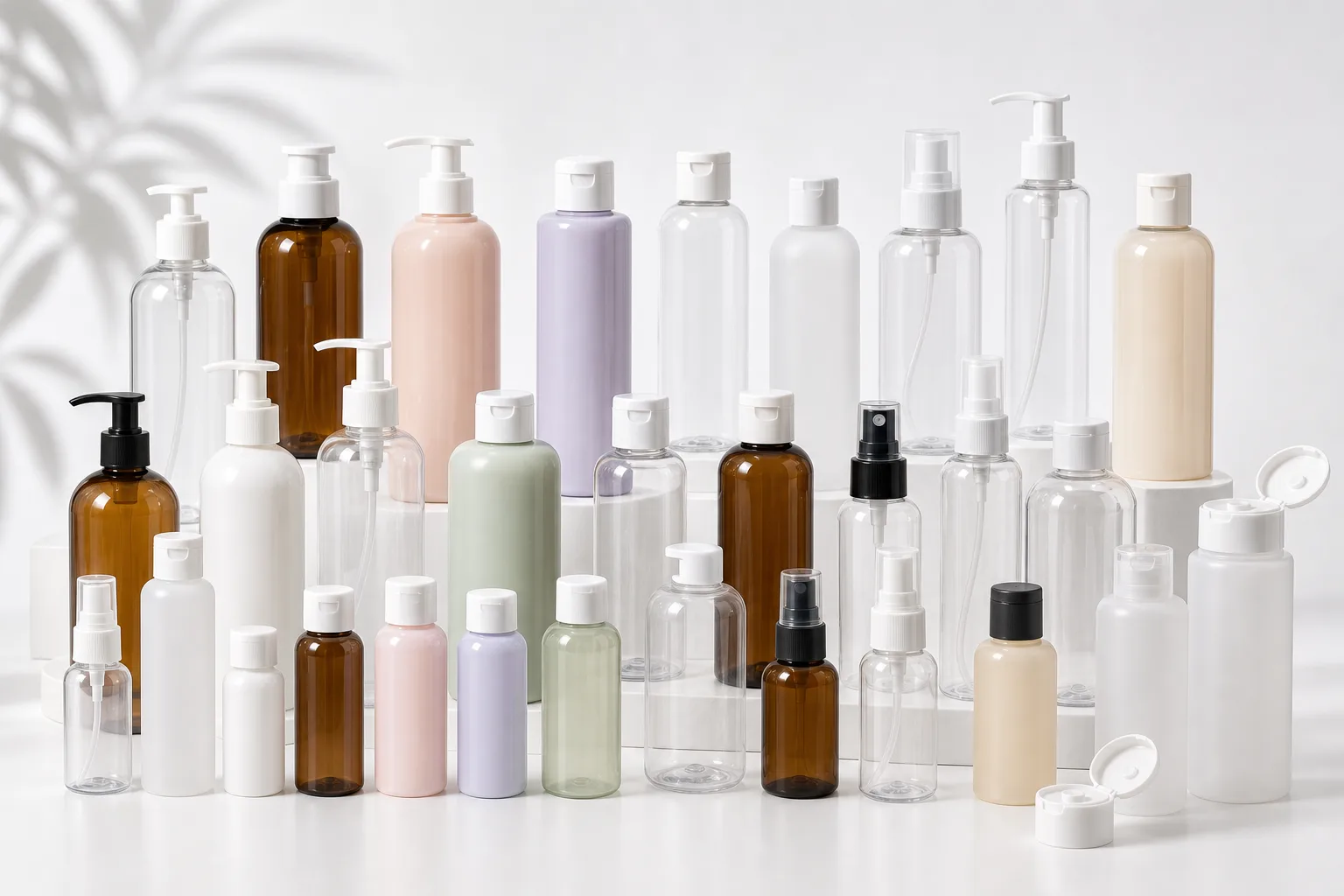
Material, Finish, and Component Options
Plastic bottle benefits should be described with evidence from the project: material, closure, compatibility, and supply route. Vague claims such as high quality or eco-friendly should be replaced with specific structure and test details.
A plastic bottle can be premium when the finish, wall feel, cap, pump, and decoration are controlled. It does not have to look low-cost.
| Material | Benefit |
| PET | Clear shelf appearance and good rigidity for toner or cleanser. |
| PP | Useful chemical resistance and closure compatibility. |
| PE or HDPE | Squeezability for cleanser, lotion, and personal care. |
| PCR PET or PCR PP | Recycled-content route when color and supply expectations are managed. |
Formula Compatibility and Sampling Tests
The benefits of plastic only matter if the bottle passes formula and packaging tests.
| Risk to check | Recommended test before bulk order |
| Formula interaction | Check stress cracking, odor, color shift, and material compatibility. |
| Closure leakage | Run inversion, vibration, and cap torque checks. |
| PCR variation | Approve color range, odor tolerance, and decoration adhesion. |
| Retail handling | Check scuffing, label adhesion, and pump/cap durability. |
MOQ, Lead Time, and Quote Planning
Plastic bottle MOQ can be flexible for stock structures, but custom color, PCR material, or decoration can change the final minimum.
| Project route | What to prepare |
| Stock plastic bottle | Capacity, material, closure, color, and quantity. |
| Custom color bottle | Pantone, finish, closure color, artwork, and target MOQ. |
| PCR bottle project | PCR target, material preference, acceptable color range, and claim needs. |
Supplier Checklist
Choose material based on formula, not only appearance.
Check closure fit and dosage before approving the bottle.
Use PCR claims only when material and component choices support them.
Test decoration durability with filling and shipping conditions.
Compare plastic against glass or aluminum when premium feel or barrier needs are higher.
Useful Product Links
Use plastic cosmetic packaging for the main plastic category.
Compare bottle choices on plastic cosmetic bottles.
Review PCR cosmetic packaging for recycled-content planning.
Send material and formula details through JPS plastic bottle quote support.
FAQ
Are plastic bottles good for skincare packaging?
Yes, when the selected plastic, closure, and decoration match the formula, user experience, and brand position.
Are plastic skincare bottles recyclable?
Some plastic bottle structures can support recyclable claims, but the material, closure, label, and local recycling context need review.
When should a brand avoid plastic bottles?
Consider glass or aluminum when the formula needs a different barrier, when premium weight is central to the brand, or when the sustainability claim requires a different structure.
Request a Practical Quote
For a plastic bottle packaging recommendation, send JPS the formula type, capacity, target material, closure, finish, MOQ, sustainability claim, and launch date.