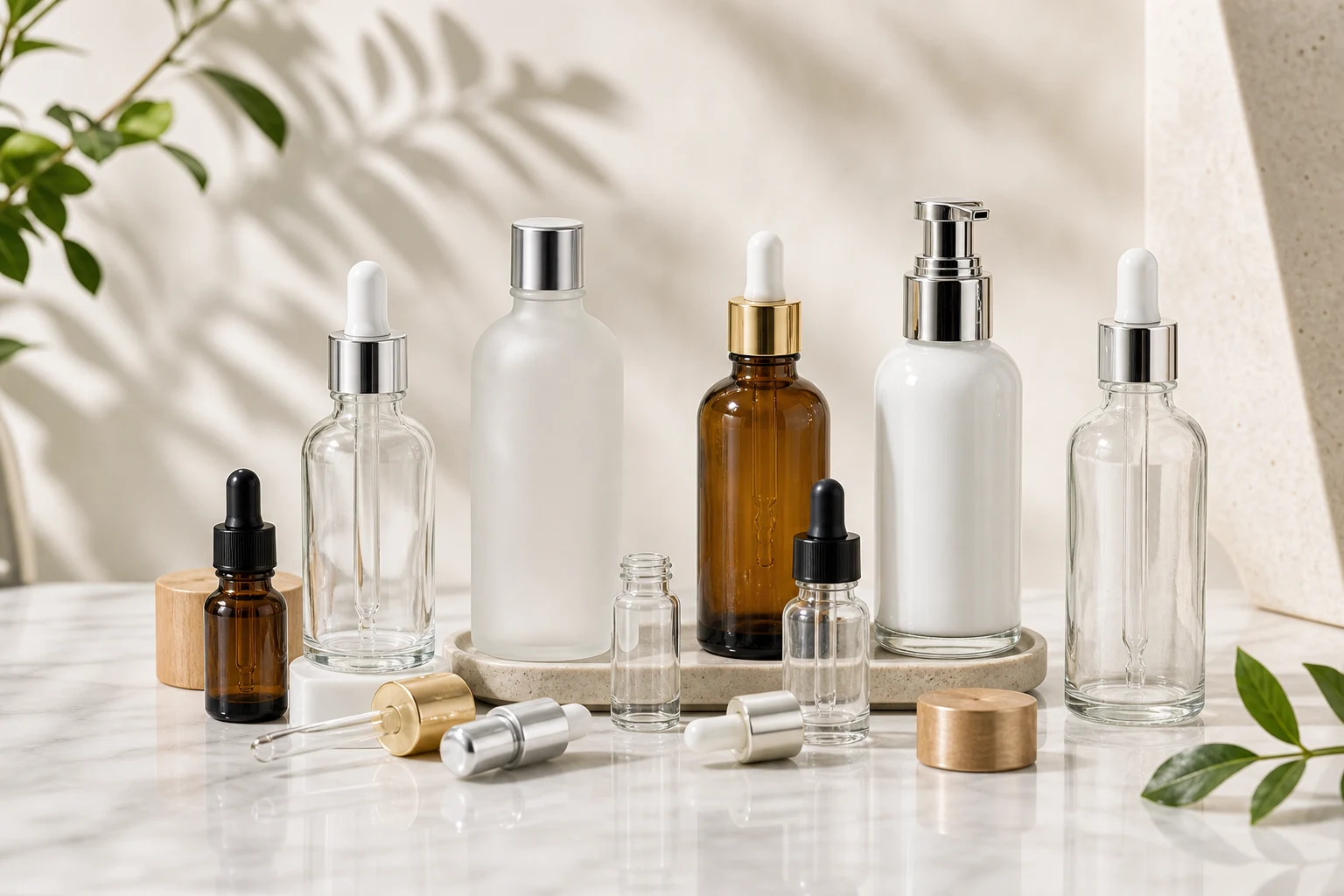
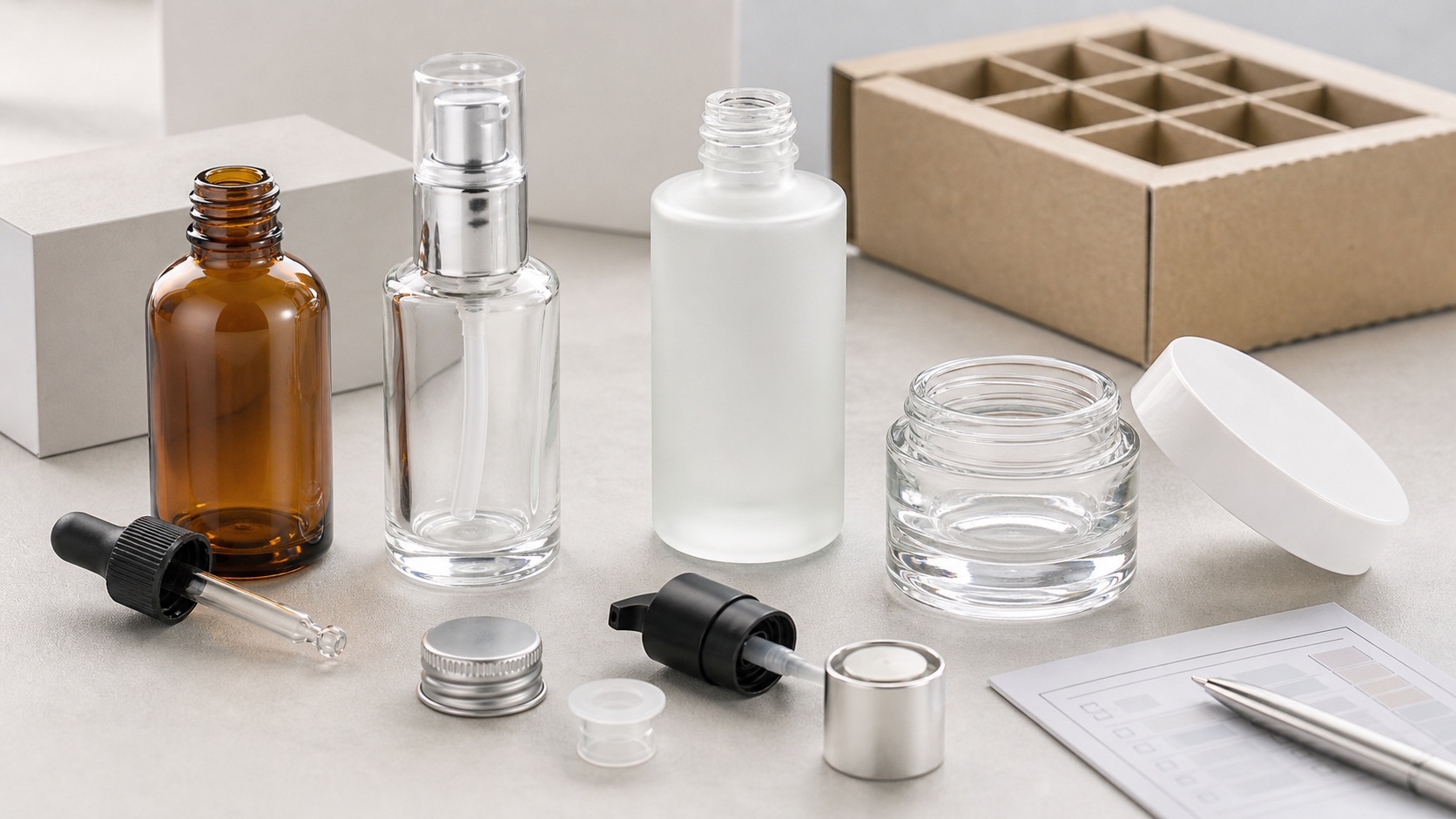
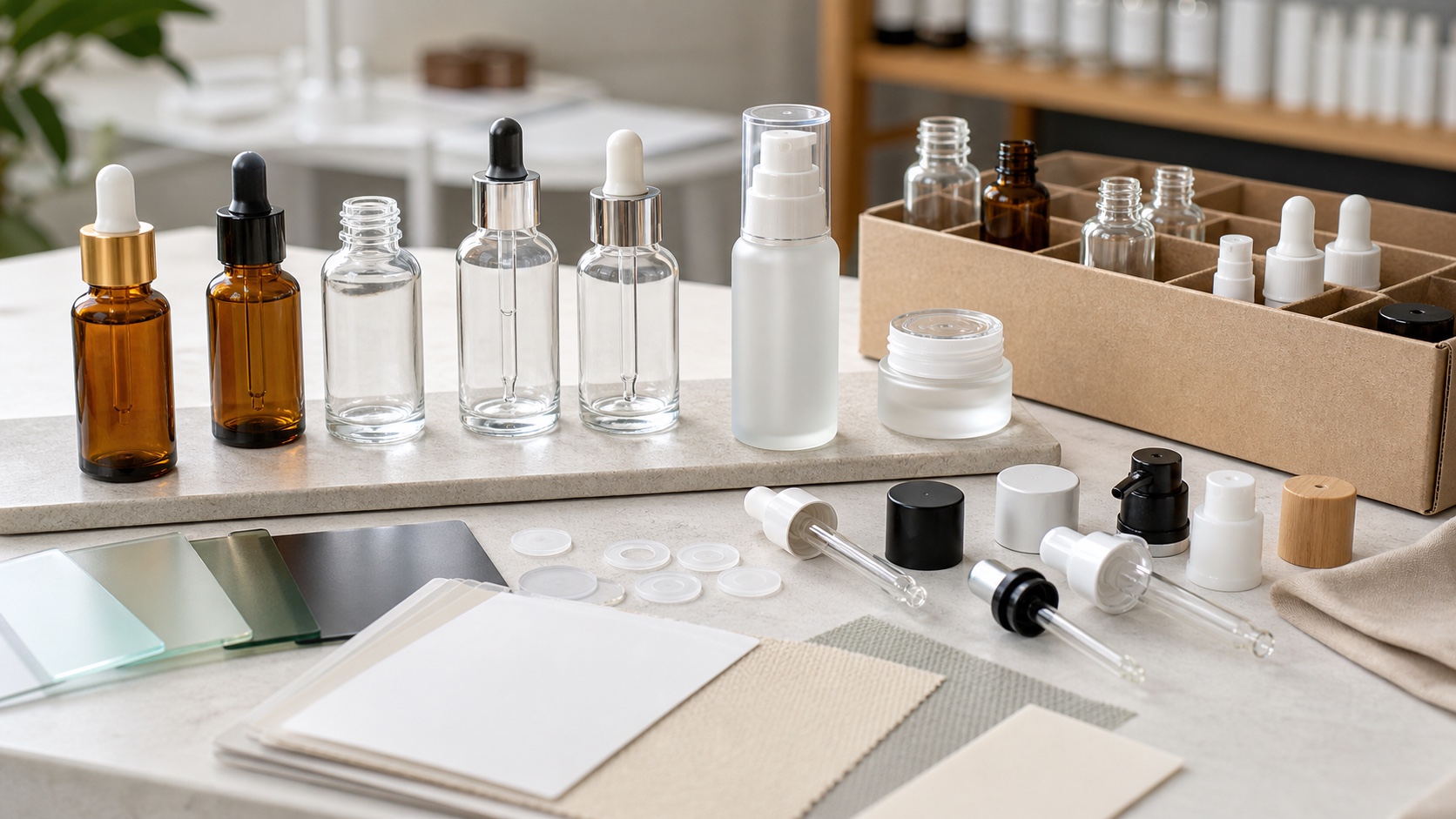
A low MOQ glass bottle for skincare helps a brand test a serum, oil, toner, essence or cream launch without committing to a large custom glass production run too early.
The useful question is what can be customized at a lower starting quantity without creating hidden risk. In most cases, the safer path is an available glass mold, standard neck finish, proven closure and limited decoration before scaling.
It is useful for buyers comparing low MOQ skincare packaging, low MOQ skincare jar options, JPS glass bottle routes and glass-versus-aluminum tradeoffs for smaller launches.
Fast Answer
For low MOQ skincare glass bottles, use an available bottle mold, standard neck finish and proven closure first. Customize label, color coating, frosting, printing or carton only after the formula and closure pass sample tests.
Questions This Guide Answers
What does low MOQ mean for skincare glass bottle sourcing?
Which custom options are realistic at low quantity?
How should a brand compare glass bottle, skincare jar and aluminum bottle routes?
What tests should be completed before a low MOQ order?
How This Page Fits With Related Guides
Use this article for low MOQ glass bottle planning. Broader buying, wholesale, how-to-choose and formula-specific glass pages remain separate.
| Reader question | Best JPS guide | Why |
| Low MOQ glass bottle launch route | This page | The reader needs a smaller-start sourcing route and realistic custom options. |
| Wholesale glass bottle sourcing | wholesale glass bottle for skincare | Bulk order searches need supplier, quote and carton planning. |
| Buying and supplier checks | buy glass bottle for skincare cosmetics | Supplier comparison should stay on the buying guide. |
| How to choose a glass bottle | how to choose glass bottles for skincare | Selection intent needs broader comparison of closure, formula and bottle type. |
| Serum, cream or jar-specific formats | glass bottle for skincare serum | Formula-specific intent should go to the matching product-use page. |
Best-Fit Applications
| Use case | Recommended packaging direction | What to check |
| Serum or facial oil | 15 ml, 30 ml or 50 ml glass bottle with dropper or pump | Formula compatibility and light protection |
| Toner or essence | 50 ml to 150 ml bottle with cap, pump or mist sprayer | Closure fit and carton protection |
| Cream or mask | Small glass jar or thick-wall jar | Lid liner, jar weight and user hygiene |
| Trial set | Small stock bottles with label and carton | Good for launch validation and sampling |
| Premium line test | Frosted or coated stock bottle | Decoration approval before scaling |
Material and Structure Options
| Option | Best fit | Approval note |
| Stock clear glass | Lowest complexity for early testing | Use carton or amber option for light-sensitive formulas |
| Amber glass | Sensitive oils, serum or active formulas | Better light protection with a classic apothecary look |
| Frosted glass | Premium skincare and spa positioning | Decoration and fingerprint review needed |
| Coated glass | Custom brand color at moderate volume | Color tolerance and scratch testing needed |
| Glass jar | Cream, balm or mask | Compare with low MOQ skincare jar options when formula is thick |
Production or Sourcing Process
| Step | What to confirm |
| 1. Start with stock mold | Confirm available capacity, neck finish and closure match |
| 2. Choose closure | Dropper, pump, cap, sprayer, liner or inner plug |
| 3. Select low-risk branding | Label, simple print, frosting, standard coating or carton |
| 4. Test real formula | Leakage, compatibility, light protection and closure seal |
| 5. Approve packaging evidence | Sample, drawing, color proof, decoration proof and carton packing |
| 6. Plan scale-up | Know which changes require higher MOQ before the next order |
Quality Checks Before Bulk Production
| Check | Pass signal |
| Compatibility | Formula should not react with closure parts, liner, dropper bulb or coating |
| Leakage | Cap, pump, dropper or sprayer must hold through storage and shipping |
| Breakage protection | Carton, tray or divider should protect glass in the chosen sales channel |
| Decoration durability | Frosting, coating, label or print should resist normal handling |
| Claim control | Recyclable, refillable or low MOQ claims should be specific and supported by supplier documentation |
Supplier Evidence to Request
A packaging recommendation should be backed by visible evidence, not only by a catalog picture. For low moq glass bottle for skincare, ask the supplier to show which component, material, decoration and testing path they are recommending before a purchase order is placed.
| Evidence | What it should show | Why it matters |
| Component drawing or size sheet | Capacity, dimensions, neck finish, cap or closure fit, decoration area and carton packing direction | It keeps the buyer, filler, designer and supplier aligned before artwork and samples are approved. |
| Material statement | Main resin or glass route, PCR percentage if used, coating route and any parts that use a different material | It prevents vague sustainability, recyclability or premium-material claims from being added without support. |
| Decorated sample | Color, finish, logo placement, label area, carton style and handling resistance | It reduces the risk of a good-looking rendering becoming a weak physical package. |
| Filled sample test notes | Formula contact, leakage, cap retention, pump or twist performance and storage observations | It proves the package works with the actual formula instead of only looking right while empty. |
| Bulk inspection criteria | Accepted defects, critical defects, color tolerance, leakage method, carton marks and sample retention | It gives both sides a shared standard when production is finished. |
RFQ Details That Lead to a Better Quote
A weak request for quotation usually produces a weak answer. Instead of asking only for price, send enough context for the supplier to judge whether the package can pass filling, storage and shipping. This is especially important when the project involves custom color, low MOQ, PCR material, a premium finish or a formula with fragrance, oil, alcohol or actives.
Product type and use: skincare, make up, sunscreen, serum, toner, cleanser, lotion, cream, balm, oil, deodorant, fragrance or gift set.
Formula details: fill weight, viscosity, oil level, alcohol level, fragrance, actives, fill temperature, cooling behavior and whether compatibility testing has already been done.
Packaging target: capacity, shape, closure, dispensing method, material route, refill route, desired finish and whether stock mold or private mold is acceptable.
Branding needs: Pantone color, artwork file, label area, logo method, carton style, sustainability claim and destination-market labeling needs.
Commercial details: first order quantity, repeat volume estimate, target launch date, sample deadline, shipping market, inspection requirement and whether the order must support e-commerce.
Common Mistakes to Avoid
Choosing the package by appearance before checking formula compatibility. A premium-looking package can still fail if the formula stains, leaks, softens a part or makes the closure loose.
Treating MOQ as a single fixed number. MOQ can change by material, stock availability, custom color, decoration method, carton, PCR content and whether a private mold is required.
Using broad sustainability language without evidence. Claims such as recyclable, PCR, refillable or eco-friendly should be specific and supported by material and market evidence.
Approving empty samples only. The final approval should include filled samples because the real formula changes cap fit, leakage risk, dispensing feel and decoration durability.
Trying to answer every related buying question on one page. A focused article is easier to use because it sends cost, supplier, production and material questions to the right supporting guide.
Keeping old or vague internal links. Links should point to the most specific related JPS guide with an anchor that tells the reader what decision the next page helps with.
When to Choose a Different Packaging Route
If the buyer is still comparing broad packaging families, start from the related category page. If the next question is cost, production, supplier selection or formula-specific fit, move to the closest supporting article.
Use the category page when the buyer wants to browse available packaging families and shapes.
Use the cost guide when the buyer is mainly asking how price, tooling, decoration and MOQ are calculated.
Use the production guide when the buyer needs manufacturing steps, sample approval and quality control details.
Use the supplier guide when the buyer is comparing quote evidence, inspection standards and bulk order risk.
Use the material-specific guide when the buyer is deciding between glass, plastic, aluminum, PCR, mono-material or refillable options.
Related JPS Guides and Next Steps
| Next step | When to use it |
| glass packaging category | Browse the broader product family before narrowing the specification. |
| wholesale glass bottle for skincare | Use it when comparing quote evidence, supplier scope and bulk-order risk. |
| glass bottle for skincare serum | Use it when the formula format needs a more specific bottle or closure decision. |
| buy glass bottle for skincare cosmetics | Use it when comparing quote evidence, supplier scope and bulk-order risk. |
| Contact Us | Send formula type, fill weight, target MOQ, decoration idea, market and launch timing for a sample recommendation. |
FAQ
What is a low MOQ glass bottle for skincare?
It is a glass skincare bottle order built around available molds or standard components so a brand can start with a smaller production quantity than a full custom mold project.
Can low MOQ glass bottles still be custom?
Yes. Low MOQ projects can often customize label, carton, simple printing, frosting or color coating. Private molds and special glass shapes usually require higher volume.
Should I choose glass or aluminum for a low MOQ skincare launch?
Choose glass when premium appearance, formula visibility or fragrance resistance matters. Choose aluminum when lightweight, opaque and less fragile packaging is more important.