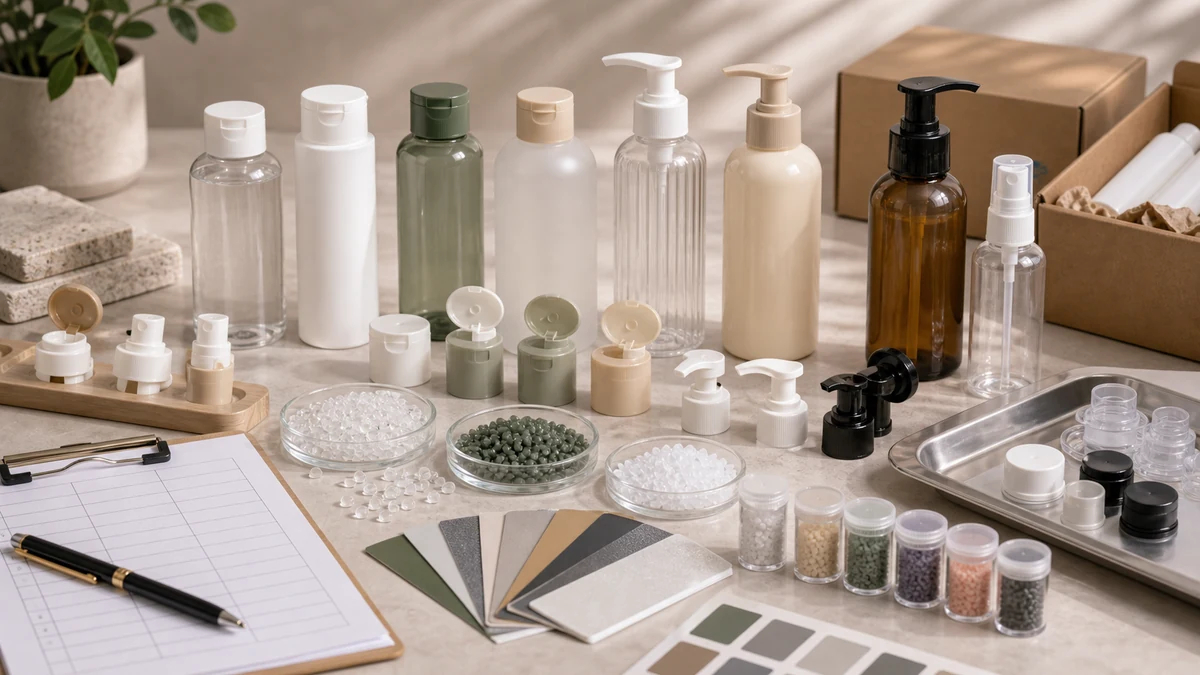
Plastic bottle for skincare production is a procurement topic. Buyers need to know how a bottle moves from sample to pre-production approval and bulk order, including material, mold, closure, decoration, QC checks, MOQ, and lead time.
For toner, cleanser, lotion, mist, shampoo, conditioner, and body care, production planning should cover formula compatibility, bottle weight, neck finish, cap or pump fit, color tolerance, decoration durability, packing method, and inspection standard.
JPS supports plastic bottle production discussions with bottle samples, closure matching, decoration planning, PCR or recyclable material options, and quote preparation for skincare and personal care brands.
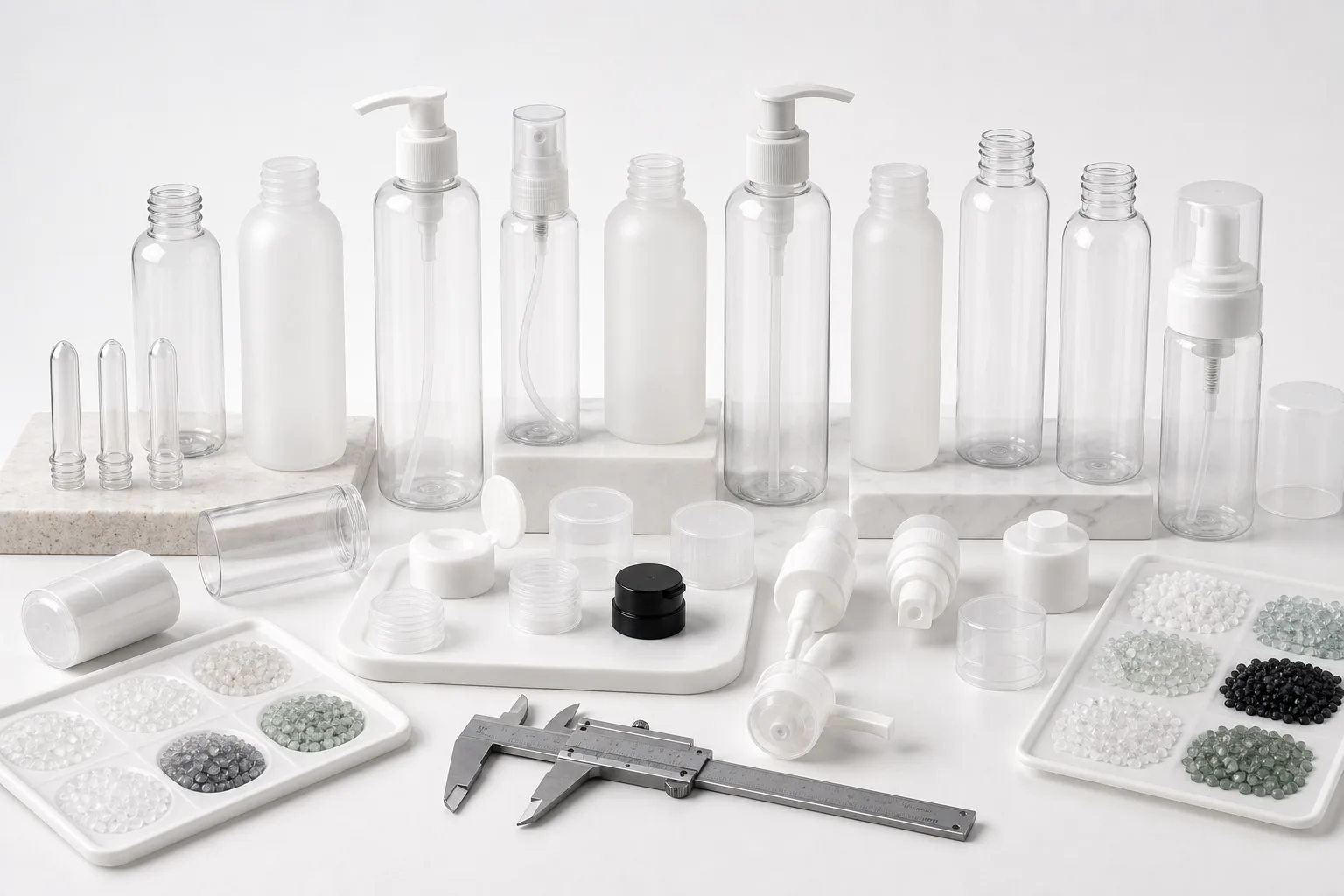
Quick Buyer Summary
| Buying question | Practical answer |
| Production focus | Move from sample to approved spec, then confirm MOQ, decoration, QC, packing, and delivery. |
| Main risks | Wrong material, poor closure fit, color drift, pump mismatch, leakage, and decoration damage. |
| Best buyer input | Formula, capacity, closure, material, finish, artwork, target MOQ, inspection needs, and launch date. |
| Quote value | Production planning reduces sample loops and avoids approving a bottle that cannot run at scale. |
Buyer Decision Points
| Project need | What to confirm before sampling |
| plastic bottle for skincare production | This project needs production-stage guidance: sampling, QC, MOQ, lead time, and component approval. |
| one stop plastic bottle for skincare | This project needs one supplier to coordinate bottle body, closure, decoration, samples, and delivery. |
| recyclable or mono material plastic bottle for skincare | This project needs sustainability route checks tied to material and closure choices. |
| what are the most ergonomic skincare bottles | This project is considering grip, dispensing, cap opening, and daily-use feel. |
Production Planning Table
| Stage | What to confirm | Why it matters |
| Sample selection | Bottle material, capacity, closure, and finish direction | Defines the real spec before artwork and testing. |
| Formula test | Compatibility, leakage, pump output, and cap seal | Prevents production failure after bulk approval. |
| Decoration sample | Color, print, label, hot stamping, or coating | Confirms shelf look and rub resistance. |
| Pre-production sample | Final components and packing method | Locks the approval standard for bulk order. |
| QC inspection | Appearance, function, leakage, dimensions, and packing | Protects consistency across production. |
Production Route by Bottle Type
| Bottle route | Best use | QC focus |
| PET bottle | Clear toner, cleanser, and body care packaging | Clarity, wall consistency, cap seal, and label adhesion. |
| PP bottle | Formula-sensitive or closure-heavy projects | Neck finish, pump fit, and chemical resistance. |
| PE or HDPE bottle | Squeezable cleanser, lotion, and personal care | Squeeze recovery, wall thickness, and cap retention. |
| PCR route | Recycled-content brand positioning | Color consistency, odor, availability, and claim support. |
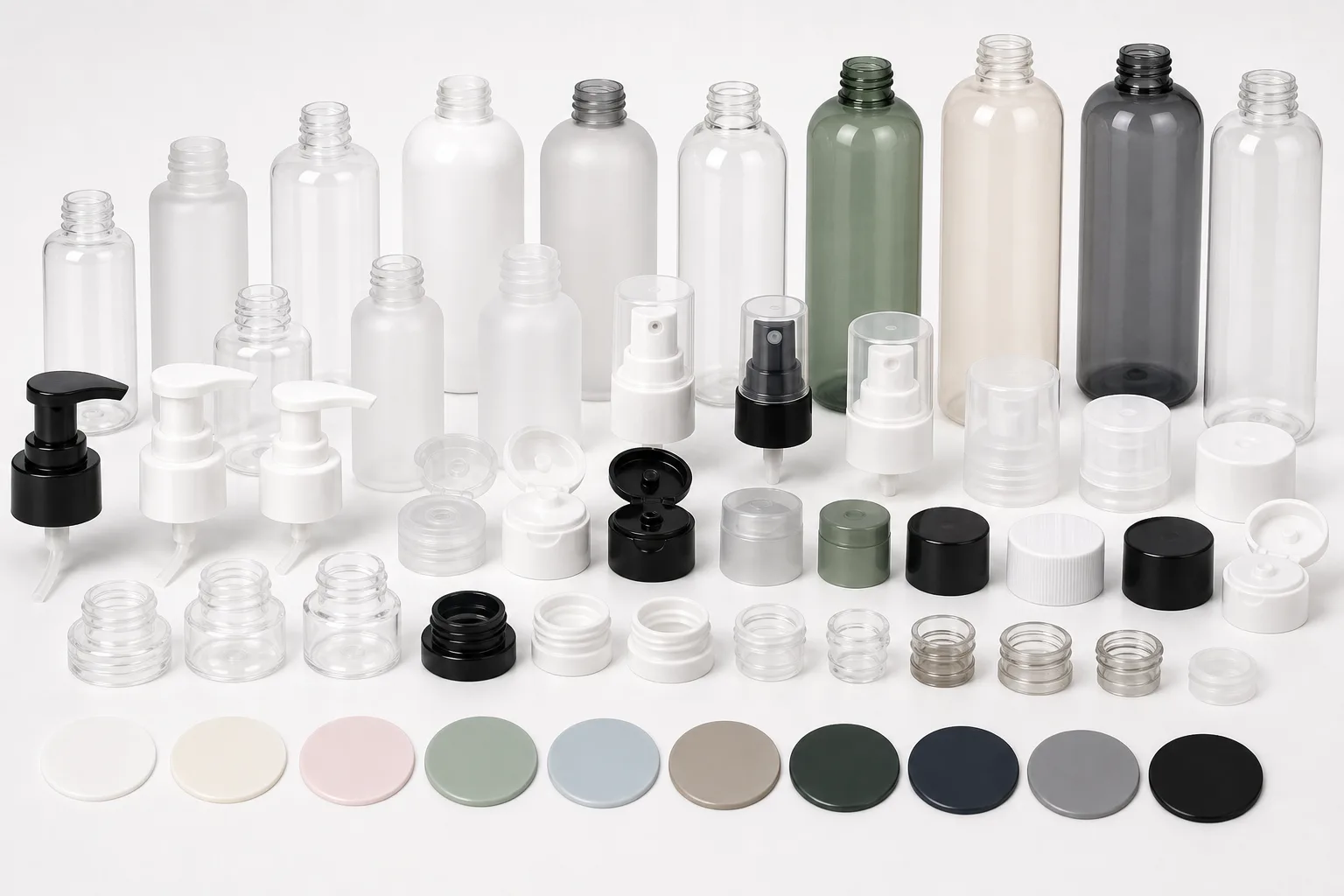
Material, Finish, and Component Options
Production planning should start with the component set, not only the bottle body. Pumps, caps, sprayers, liners, labels, and cartons can all affect approval and lead time.
A one-stop supplier is useful when the buyer needs fewer handoffs, but the supplier still needs clear formula and artwork data before confirming production feasibility.
| Production option | Impact |
| Existing mold | Faster sampling and clearer MOQ. |
| Custom color | Adds color sample approval and resin planning. |
| Custom decoration | Adds artwork proof, rub testing, and production setup. |
| PCR material | Adds material availability, color tolerance, and claim review. |
Formula Compatibility and Sampling Tests
Production approval should include formula compatibility and handling tests before the final purchase order.
| Risk to check | Recommended test before bulk order |
| Leakage during shipping | Run inversion, vibration, and cap torque checks. |
| Pump mismatch | Test viscosity, output dose, priming, and dip tube length. |
| Decoration damage | Run rub, scratch, tape, and filling-line handling checks. |
| PCR variation | Approve acceptable color range and odor limits. |
MOQ, Lead Time, and Quote Planning
Production MOQ is affected by resin, mold, color, closure, decoration, and packing. Ask for the complete set MOQ and lead time.
| Project route | What to prepare |
| Existing bottle production | Capacity, material, closure, quantity, and standard color choice. |
| Custom production | Color reference, artwork, closure match, sample approval plan, and launch date. |
| Sustainable production | PCR target, recyclability expectations, component list, and claim language. |
Supplier Checklist
Approve bottle, closure, decoration, and packing as one complete spec.
Test formula with the actual production closure.
Confirm QC checks before production starts.
Keep a signed pre-production sample as the comparison standard.
Separate sample lead time from bulk production lead time.
Useful Product Links
Use plastic cosmetic packaging for the main material category.
Compare plastic cosmetic bottles for bottle formats and closure choices.
Review PCR cosmetic packaging for recycled-content projects.
Send production specs through JPS plastic bottle production quote support.
FAQ
What is the first step in plastic bottle production?
Confirm bottle material, capacity, closure, formula compatibility, and sample route before final artwork.
What quality checks matter most?
Leakage, cap fit, pump output, dimensions, appearance, decoration durability, and packing protection are key checks.
Can plastic bottle production support recyclable or PCR options?
Yes, but material availability, color tolerance, closure material, and claim wording should be confirmed before sampling.
Request a Practical Quote
For plastic bottle production planning, send JPS the formula, capacity, material target, closure type, decoration, MOQ, QC needs, and launch date.