Cosmetic packaging boxes are the secondary cartons, sleeves, rigid-style boxes, set boxes, and inserts that protect and present beauty products after the primary pack is chosen. For skincare, makeup, personal care, sample kits, and gift sets, the box should be built around the real bottle, jar, tube, stick, compact, or multi-piece set, not around artwork alone.
This guide focuses on beauty secondary packaging, not shipping cartons or moving boxes. Use it to choose the right structure, plan inserts, review artwork and claim wording, and prepare a supplier-ready brief before comparing cosmetic carton and set box packaging options with JPS Packaging.
Quick answer: choose the box after the product is defined
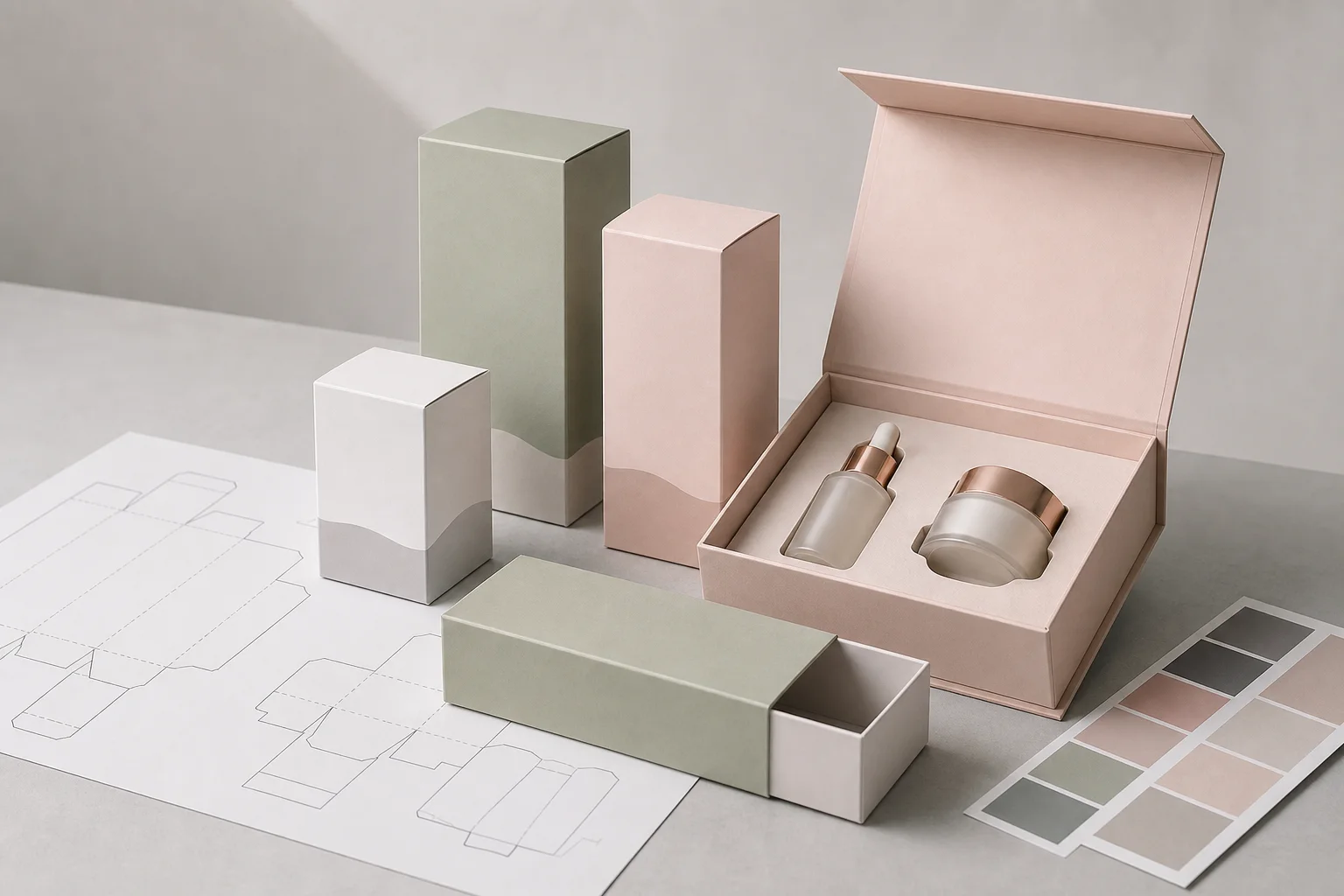
The best cosmetic box route depends on the product format, pack count, product weight, sales channel, opening experience, insert need, finish target, and artwork status. A lipstick or mascara may need a folding carton. A skincare routine or PR kit may need a set box or rigid-style structure. A glass bottle set may need an insert and extra pack-out checks.
| Box route | Good fit | What to confirm |
| Folding carton | Single-SKU retail products such as lipstick, mascara, serum bottles, cream jars, and tubes. | Product dimensions, panel order, barcode area, carton direction, and print proof. |
| Sleeve | Compact products, promotional bundles, and light secondary wraps where full box protection is not the main need. | Grip, sliding fit, artwork alignment, product exposure, and retail handling. |
| Rigid-style box | Premium skincare sets, launch kits, giftable ranges, and fragile value-dense products. | Opening feel, insert hold, assembly method, finish route, and pack-out behavior. |
| Set box | Multi-step skincare systems, shade ranges, sample kits, PR sets, and paired products. | Pack count, sequence, insert layout, unboxing order, and outer carton plan. |
Match the structure to the primary pack
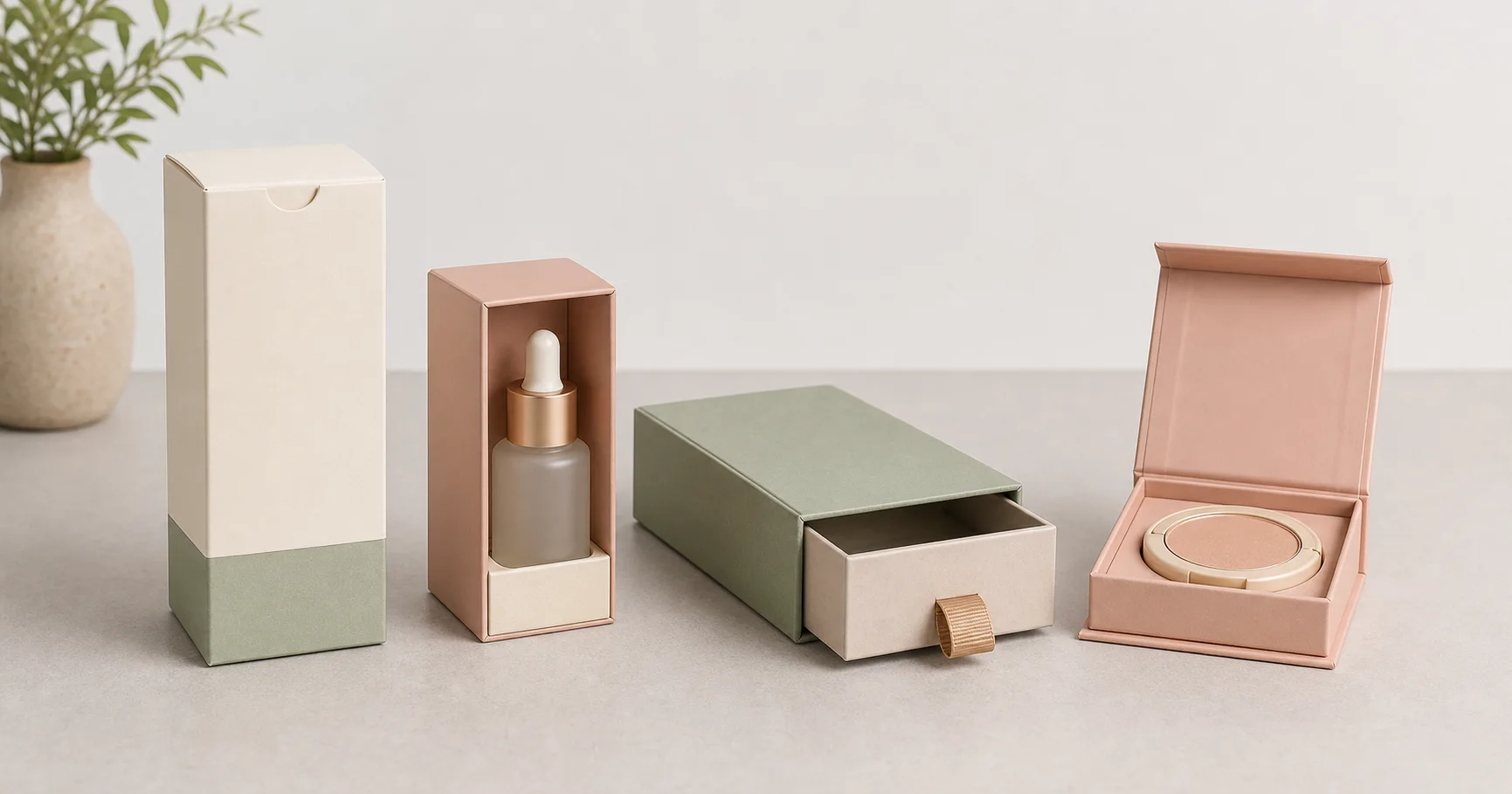
A cosmetic box that works for a plastic tube may not work for a glass serum bottle or a double-wall cream jar. Before choosing the carton type, define the primary pack dimensions, product weight, closure height, label area, cap movement, and whether the product will be sold on shelf, shipped direct-to-consumer, packed in a kit, or used as a launch sample.
This is also where primary-pack pages can help. A brand comparing glass serum bottles should think about insert hold and breakage risk differently from a brand packing lightweight plastic tubes. For examples, review glass bottles for serums and oils, glass jars for creams and balms, plastic bottles for skincare formulas, plastic jars for creams and balms, and cosmetic tube packaging options.
Decide whether the box needs an insert
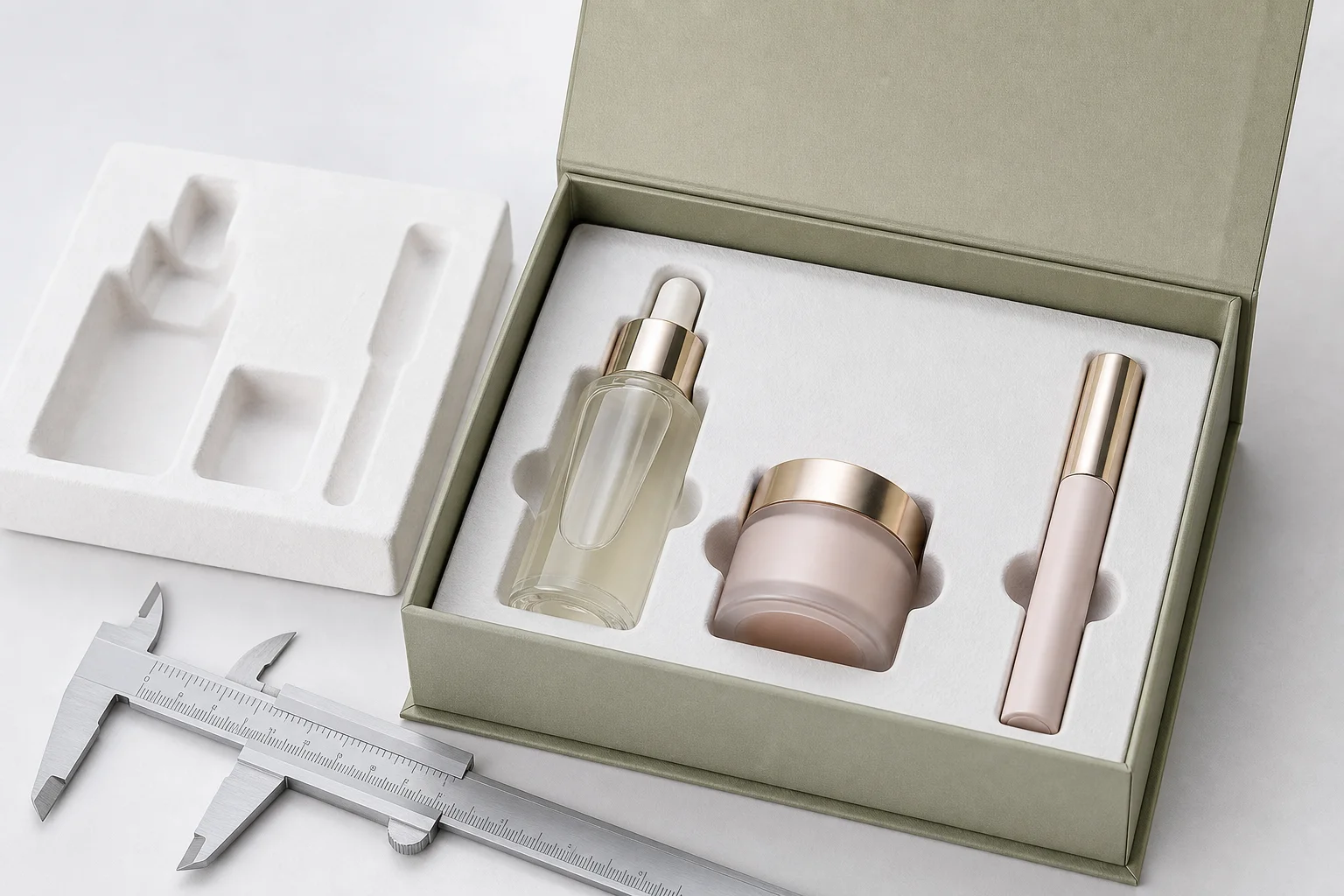
Inserts are useful when a product needs cleaner presentation, less movement, or separated components. They are common in glass bottle sets, skincare systems, sample kits, PR boxes, and premium gift sets. A simple folding carton for a lightweight single product may not need an insert, while a multi-piece set often does.
| Insert route | When it may fit | Buyer check |
| Paperboard insert | Lightweight retail sets and cartons where clean organization matters. | Check hold, fold direction, edge visibility, and assembly time. |
| Molded pulp or corrugated insert | Projects needing more separation, hold, or transport support. | Check product tolerance, surface look, dust, fit, and outer carton method. |
| Foam or EVA insert | Premium presentation boxes or fragile products when the project calls for that feel. | Check material appearance, claim wording, product contact, and disposal expectations. |
Retail boxes and e-commerce pack-out are different decisions
A shelf carton is judged by fit, panel hierarchy, finish, barcode space, and retail presentation. A direct-to-consumer pack also needs movement, crush exposure, outer carton pairing, closure protection, and leakage or breakage checks around the primary pack. Do not approve the box only from a desk mockup if the product will ship through parcel networks.
For higher-risk launches, ask the supplier how the carton, insert, and outer shipper should be tested. Transport-test standards such as ISTA or ASTM D4169 can provide testing vocabulary, but they should not be used as a public performance claim unless a project has real test documentation.
Artwork, finish, and label copy should be reviewed together
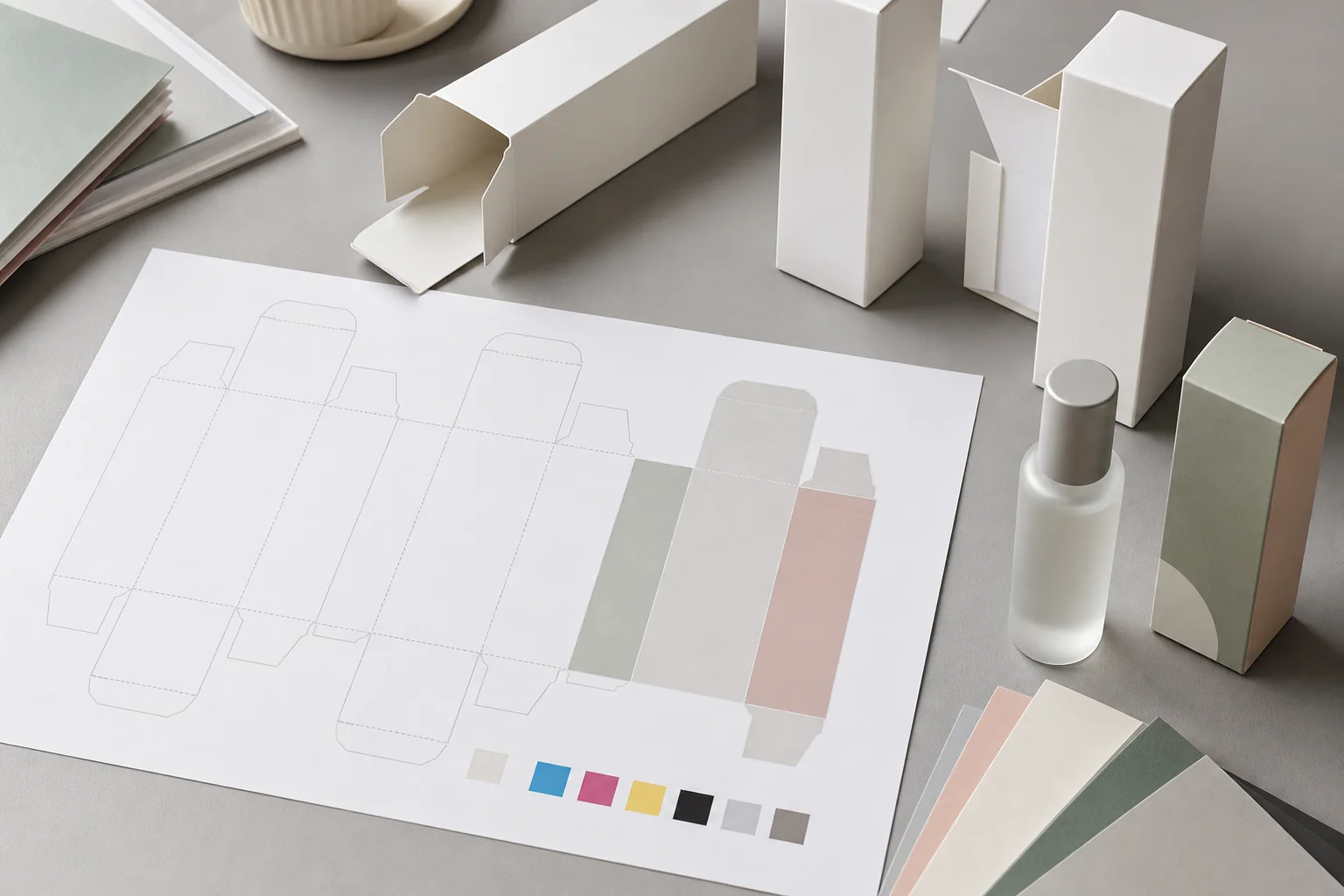
Foil stamping, embossing, debossing, spot UV, matte coating, gloss coating, and soft-touch effects can improve shelf presence, but they can also compete with barcode zones, shade codes, ingredient or warning panels, and claim copy. Approve finishes with printed samples whenever possible, not only screen previews.
For proofing, color, barcode, and artwork handoff details, use the JPS guide to packaging decoration and labeling. If the carton carries U.S. cosmetic label copy, keep the packaging team aligned with the brand's regulatory review. FDA's Cosmetics Labeling Guide is a useful official reference, but it does not replace brand-side legal or regulatory review.
Be careful with FSC, recyclable, and environmental claims
Paperboard and carton projects often raise questions about FSC wording, recycled content, recyclability, and disposal labels. These claims should be tied to the exact board, insert, coating, adhesive, market, and supply-chain documents for the finished project.
Avoid broad wording such as "eco-friendly" or "FSC-certified" unless the specific project can support it. The FTC Green Guides help marketers avoid misleading environmental claims, and FSC chain-of-custody requirements matter when FSC labels or trademarks are used. For broader paper recycling context, see AF&PA paper recycling resources and use the JPS guide to sustainable packaging materials for claim planning.
RFQ checklist for cosmetic packaging boxes
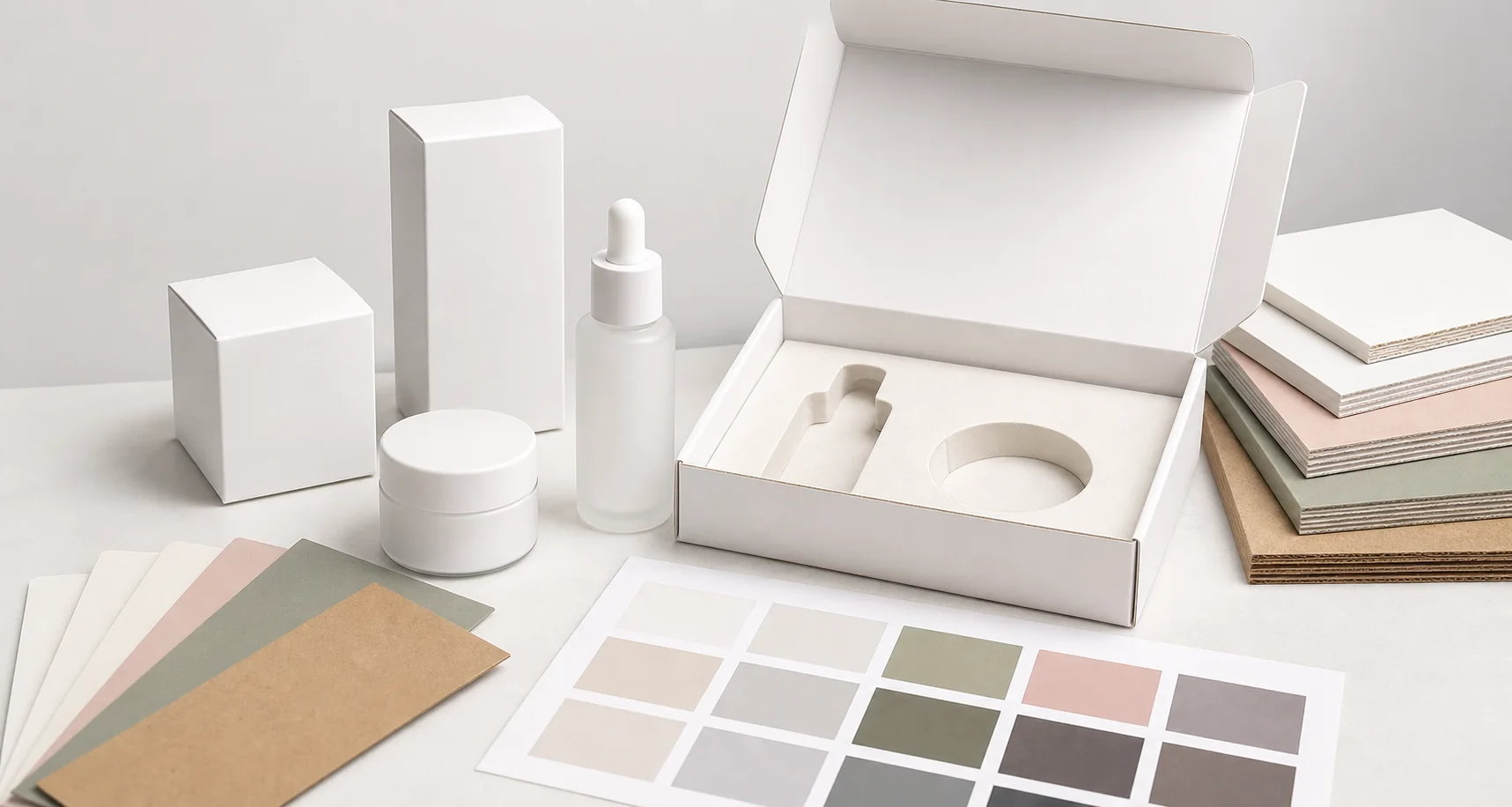
A useful quote request should give the packaging team enough information to check fit, structure, artwork, and sample workflow before pricing. Send a reference box if you have one, but do not rely on a reference image alone.
Primary pack type: bottle, jar, tube, stick, compact, pouch, or mixed kit.
Measured dimensions, product weight, cap or closure height, fill state, and pack count.
Box route: folding carton, sleeve, drawer box, rigid-style box, set box, or sample kit.
Insert need: none, paperboard, molded pulp, corrugated, foam/EVA, or project-specific route.
Sales channel: retail shelf, gift set, PR kit, travel set, e-commerce, or mixed channel.
Artwork status, barcode zone, finish direction, claim wording, target market, target quantity, and sample deadline.
When the brief is ready, compare JPS cosmetic carton and set box packaging or use custom cosmetic packaging support to review dielines, inserts, finishes, samples, and launch requirements.
FAQ
What are cosmetic packaging boxes?
They are secondary packaging structures such as folding cartons, sleeves, rigid-style boxes, set boxes, drawer boxes, and inserts used to present, protect, organize, or ship beauty products after the primary container is chosen.
How do I choose between a folding carton and a rigid box?
Use a folding carton for efficient single-SKU retail packaging when the product does not need a premium set-box structure. Review a rigid-style box when presentation, opening feel, insert layout, gift use, or fragile value-dense products matter more.
Do makeup packaging boxes need inserts?
Not always. Inserts help when a product needs cleaner presentation, less movement, component separation, or added hold. A lightweight single-SKU carton may not need one, while glass bottles, shade sets, gift kits, and e-commerce packs often need closer fit checks.
What should I check before approving carton artwork?
Check dieline direction, panel order, barcode area, ingredient or warning panel space, shade code, claim wording, foil or embossing position, coating choice, and proof color. Regulated label copy should be reviewed by the brand team before print approval.
Can I call a cosmetic carton recyclable or FSC-certified?
Only use those claims when the exact board, insert, coating, market, and supply-chain documents support them. Broad environmental wording should be avoided unless the finished project has the right documentation and approved label route.
What information helps JPS quote a cosmetic box project?
Send the primary pack type, measured dimensions, product weight, pack count, box format, insert need, sales channel, artwork status, finish direction, target quantity, target market, and sample deadline. A physical sample or reference box also helps.
Should I test a white mockup before a printed sample?
Yes when the structure or insert is new. A white mockup checks fit, hold, opening direction, and assembly before print cost and finish decisions are locked. A printed sample then checks color, registration, finish, barcode placement, and copy hierarchy.