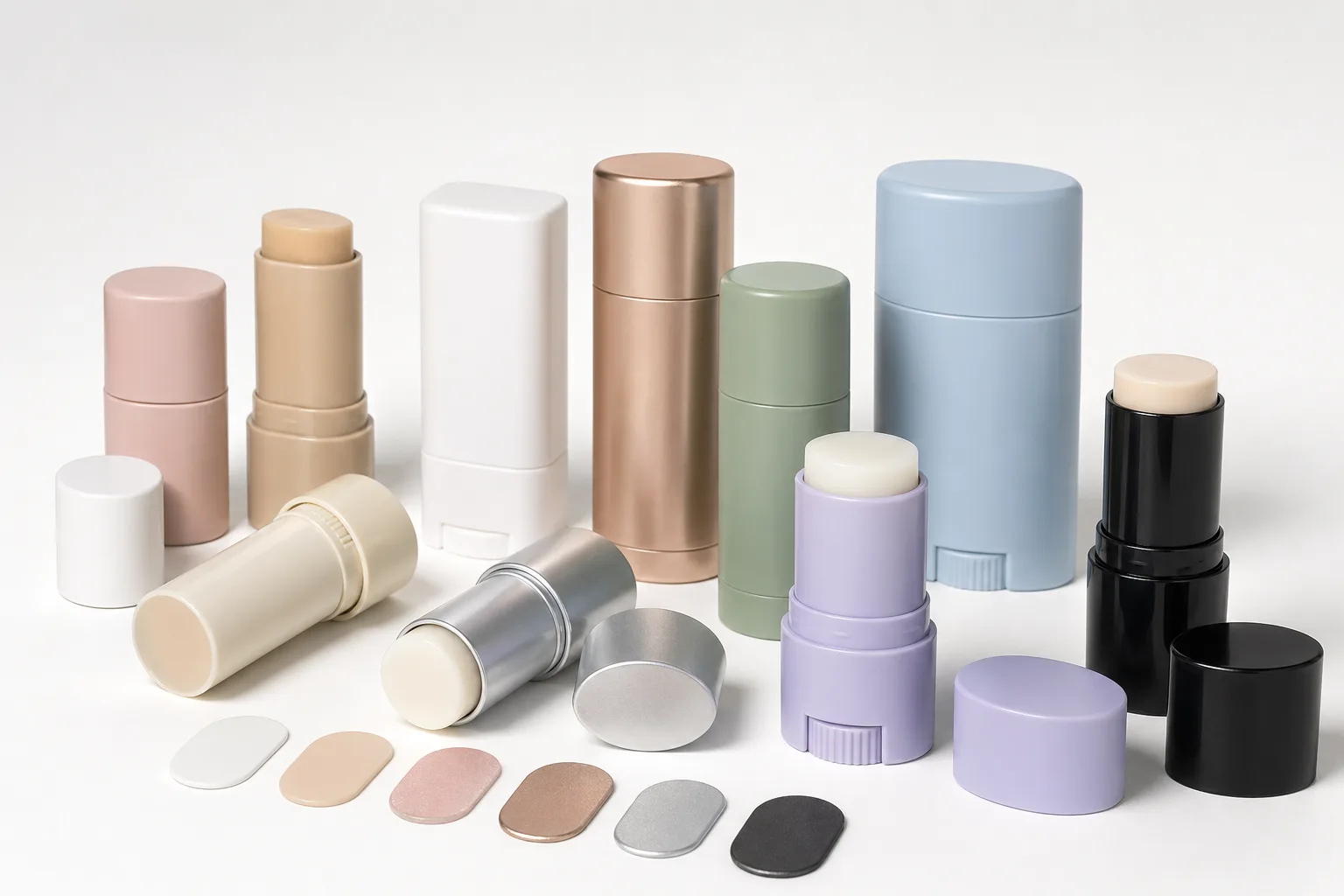
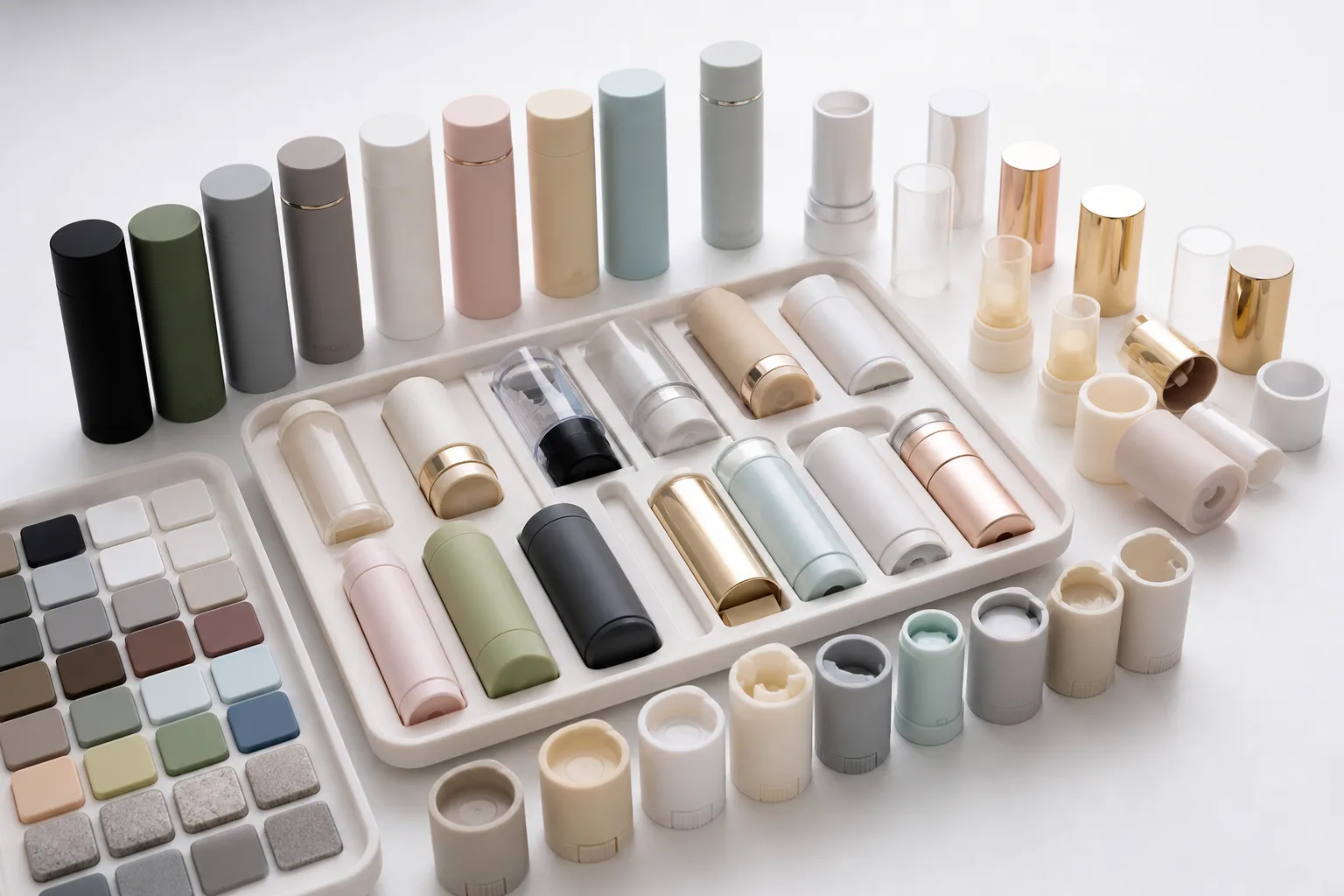
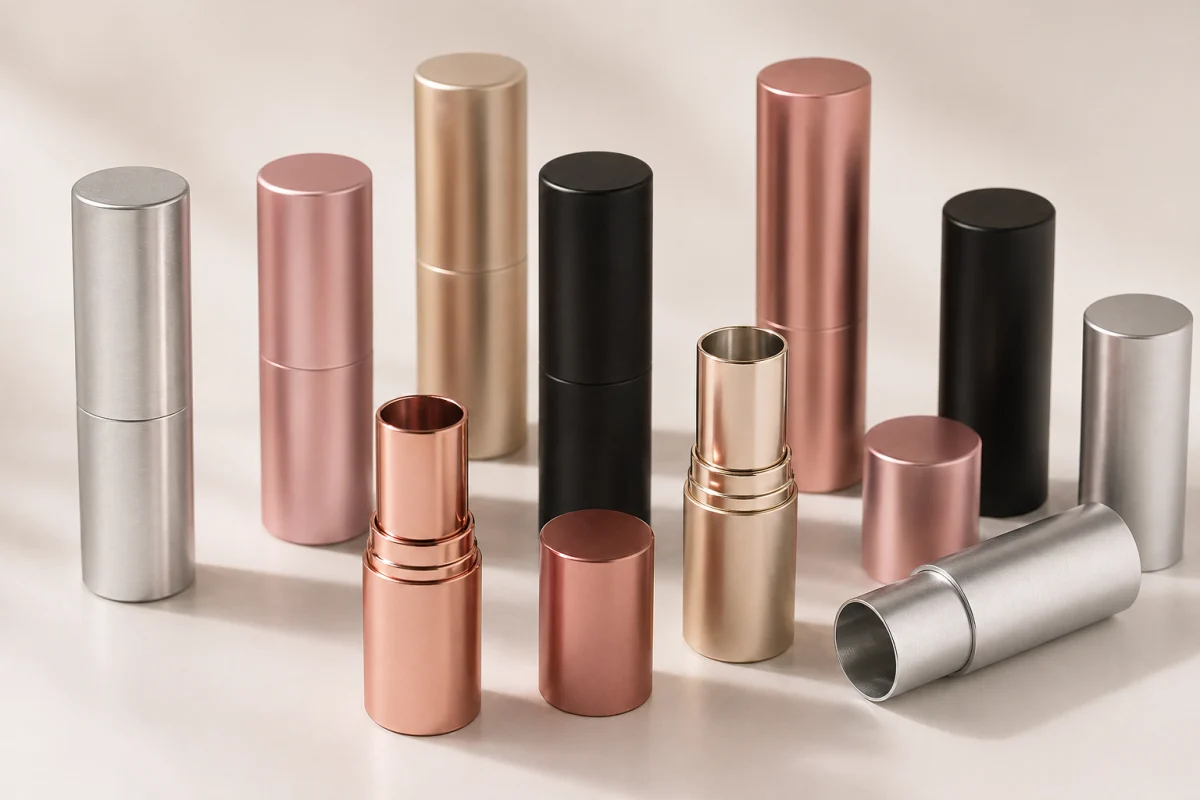
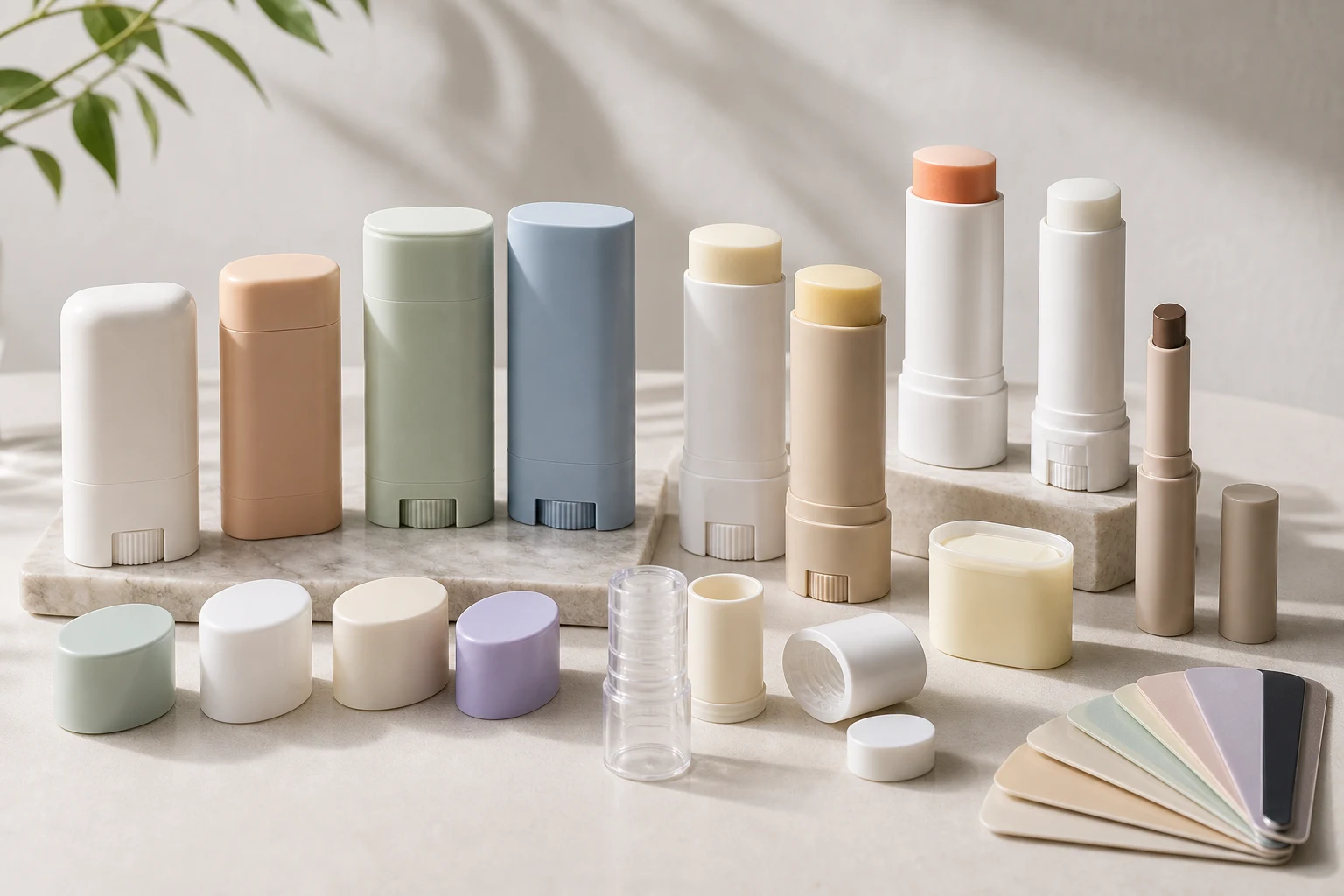
Beauty stick packaging production is the process of turning a stick formula, brand design and filling requirement into a working package that can be molded, decorated, filled, tested and shipped without failure.
A good production plan starts before the purchase order. The buyer should confirm material route, mold type, twist mechanism, decoration method, sample approval, compatibility testing, inspection standard and carton packing before bulk production starts.
This guide is written for skincare and makeup brands sourcing sunscreen stick packaging, balm stick packaging, contour stick packaging, deodorant stick packaging, high quality beauty stick packaging or custom beauty stick packaging for make up and face products.
Fast Answer
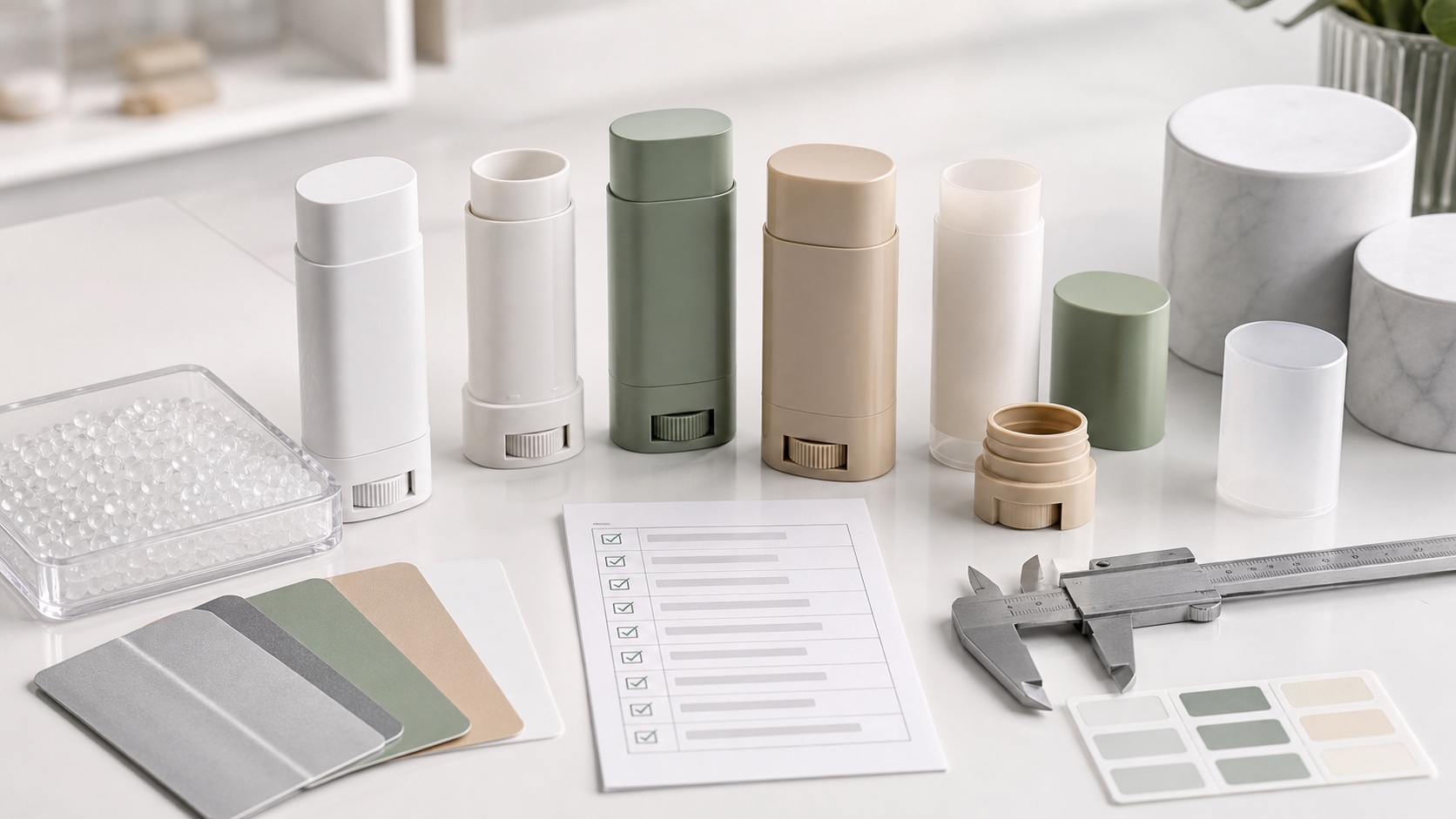
A good beauty stick production plan starts with the formula and fill weight, then confirms PP, PCR PP or aluminum-look material, cap and twist mechanism, decoration method, MOQ, sample approval and filled-product testing before bulk production.
Questions This Guide Answers
What steps are involved in beauty stick packaging production?
Which material works for a glossy, matte, premium or high quality beauty stick package?
How should a brand compare a beauty stick packaging manufacturer or supplier?
Which tests should be completed before production starts?
How This Page Fits With Related Guides
Use this article when the decision is about production flow, filled-sample approval and quality control. Use the related guide when the question is mainly sourcing, cost, custom finish or broad product selection.
| Reader question | Best JPS guide | Why |
| Production, mold route, filled-sample testing | This page | The reader needs manufacturing and approval checkpoints, not a general shopping guide. |
| Where to source or compare suppliers | beauty stick packaging supplier checklist | Supplier searches need quote evidence, factory checks and sourcing criteria rather than a production-process article. |
| How to choose format, size and material | how to choose beauty stick packaging | That guide covers format, size, material and formula fit in more detail. |
| Cost, affordable route or MOQ | beauty stick packaging cost guide | Price-focused questions need tooling, decoration and MOQ context. |
| Custom finish, branding or decoration | custom beauty stick packaging | Branding and decoration decisions belong to the custom packaging page. |
Best-Fit Applications
| Use case | Recommended packaging direction | What to check |
| Sunscreen stick | Oval or round PP stick with firm cap fit and good grip | Heat exposure, cap retention and formula shrinkage |
| Balm or salve stick | Wider stick with stable base and oil-resistant material | Oil staining, twist smoothness and leakage |
| Contour or foundation stick | Slim or mid-size twist-up package with precise elevation | Wobble, shade labeling and decoration rub |
| Deodorant stick | Larger PP structure with strong bottom-fill route | Repeated twist cycles and bottom plug fit |
| Solid perfume stick | Small premium stick with tighter cap and clean decoration | Fragrance compatibility and cap seal |
Material and Structure Options
| Option | Best fit | Approval note |
| PP | Most beauty stick packaging production projects | Good mold availability, color control and cost balance |
| PCR PP | Sustainable beauty stick packaging | Needs color, odor and claim evidence before approval |
| Mono-material PP | Simpler recycling communication | Check cap, base, insert and label do not weaken the claim |
| Aluminum-look finish | Premium or metallic beauty stick packaging | Clarify coating route and rub resistance |
| Paper carton | Secondary packaging and retail information | Useful for ingredient, barcode and compliance information |
Production or Sourcing Process
| Step | What to confirm |
| 1. Define the formula | Fill weight, hardness, oil level, fragrance, active ingredients and fill temperature |
| 2. Select structure | Oval, round, slim, large, refillable, bottom-fill or top-fill |
| 3. Confirm material | PP, PCR PP, mono-material PP or decorated plastic route |
| 4. Build samples | Plain sample first, then color and decoration sample |
| 5. Test filled samples | Compatibility, mechanism, cap, leakage, drop and decoration checks |
| 6. Approve bulk production | Signed sample, artwork, carton mark, inspection standard and shipping plan |
Quality Checks Before Bulk Production
| Check | Pass signal |
| Formula compatibility | No swelling, cracking, odor transfer, staining or stress marks after filled-sample review |
| Mechanism cycling | Smooth twist-up and twist-down movement without wobble or broken base |
| Cap retention | Cap stays secure during handling, warm storage and carton movement |
| Decoration durability | Logo, label, matte finish or metallic effect resists normal rub and oily-hand contact |
| Carton transit | Components and cartons survive the agreed shipping test plan without contamination |
Supplier Evidence to Request
A packaging recommendation should be backed by visible evidence, not only by a catalog picture. For beauty stick packaging production, ask the supplier to show which component, material, decoration and testing path they are recommending before a purchase order is placed.
| Evidence | What it should show | Why it matters |
| Component drawing or size sheet | Capacity, dimensions, neck finish, cap or closure fit, decoration area and carton packing direction | It keeps the buyer, filler, designer and supplier aligned before artwork and samples are approved. |
| Material statement | Main resin or glass route, PCR percentage if used, coating route and any parts that use a different material | It prevents vague sustainability, recyclability or premium-material claims from being added without support. |
| Decorated sample | Color, finish, logo placement, label area, carton style and handling resistance | It reduces the risk of a good-looking rendering becoming a weak physical package. |
| Filled sample test notes | Formula contact, leakage, cap retention, pump or twist performance and storage observations | It proves the package works with the actual formula instead of only looking right while empty. |
| Bulk inspection criteria | Accepted defects, critical defects, color tolerance, leakage method, carton marks and sample retention | It gives both sides a shared standard when production is finished. |
RFQ Details That Lead to a Better Quote
A weak request for quotation usually produces a weak answer. Instead of asking only for price, send enough context for the supplier to judge whether the package can pass filling, storage and shipping. This is especially important when the project involves custom color, low MOQ, PCR material, a premium finish or a formula with fragrance, oil, alcohol or actives.
Product type and use: skincare, make up, sunscreen, serum, toner, cleanser, lotion, cream, balm, oil, deodorant, fragrance or gift set.
Formula details: fill weight, viscosity, oil level, alcohol level, fragrance, actives, fill temperature, cooling behavior and whether compatibility testing has already been done.
Packaging target: capacity, shape, closure, dispensing method, material route, refill route, desired finish and whether stock mold or private mold is acceptable.
Branding needs: Pantone color, artwork file, label area, logo method, carton style, sustainability claim and destination-market labeling needs.
Commercial details: first order quantity, repeat volume estimate, target launch date, sample deadline, shipping market, inspection requirement and whether the order must support e-commerce.
Common Mistakes to Avoid
Choosing the package by appearance before checking formula compatibility. A premium-looking package can still fail if the formula stains, leaks, softens a part or makes the closure loose.
Treating MOQ as a single fixed number. MOQ can change by material, stock availability, custom color, decoration method, carton, PCR content and whether a private mold is required.
Using broad sustainability language without evidence. Claims such as recyclable, PCR, refillable or eco-friendly should be specific and supported by material and market evidence.
Approving empty samples only. The final approval should include filled samples because the real formula changes cap fit, leakage risk, dispensing feel and decoration durability.
Trying to answer every related buying question on one page. A focused article is easier to use because it sends cost, supplier, production and material questions to the right supporting guide.
Keeping old or vague internal links. Links should point to the most specific related JPS guide with an anchor that tells the reader what decision the next page helps with.
When to Choose a Different Packaging Route
If the buyer is still comparing broad packaging families, start from the related category page. If the next question is cost, production, supplier selection or formula-specific fit, move to the closest supporting article.
Use the category page when the buyer wants to browse available packaging families and shapes.
Use the cost guide when the buyer is mainly asking how price, tooling, decoration and MOQ are calculated.
Use the production guide when the buyer needs manufacturing steps, sample approval and quality control details.
Use the supplier guide when the buyer is comparing quote evidence, inspection standards and bulk order risk.
Use the material-specific guide when the buyer is deciding between glass, plastic, aluminum, PCR, mono-material or refillable options.
Related JPS Guides and Next Steps
| Next step | When to use it |
| beauty stick packaging category | Browse the broader product family before narrowing the specification. |
| beauty stick packaging cost guide | Use it when budget, tooling, decoration cost or MOQ is the main question. |
| low MOQ beauty stick packaging | Use it when the launch needs a smaller starting order or stock-mold route. |
| custom beauty stick packaging | Use it when color, finish, logo, carton or tooling decisions are the next step. |
| Contact Us | Send formula type, fill weight, target MOQ, decoration idea, market and launch timing for a sample recommendation. |
FAQ
What is beauty stick packaging production?
It is the full process of selecting material, mold structure, twist mechanism, decoration, sample testing, quality inspection and carton packing for stick-format skincare or makeup products.
What material is most common for beauty stick packaging?
PP is the most common starting point because it fits many stick mechanisms. PCR PP, mono-material PP and premium decorated finishes can be used when the claim and sample tests support them.
When should a brand request a custom mold?
Use a stock mold first when possible. A custom mold makes sense when the formula, shape, refill structure, brand ownership or large repeat volume cannot be met by available components.