Beauty product packaging for startups should start with a clear sourcing brief, not a random catalog search. Before asking suppliers for quotes, define the formula, fill volume, package format, dispensing method, artwork status, launch quantity, sample deadline, and shipping route. Those details help a packaging supplier suggest stock packaging, low-MOQ decoration, or a custom route without guessing.
This guide is for beauty, skincare, makeup, and personal-care teams preparing their first serious packaging inquiry. It focuses on the packaging decisions that affect samples, quotes, labels, cartons, and production planning.
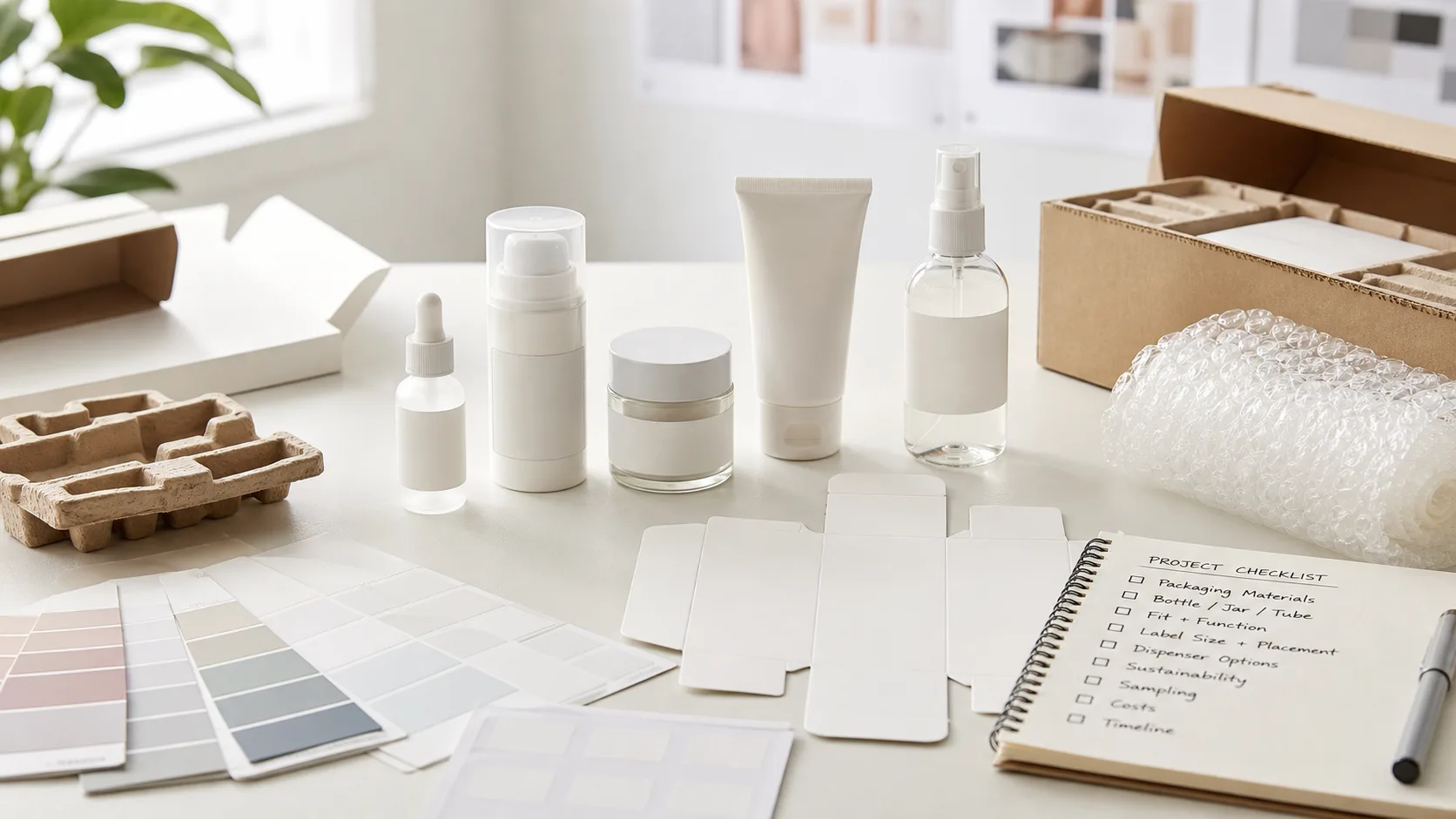
Quick sourcing checklist
| What to define before sourcing | Why it matters | Practical note |
|---|---|---|
| Product formula and viscosity | Decides whether a bottle, jar, tube, pump, sprayer, or dropper can work | A thin serum and a thick cream need different package checks. |
| Fill volume or net contents | Affects capacity, headspace, label panel, and carton size | Confirm both target fill and acceptable overflow space. |
| Package format | Narrows supplier recommendations | Start with the use case, then compare bottles, jars, tubes, sticks, droppers, pumps, sprayers, or cartons. |
| Closure or dispensing method | Controls user experience, leakage risk, and formula exposure | Review pumps, caps, sprayers, droppers, liners, wipers, and overcaps as part of the package system. |
| Artwork and label status | Affects decoration route, label panel, proofing, and timing | Do not approve decoration before the physical pack and label area are confirmed. |
| Launch quantity and MOQ tolerance | Determines whether stock, decoration, or private mold routes are realistic | Treat MOQ as a planning range until the exact component set is quoted. |
| Sample deadline and launch window | Drives supplier route and approval timing | Build in time for unfilled samples, filled samples, artwork proofing, and revisions. |
| Shipping and retail protection | Prevents breakage, scuffing, label damage, and carton fit issues | Glass, pumps, cartons, and sets need extra protection review. |
Start with the product, not the package photo
A startup brand often starts with a reference image: a frosted serum bottle, a soft-touch jar, a squeeze tube, or a premium carton set. That is useful for style, but it is not enough for sourcing.
The first packaging decision is formula fit. A lightweight toner may suit a fine mist bottle, pump bottle, or simple cap. A facial oil may need a glass bottle with a dropper or reducer. A thick cream usually needs a jar, airless jar, tube, or pump route that can handle viscosity. A sunscreen, balm, or solid stick creates a different filling and cooling problem.
If the format is still open, first compare broad cosmetic packaging products by use case. Then narrow into specific families such as plastic bottles for skincare and personal care formulas, glass bottles for serums and oils, plastic jars for creams, balms, and masks, cosmetic tube packaging options, or dispensing components for beauty packaging.
The goal is not to pick the most attractive sample. The goal is to choose a package system that can be filled, decorated, shipped, used, and reordered without surprises.
Choose the right customization route
For startup beauty packaging, "custom" can mean several different things. A clear route keeps the quote realistic.
| Route | Best fit | Typical planning range | Main risk to check |
|---|---|---|---|
| Stock packaging | Early launch, market test, simple private label, faster sampling | MOQ may start around hundreds to low thousands of units, depending on item and supplier stock | Limited color, shape, and component control |
| Stock packaging with custom decoration | Startup launch with brand artwork, label, print, or color target | Custom decoration often starts around low thousands to 10,000+ units, depending on method and component | Artwork, color matching, label adhesion, and proof approval can add time |
| Existing mold with component changes | Better brand fit without full private tooling | MOQ and lead time depend on component availability, finish, decoration, and supplier schedule | A small change can affect closure fit, carton size, or compatibility |
| Private mold or engineered structure | Differentiated brand system, special shape, refill concept, or component design | Higher MOQ, tooling cost, and longer development timeline are common | Tooling, testing, revisions, and production approval must be planned early |
These are planning ranges, not JPS Packaging commitments. Actual MOQ, sample timing, production time, and cost depend on stock status, decoration method, tooling, artwork approval, factory schedule, destination market, and the full component set.
If the brand identity is still changing, it is usually safer to start with stock or semi-custom packaging. Use the first launch to confirm formula fit, user response, shipping protection, and retail presentation before investing in private tooling.
Build a supplier-ready packaging brief
A good supplier brief does not need to be long. It does need enough detail for a packaging team to recommend realistic options.
- Product type: serum, lotion, cream, balm, cleanser, toner, lip product, stick, sample kit, set box, or another format.
- Formula notes: viscosity, oil level, alcohol content if relevant, fragrance or active sensitivity, light sensitivity, and whether the formula has been filled into sample packaging before.
- Fill volume: target ml, g, or oz, plus preferred visual size if the brand has one.
- Package preference: bottle, jar, tube, stick, dropper, pump, sprayer, cap, carton, insert, or an open request for recommendations.
- Material direction: plastic, glass, aluminum, paperboard, PCR, refillable, mono-material, or "not decided".
- Decoration direction: label, screen printing, hot stamping, color spray, matte coating, metallization, heat transfer, shrink sleeve, carton print, or no decoration yet.
- Artwork status: logo ready, dieline needed, label file ready, claim wording still in review, color target available, or brand identity not finished.
- Quantity target: first sample quantity, pilot order, launch order, reorder expectation, and maximum acceptable MOQ.
- Timeline: sample deadline, artwork approval deadline, launch date, and whether air or ocean shipping is being considered.
- Market and channel: United States, EU, online, retail, spa/professional, subscription, kit, or marketplace.
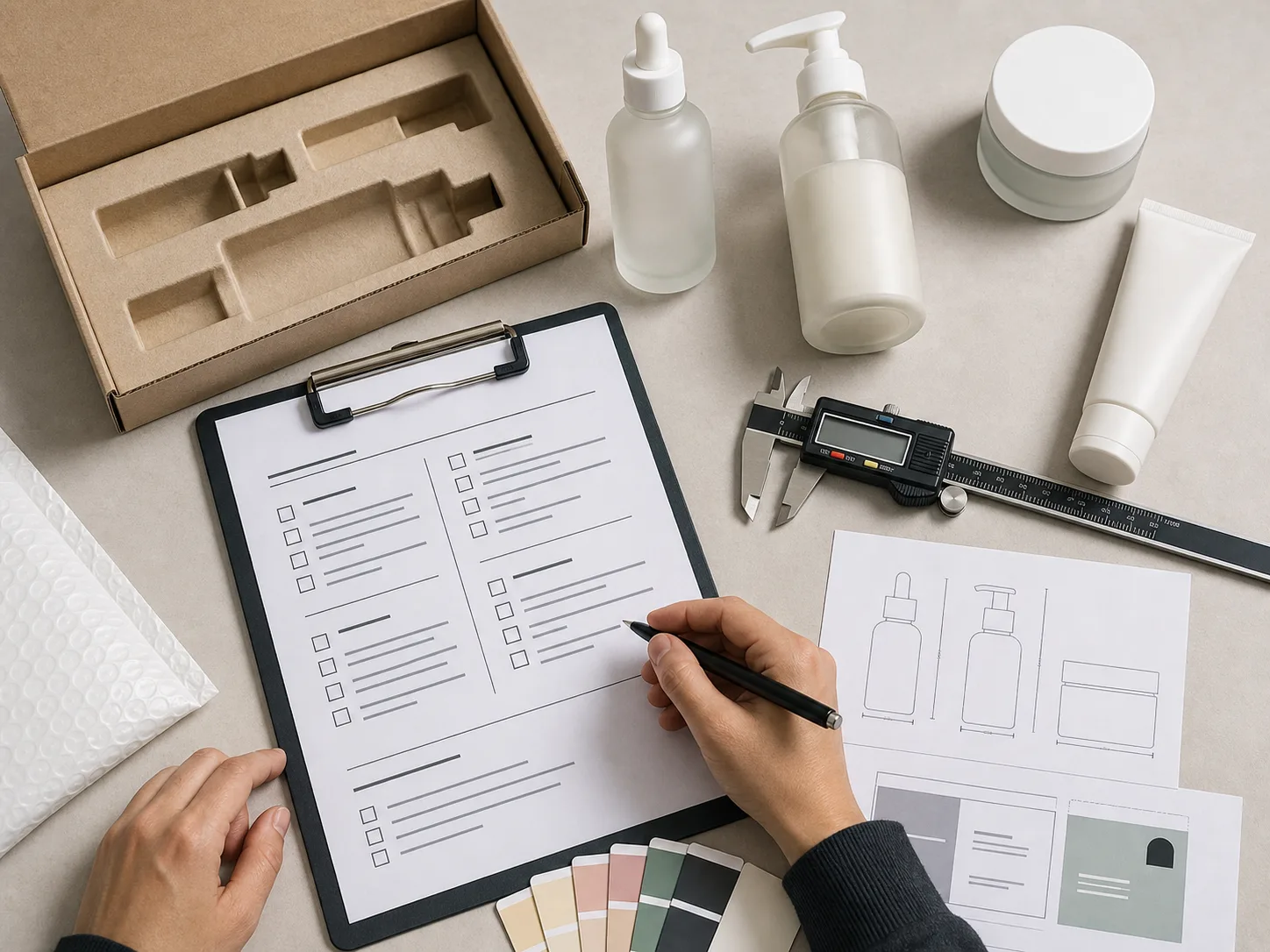
When these details are ready, send package format, artwork status, and sample deadline to the JPS Packaging team for a practical fit review. JPS can then discuss custom cosmetic packaging options, sample routes, and the product families that match the project.
Plan artwork and label space early
For startup packaging, artwork is often where the timeline slows down. A bottle may look perfect until the label panel is too small, the curve distorts a fine line, the pump collar blocks the front view, or the carton needs more required information than expected.
For US cosmetic projects, use the FDA's Cosmetics Labeling Guide as a source for label-planning questions, and review FDA's MoCRA information when launch responsibilities may affect the project. This article is packaging guidance, not legal advice, so final claim and label review should be handled by the brand's qualified reviewer.
- Is there enough flat or readable label space for the front panel?
- Will the closure, cap, pump, or overcap hide any important artwork?
- Does the decoration method suit the material and shape?
- Is the label adhesive suitable for the surface, formula residue, bathroom use, or handling?
- Does the carton need room for ingredients, warnings, barcode, batch code, recycling notes, or importer/distributor details?
- Are any sustainability or material claims supported?
If artwork is a major part of the launch, review packaging decoration and labeling methods before approving the route. For label-planning context, also use JPS Packaging's guide to cosmetic labeling requirements for artwork planning.
Keep sustainability claims conservative
Many startup brands want recyclable, PCR, refillable, paper, glass, aluminum, or mono-material packaging. Those can be useful directions, but the claim must match the full package and the market where it will be sold.
For example, a bottle body may be recyclable, while the pump, label, coating, liner, carton, or mixed-material component makes the consumer-facing claim more complicated. A PCR claim should match the actual component and documentation. A refillable claim should reflect the whole use system, not just a durable container.
When environmental wording appears on the package, review the Green Guides rules in 16 CFR Part 260 and keep claims specific. Packaging teams should ask suppliers what documents can support recycled content, material composition, recyclability, coating, and refill claims before the claim is printed.
Approve samples in the right order
A startup team may want to approve the prettiest decorated sample first. That can hide functional problems. A safer order is:
- Structure sample: check capacity, hand feel, closure fit, dispensing, and carton fit before decoration.
- Filled sample: test the real or pilot formula for leakage, staining, swelling, clogging, pump output, dropper behavior, tube recovery, label adhesion, and user handling.
- Decoration proof: check color, artwork placement, rub resistance, label fit, print registration, and finish consistency.
- Pack-out sample: check inner tray, carton, sleeve, insert, shipper, barcode placement, and visible scuffing after handling.
- Approval record: keep approved samples, photos, dielines, color references, component names, and version notes together.
This order reduces the chance of approving a beautiful package that cannot handle the formula, the closure, or the shipping route.
Plan cartons, inserts, and shipping protection
Primary packaging gets most of the attention, but secondary packaging often decides whether the launch feels finished. A serum bottle, jar, tube, or kit may need a folding carton, set box, insert, sleeve, protective tray, or shipping mailer.
For fragile glass, pumps, droppers, coated finishes, and multi-piece sets, review shipping protection before the final carton is printed. Check whether the package needs pulp inserts, paperboard dividers, molded trays, bubble protection, corner space, label protection, or a stronger shipper. If the product will be sold as a kit, compare cosmetic carton boxes and set boxes early so the carton and insert match the primary package.
Good shipping protection is not only about preventing breakage. It also protects decoration, label edges, caps, pump actuators, carton corners, and the first impression a customer sees when opening the order.
Questions to ask a cosmetic packaging supplier
- Which route fits this launch better: stock, stock with decoration, existing mold customization, or private tooling?
- What components are included in the quote: bottle, jar, tube, cap, pump, sprayer, dropper, liner, wiper, inner plug, overcap, carton, insert, or shipper?
- What is the typical MOQ and production timing for this exact route?
- Are samples available before decoration and after decoration?
- Which filled-sample tests should the brand run before bulk approval?
- Can the supplier provide dielines, label panel dimensions, print area, and artwork requirements?
- What documents can support material, PCR, recyclable, refillable, or other packaging claims?
- How should the components be packed to reduce scuffing, leakage, pump damage, or glass breakage?
- What changes would reduce MOQ, cost, lead time, or risk without weakening the launch?
If a supplier cannot answer these questions clearly, the quote may be too early or too vague to compare.
Common startup packaging mistakes
The most common mistake is choosing packaging by appearance before confirming formula fit. The second is treating MOQ as a single number. MOQ changes with stock status, color, decoration, component matching, tooling, packaging inserts, and approval steps.
- Starting with a private mold before market demand is proven.
- Designing artwork before checking the label panel and decoration limits.
- Ignoring closure and dispensing compatibility.
- Using sustainability wording without supplier documentation.
- Forgetting carton, insert, and shipping protection until the end.
- Comparing supplier quotes without confirming what each quote includes.
- Approving one empty sample and skipping filled-sample testing.
For a startup launch, the best packaging decision is usually the one that leaves enough room to test, revise, and reorder. A clean stock or semi-custom package that works with the formula is often stronger than a complex custom structure that delays the first launch.
FAQ
What packaging does a startup beauty brand need first?
Start with the primary package that touches or dispenses the formula, such as a bottle, jar, tube, stick, pump, sprayer, dropper, or cap system. Then plan secondary packaging such as cartons, labels, inserts, and shipping protection. Do not finalize the carton or decoration until the primary package and label space are confirmed.
Can startups get custom cosmetic packaging with low MOQ?
Sometimes. Stock packaging with labels or simple decoration is usually the most startup-friendly route. Custom color, special decoration, component changes, or private molds often require higher MOQs and longer approval time. Treat low MOQ as project-dependent until the exact package, finish, and component set are quoted.
What should I send a supplier for a cosmetic packaging quote?
Send the formula type, fill volume, preferred format, material direction, closure or dispensing needs, artwork status, quantity target, sample deadline, destination market, and any sustainability or claim requirements. If you have a reference photo, include it as style direction, not as the only specification.
Should a startup choose stock packaging or private mold packaging?
Most startups should test stock or semi-custom packaging first unless the package structure is central to the product concept. Private molds can create stronger differentiation, but they usually add tooling cost, higher MOQ, longer development, and more sampling risk.
What should be tested before bulk ordering cosmetic packaging?
Test formula compatibility, leakage, pump or dropper performance, tube recovery, jar sealing, label adhesion, decoration durability, carton fit, shipping protection, and user handling. Keep approved physical samples and written specifications together before placing a bulk order.
How early should packaging be sourced before a beauty launch?
Start sourcing as soon as the formula direction, fill volume, and launch quantity are clear enough to brief a supplier. For simple stock routes, samples may move faster. Custom decoration, component matching, private tooling, filled-sample testing, and freight can add weeks or months, so the safest timeline is project-dependent and should be planned before artwork is treated as final.