Cosmetic labeling requirements affect more than label text. For a U.S. beauty product, the package plan usually needs space for product identity, net quantity, business information, ingredients, required warnings or directions, responsible-person contact details, and claims review before artwork moves into decoration or production. JPS Packaging can help check package format, printable area, decoration method, sample proofing, and component fit. Final label compliance still belongs to the brand, responsible person, manufacturer, distributor, importer, or qualified legal/regulatory reviewer.
This article is a packaging and artwork planning checklist, not legal advice. It does not cover every type-size rule, exemption, state law, retailer rule, marketplace rule, imported-goods rule, OTC drug/cosmetic overlap, or export-market requirement. Use it to prepare a cleaner supplier handoff before final regulatory review.
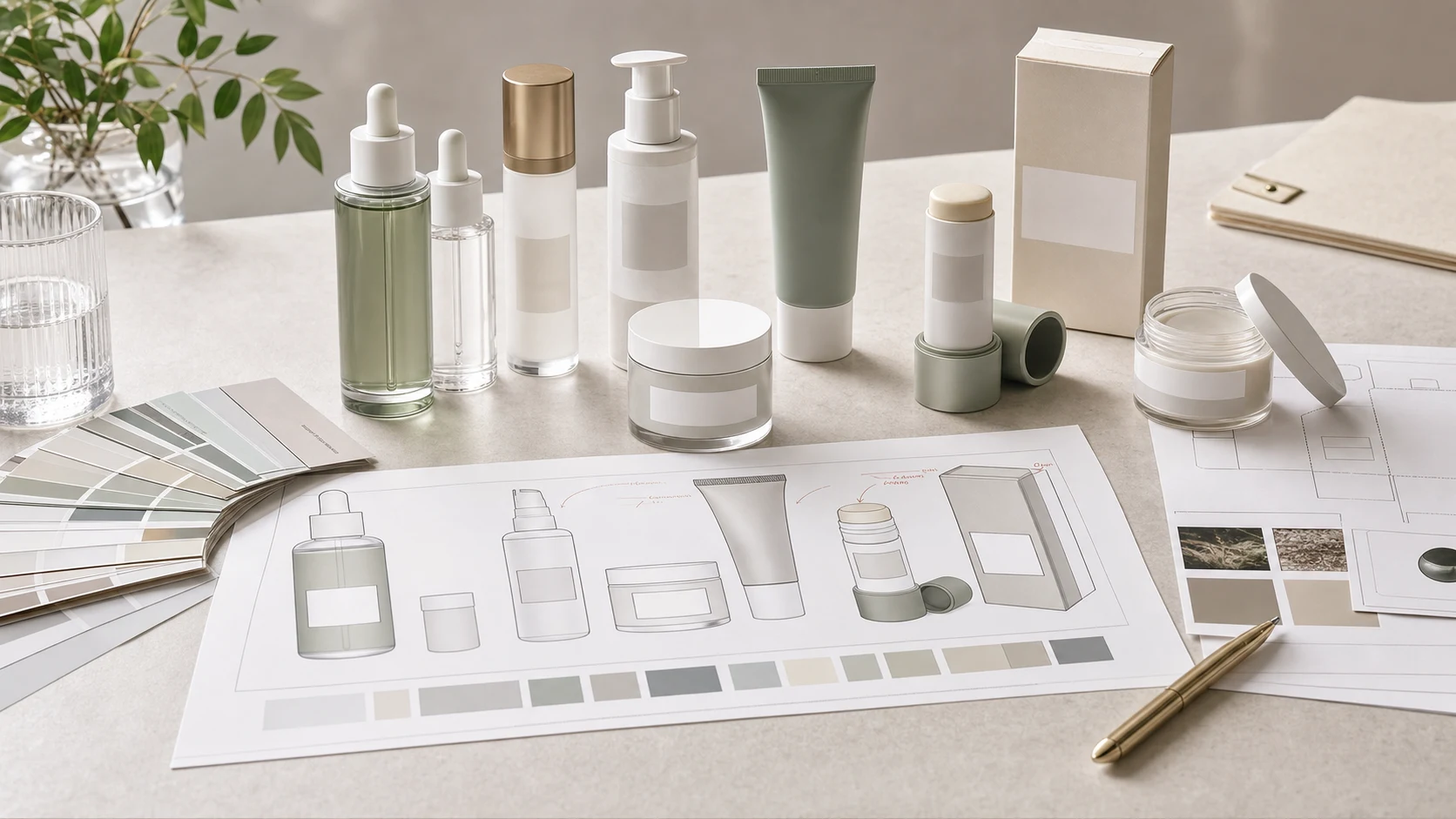
Review the package format, artwork proof, and label panel before decoration or production.
Official sources this checklist is based on
Use the sources below to verify the regulatory side of the label before final artwork approval. Source status was last checked on May 12, 2026.
| Source | What it supports for this article | How to use it |
| FDA Summary of Cosmetics Labeling Requirements | High-level U.S. cosmetic labeling topics, including product identity, net quantity, information-panel items, ingredients, warnings, and misbranding concepts. | Use as a starting map, not a final product-specific ruling. |
| FDA Cosmetics Labeling Guide | PDP, information panel, placement, type-size, identity, name/place of business, net quantity, warnings, ingredient labeling, fragrances, flavors, and trade secrets. | Use for detailed label-panel review and reviewer questions. |
| eCFR 21 CFR Part 701 | Current federal cosmetic-labeling regulatory text. | Use when exact regulatory text matters. |
| FDA Cosmetics Labeling Regulations | FDA does not pre-approve cosmetic labeling; manufacturers and distributors are responsible; "FDA Approved" language can be misleading. | Use to avoid unsafe claims on packaging or marketing. |
| FDA Cosmetics Labeling Claims | Cosmetic claims must be truthful and not misleading; disease or structure/function claims can change regulatory status. | Use before printing SPF, anti-acne, therapeutic, natural, organic, clean, hypoallergenic, or test claims. |
| FDA MoCRA page | MoCRA topics such as serious adverse event reporting, product listing, safety substantiation, GMP rulemaking, fragrance allergen labeling rulemaking, and talc asbestos testing methods. | Use as a current MoCRA checkpoint before publication and production. |
| FTC Fair Packaging and Labeling Act policy | FPLA concepts around product identity, manufacturer/packer/distributor information, and net contents. | Use with FDA sources because FDA administers FPLA for cosmetics. |
| NIST Handbook 130 current edition | Uniform Packaging and Labeling Regulation and state/local packaging-labeling context. | Use for weights-and-measures context and display-area planning questions. |
What goes where on cosmetic packaging
The main packaging question is not "Can all the text fit somewhere?" It is "Can the right information fit in the right place, at readable size, on the real container and outer package?"
For many U.S. cosmetic products, the front-facing area is the principal display panel, often called the PDP. FDA guidance and 21 CFR Part 701 are the key sources for PDP and information-panel concepts. In practical artwork review, plan these areas early:
| Package area | Common information to plan | Packaging risk to check |
| Principal display panel | Product identity and net quantity. | The front panel may be too small, curved, crowded, or interrupted by cap shape, shoulder shape, label wrap, or decoration. |
| Information panel | Business information, material facts, ingredient declaration, warnings or directions where required. | Side/back area may not have enough readable space, especially on mini packs, tubes, sticks, jars, or round bottles. |
| Outer carton or box | Information that does not fit on the inner container, retail presentation, barcode, lot/date planning, warnings, inserts, or multi-language needs. | The carton may hide information printed on the inner pack, or the inner pack may be separated from required information after purchase. |
| Insert, leaflet, tag, or folded label | Longer directions, warnings, multi-language copy, or extra product information. | Do not assume an insert solves a label issue without regulatory review. |
| Decoration proof | Final print, label, sleeve, screen print, hot stamp, carton, or coating approval. | Digital artwork can pass review while the real sample fails on contrast, adhesion, rub resistance, label lift, or curved-surface readability. |
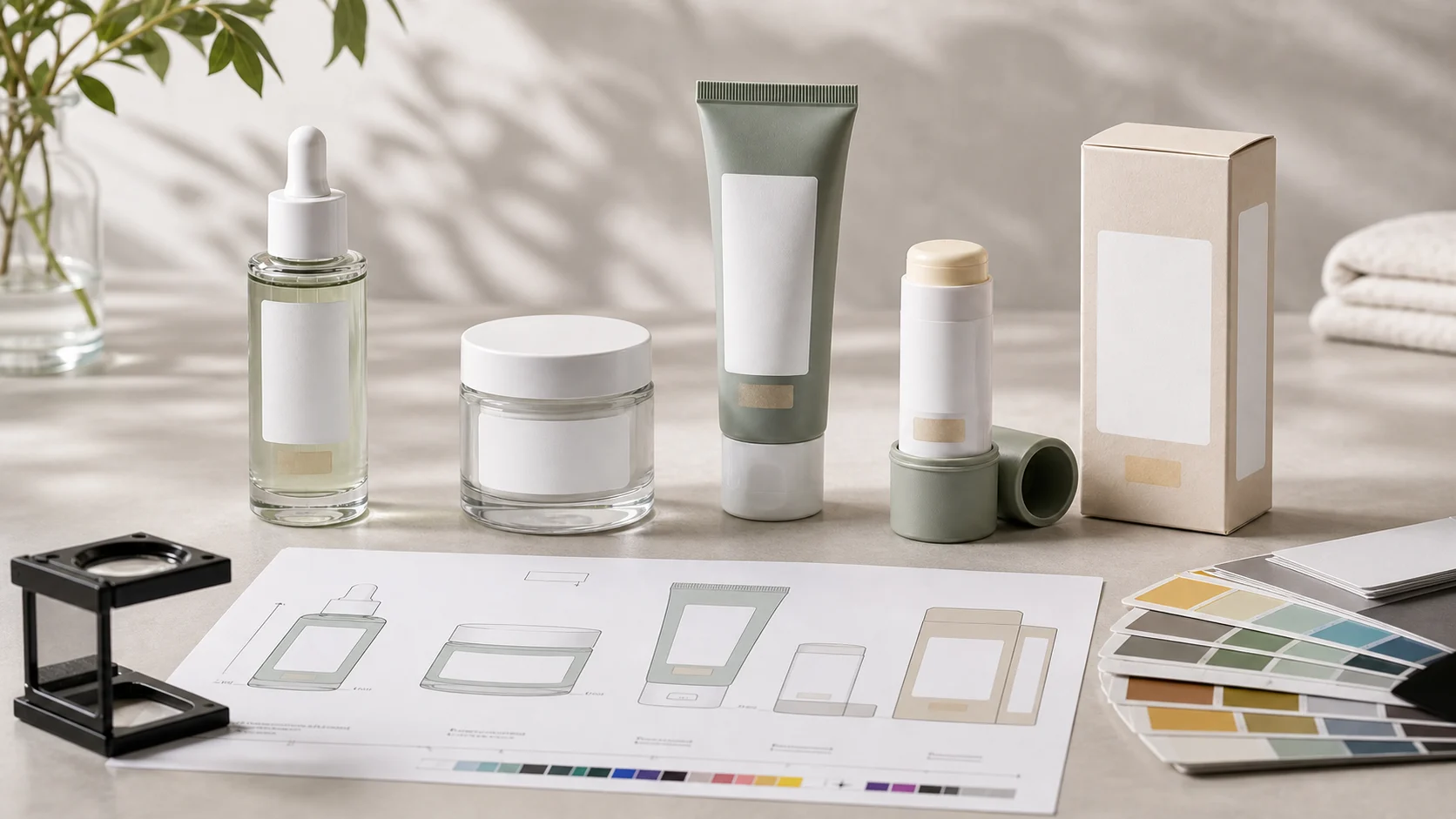
Package-shape and artwork proof review before decoration.
Cosmetic label planning checklist before artwork approval
The checklist below translates official-source topics into packaging and artwork questions. It should sit beside the artwork file; it does not replace legal review.
| Label or artwork item | Packaging question before approval | Who should own the final decision |
| Product identity | Does the front-facing area clearly describe the product, such as serum, cream, gloss, balm, toner, lotion, stick, or cleanser? | Brand and regulatory reviewer |
| Net quantity | Is there enough PDP space for the correct net quantity statement by size and SKU? | Brand and regulatory reviewer |
| Name and place of business | Is the responsible company information readable on the selected container, carton, or label? | Brand, responsible person, or distributor |
| Ingredient declaration | Does the approved ingredient list fit at readable size, including shade, fragrance, flavor, or formula variants? | Brand, formulator, and regulatory reviewer |
| Warnings and directions | Has the brand confirmed whether warnings, cautions, directions, or tamper-resistant statements are required? | Brand and regulatory reviewer |
| Claims | Have claims such as "FDA approved," SPF, anti-acne, clean, natural, organic, hypoallergenic, dermatologist tested, recyclable, or clinically proven been reviewed? | Brand and legal/regulatory reviewer |
| MoCRA contact checkpoint | Has the responsible person planned a domestic address, domestic phone number, or electronic contact route where needed for adverse-event reports? | Responsible person and regulatory reviewer |
| Fragrance allergen status | Has FDA rulemaking status been checked before final copy is approved? | Brand and regulatory reviewer |
| Country of origin / import review | If imported, has origin marking and import documentation been reviewed? | Brand/importer |
| Barcode, lot, date, and carton marks | Does the artwork leave functional space for production and fulfillment information? | Brand, manufacturer, supplier, and fulfillment team |
| Decoration feasibility | Can the selected material and shape support the required readability, contrast, adhesion, and durability? | JPS and the decorator/printer |
Package-format checks for beauty brands
Different cosmetic packages create different label and decoration constraints. Use this section before choosing a package or approving a dieline.
| Package format | Label/artwork risk | What to check with JPS before production |
| Glass bottles | Curved surface, small PDP, label adhesion, print contrast, droppers or pumps covering copy. | Confirm bottle diameter, label panel, closure fit, coating/frosting, decoration route, carton protection, and readable area. |
| Plastic bottles | Squeezability, label lift, curved shoulders, translucent material, pump or flip-cap interference. | Confirm resin, surface finish, label or direct-print route, closure clearance, fill volume, and sample testing. |
| Cosmetic jars | Lid/top label may not replace side or carton information; round walls reduce readable area. | Confirm jar wall height, lid decoration, liner, inner seal, carton need, ingredient-panel location, and label wrap. |
| Tubes | Crimp area, shoulder curve, flexible body distortion, front/back orientation, and squeeze deformation. | Confirm tube diameter, seam/crimp space, label or print method, cap orientation, and readability after filling. |
| Beauty sticks | Small barrel area, shade/SKU variation, twist base, cap coverage, and multi-shade ingredient differences. | Confirm cap, base, label wrap, shade system, bottom label, carton need, and proof version by SKU. |
| Airless bottles and jars | Pump, actuator, overcap, cartridge, or dosing plate can reduce visible label space. | Confirm visible surfaces after closure assembly and whether carton or insert is needed. |
| Aluminum packaging | Coating, dent risk, print contrast, label adhesion, and claim wording around recyclability. | Confirm finish, liner/coating route, decoration method, claim evidence, and sample rub checks. |
| Cartons and set boxes | Outer package may carry most information, but inner components still need a reviewed plan. | Confirm dieline, panel hierarchy, inserts, barcode, lot/date, retail display orientation, and component pairing. |
| Closures, pumps, droppers, and dispensers | Components may cover copy or change how the package is displayed. | Approve label placement with the exact closure, pump, dropper, wiper, overcap, or applicator installed. |
Ingredient-list handoff: what JPS should receive
For retail cosmetics, ingredient labeling is a regulatory review topic. JPS should not decide whether the ingredient names, order, fragrance/flavor treatment, color additives, incidental ingredients, or trade-secret handling are correct.
For packaging production, JPS needs a practical handoff:
the brand-approved artwork file;
the final ingredient declaration or the current reviewed version;
SKU-specific ingredient differences for shades, scents, actives, or formula versions;
selling market and language requirements;
container size and fill amount by SKU;
packaging format and outer-carton plan;
label or direct-decoration method;
proof approval owner and revision deadline.
Example: a serum line with 5 ml, 15 ml, and 30 ml bottles may use the same visual identity, but each size can need a different net quantity statement, label wrap, and readable ingredient-panel layout. If the line also has multiple scents or active variations, the artwork file should identify which ingredient list belongs to each SKU before label printing, direct decoration, or carton production begins.
Claims that need extra review before printing
FDA states that it does not pre-approve cosmetic labeling and warns that "FDA Approved" labeling or advertising can be misleading. FDA also notes that disease or structure/function claims can affect whether a product is regulated as a drug. That makes claim review a production issue, not only a marketing issue.
Flag these before the artwork proof is released:
"FDA approved," "FDA compliant," or similar approval-style language;
SPF, sunscreen, anti-acne, antidandruff, antiperspirant, fluoride, pain relief, or therapeutic claims;
"clinically proven," "dermatologist tested," "hypoallergenic," "non-comedogenic," or similar substantiation claims;
"natural," "organic," "clean," "non-toxic," "chemical-free," or environmental claims;
recyclable, refillable, PCR, mono-material, biodegradable, compostable, or plastic-free claims;
before/after results, performance percentages, or user-test numbers.
JPS can help check whether the claim fits on the package and whether the decoration method can keep it readable. JPS should not approve whether the claim is legally valid.
MoCRA checkpoint before production
MoCRA added or expanded areas cosmetic companies must track, including serious adverse-event reporting, product listing, safety substantiation records, and FDA rulemaking around GMP, fragrance allergen labeling, and talc asbestos testing methods. For label planning, the safest position is practical and cautious:
plan space for responsible-person contact information where required;
confirm whether the project involves professional-use labeling;
keep product listing, safety substantiation, and responsible-person information with the product file;
recheck FDA fragrance allergen labeling rule status before final customer-facing artwork;
do not state proposed or pending fragrance allergen rules as final requirements.
Practical guardrail: if a customer artwork example states exact fragrance-allergen disclosure requirements, exact MoCRA contact wording, or product-specific legal conclusions, it needs a current FDA status check and qualified legal/regulatory review.
What JPS can review vs. what needs regulatory signoff
| Work area | JPS Packaging can help with | Needs brand/legal/regulatory signoff |
| Package format | Bottle, jar, tube, stick, carton, airless, closure, dispenser, and component options. | Whether the product can legally be sold with the proposed label and claims. |
| Panel planning | Printable area, visible surface, label wrap, carton panels, closure interference, and decoration route. | Exact PDP/information-panel compliance, type size, placement, and required wording. |
| Decoration | Screen printing, hot stamping, labels, heat transfer, coating, carton print, and proof samples. | Whether printed claims, warnings, and statements are legally correct. |
| Samples | Dry sample, decorated sample, filled sample, closure fit, label adhesion, rub check, carton fit. | Formula safety, ingredient declaration, warning requirements, and claim substantiation. |
| Production handoff | Version control, approved sample record, packaging brief, carton and inner packing review. | Final artwork approval, responsible-person obligations, state/retailer/import rules. |

JPS can review packaging feasibility; legal compliance needs qualified signoff.
For custom decoration and proof planning, start with custom cosmetic packaging options. If the package format is still undecided, compare cosmetic packaging products before locking label size. When the project is ready for review, send the package format, fill target, artwork status, label-space concerns, and sample deadline to the JPS packaging team.
Artwork review questions before sampling
Use these questions before ordering decorated samples:
| Review area | Question to ask | Why it matters |
| Product category | Is the item a cosmetic only, or could it be an OTC drug/cosmetic product? | Drug-style claims can change labeling requirements. |
| PDP | Which surface will be displayed first, and does it fit identity and net quantity? | The front design should not crowd required information. |
| Information panel | Where will business information, ingredients, warnings, and material facts sit? | Side/back space can disappear on small or curved packaging. |
| Inner vs. outer packaging | Which information appears on the container, carton, insert, tag, or sleeve? | A carton can help, but it does not automatically solve every label issue. |
| Ingredient version | Has the brand supplied final ingredient copy by SKU? | Shade, scent, formula, or size changes can require different copy. |
| Claims | Have marketing, sustainability, clinical, and "FDA approved" style claims been reviewed? | Unsupported claims can create regulatory and trust risk. |
| Decoration method | Will the copy be printed, labeled, sleeved, hot stamped, or screen printed? | Each method has different readability and durability limits. |
| Material and shape | Is the surface curved, flexible, frosted, metallic, oily, textured, or transparent? | The real material can change contrast, adhesion, and legibility. |
| Production marks | Is there space for barcode, lot, date, carton mark, or retailer data? | These details often get added late and crowd the final layout. |
| Approval record | Is the approved proof tied to SKU, date, material, finish, reviewer, and sample version? | Version control prevents the wrong artwork from reaching production. |
Official references to keep with the article file
Before using this checklist for production approval, verify the final copy against current official sources:
FAQ
Does FDA approve cosmetic labels before sale?
No. FDA states that it does not pre-approve cosmetic product labeling. Manufacturers and distributors are responsible for proper labeling, and improper labeling can make a product misbranded. Treat any "FDA approved" packaging or label claim as a red flag for legal review.
What information is usually needed on a cosmetic label?
For U.S. retail cosmetics, plan for product identity, net quantity, name and place of business, ingredient declaration, warnings or directions where required, and other product-specific information. The exact wording, placement, and type-size treatment should be checked against FDA guidance, eCFR text, and a qualified reviewer.
What goes on the principal display panel versus the information panel?
The PDP is the front-facing panel most likely to be displayed or examined at retail. It commonly carries product identity and net quantity. The information panel commonly carries business information, material facts, ingredients, and warnings or directions where required. Small, curved, or unusual packages may need a carton, insert, tag, or revised layout.
Can JPS confirm that my cosmetic label is compliant?
JPS can review packaging format, label area, decoration method, proof samples, component fit, and production feasibility. Final label compliance should be reviewed by the brand's qualified regulatory or legal reviewer.
What did MoCRA add to label planning?
MoCRA added or expanded compliance areas that brands must track, including serious adverse-event reporting, product listing, safety substantiation, and FDA rulemaking around topics such as fragrance allergen labeling. For artwork planning, keep responsible-person contact and MoCRA review notes in the product file, and recheck current FDA status before production.
Should OTC drug/cosmetic products be handled in this checklist?
Only as a warning flag. Products with sunscreen, anti-acne, antidandruff, antiperspirant, fluoride, or other therapeutic-style claims may need OTC drug labeling review in addition to cosmetic label review.