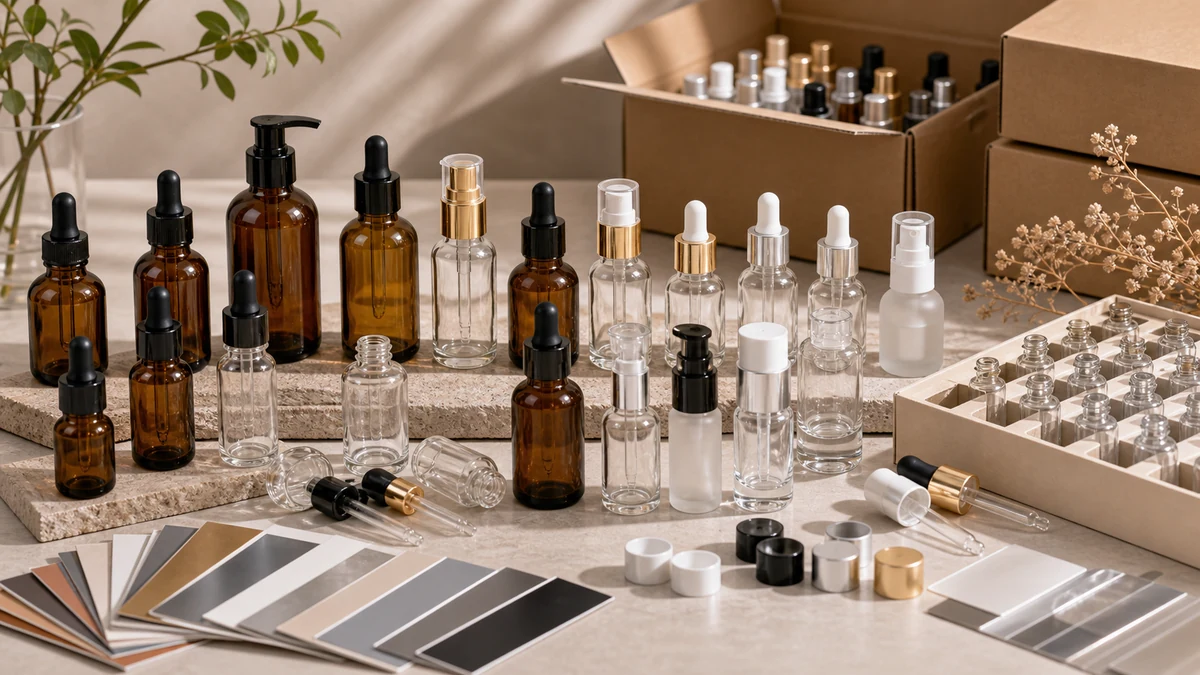
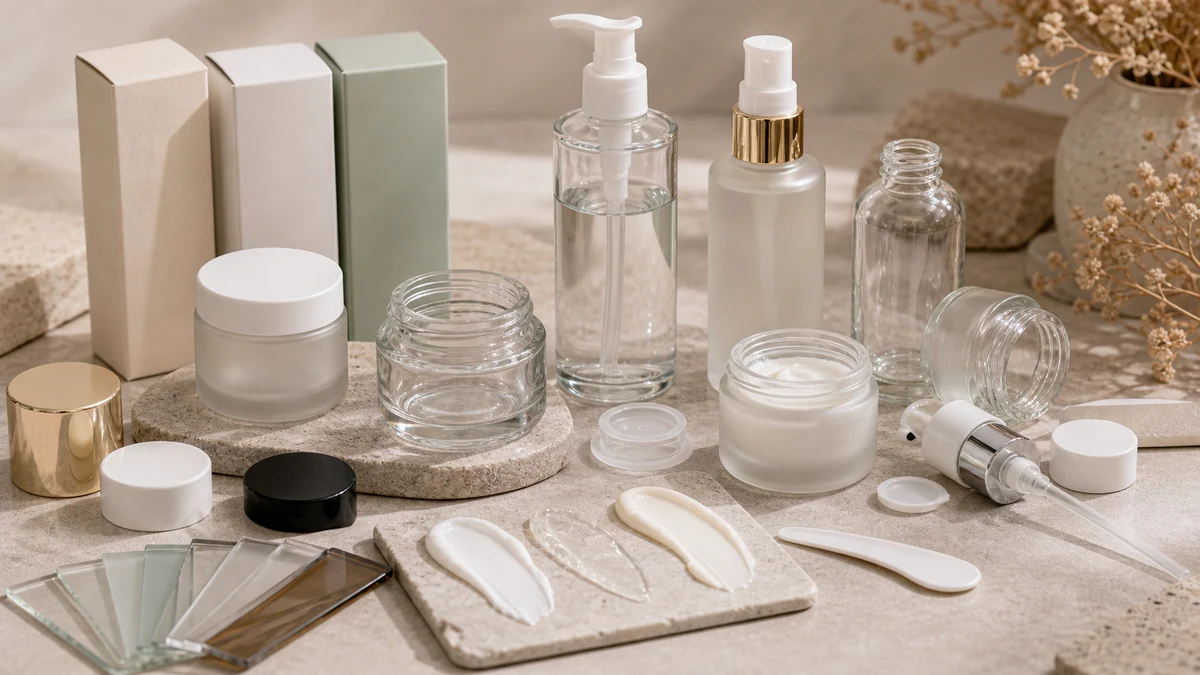
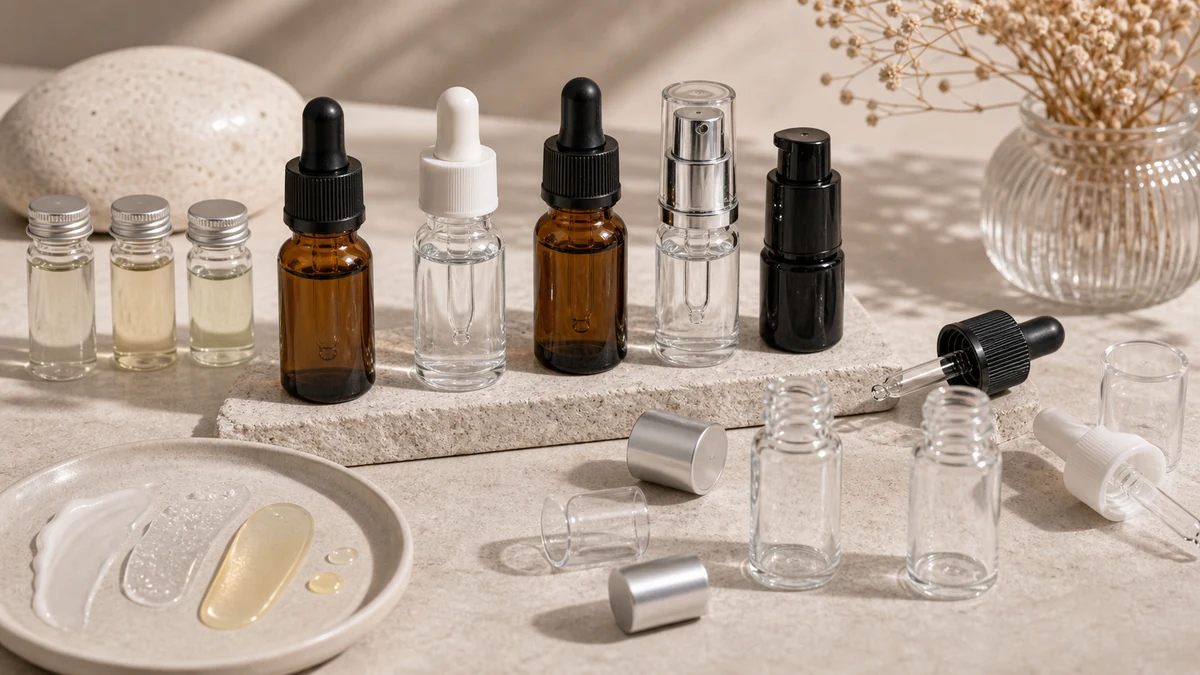
Glass packaging material for cosmetics is usually soda-lime glass made mainly from silica sand, soda ash, limestone, and cullet, which is recycled glass. For beauty buyers, the material matters because it affects weight, breakage risk, color, decoration, closure fit, recyclability claims, and shipment protection. Glass can be a strong fit for serums, oils, creams, masks, fragrance-adjacent products, and premium skincare, but it should be chosen with the formula, dispensing method, carton protection, and claim wording in mind.
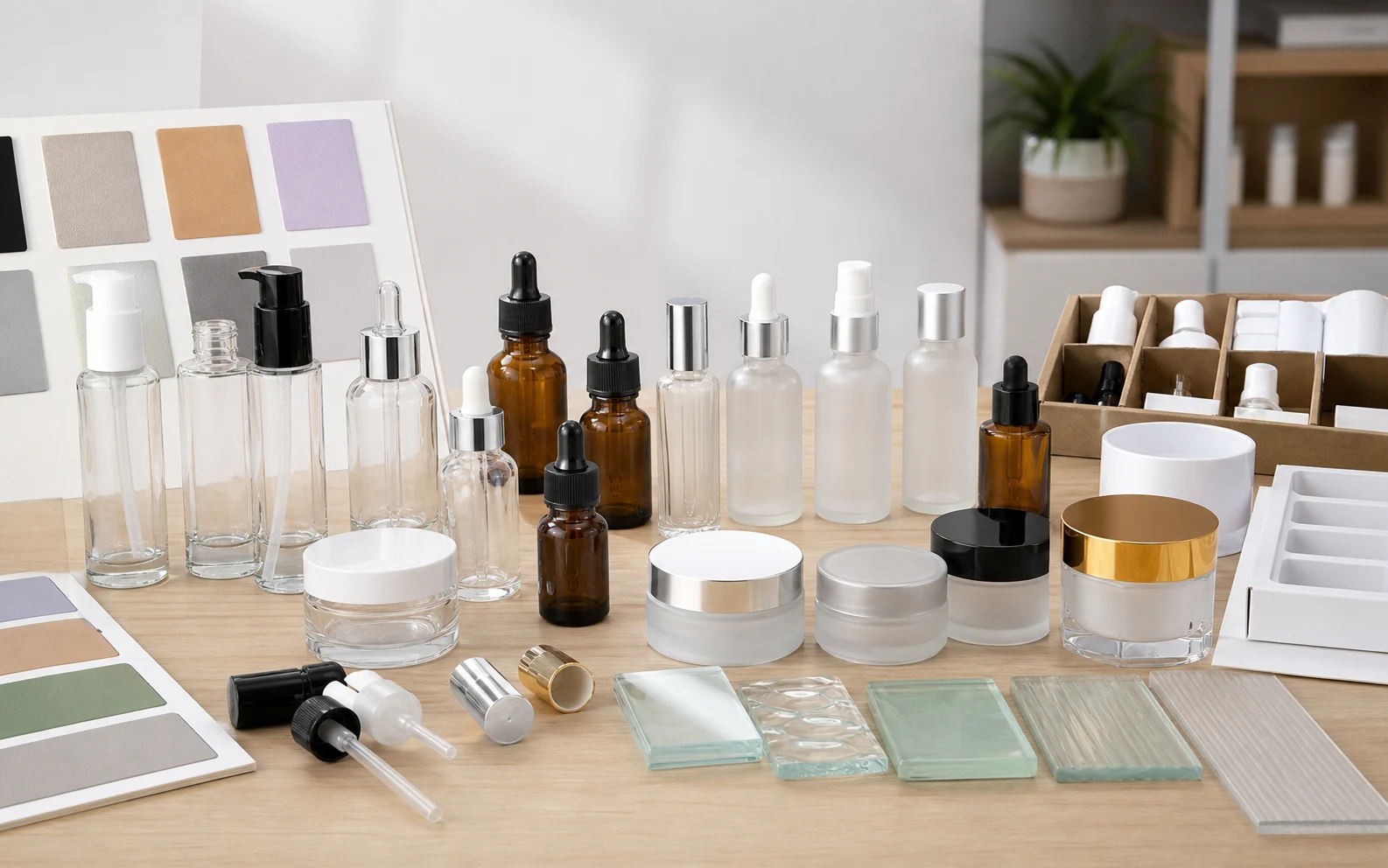
Glass packaging should be reviewed as a full package system: bottle or jar, closure, liner, dropper, pump, decoration, carton, and filled-product testing.
Source note for buyers
This guide uses research checked in May 2026. It explains glass packaging from a cosmetic packaging buyer's point of view, not as a glassmaking history lesson or a legal claim review. Any exact recyclability, recycled-content, refillable, or environmental claim should match the final package, decoration, market, and supporting documents.
| Source | What it supports | Buyer takeaway |
| Glass Packaging Institute: What is glass | Container glass is commonly soda-lime glass made from raw materials such as sand, soda ash, limestone, and cullet. | Use glass composition as background; do not turn it into an unsupported product claim. |
| Glass Packaging Institute: Facts about glass | Cullet is recycled glass, glass color can affect recycling, and glass is described at the material level as recyclable. | Useful background, but cosmetic package claims still need local and package-level qualification. |
| EPA Glass: Material-Specific Data | EPA tracks glass containers and glass recycling in U.S. municipal solid waste data, including bottles and jars for cosmetics. | National recycling data is useful context, not proof for a specific cosmetic package. |
| EPA: How do I recycle common recyclables | EPA notes that local programs may differ and gives glass recycling handling guidance. | Check local acceptance, caps, residue, and decoration before making consumer-facing claims. |
| FTC Environmental Claims: Summary of the Green Guides | Environmental claims should be qualified and supported. | Avoid broad claims such as "green," "eco-friendly," or "100% recyclable" unless supported for the exact package. |
What glass packaging material is made from
Most cosmetic glass bottles and jars are made from soda-lime glass. The main raw material is silica, usually from sand. Soda ash helps lower the melting temperature. Limestone and other oxides help the finished glass keep durability and water resistance. Cullet, or recycled glass, can be added to the batch when the supply is available and clean enough for production.
For buyers, the exact chemistry is less important than the practical result. Glass is rigid, transparent or colorable, relatively inert, heat-resistant enough for many filling and decoration processes, and able to hold a premium finish. It is also heavier and more breakable than most plastic packaging, so the material decision affects freight, secondary packaging, drop testing, and the buyer's damage allowance.
Instead of treating glass as a history or manufacturing topic, buyers usually need a simpler sourcing question: which glass format, color, finish, closure, and protection plan fits the product?
For broader format browsing after the material question is clear, use glass packaging materials as the starting point.
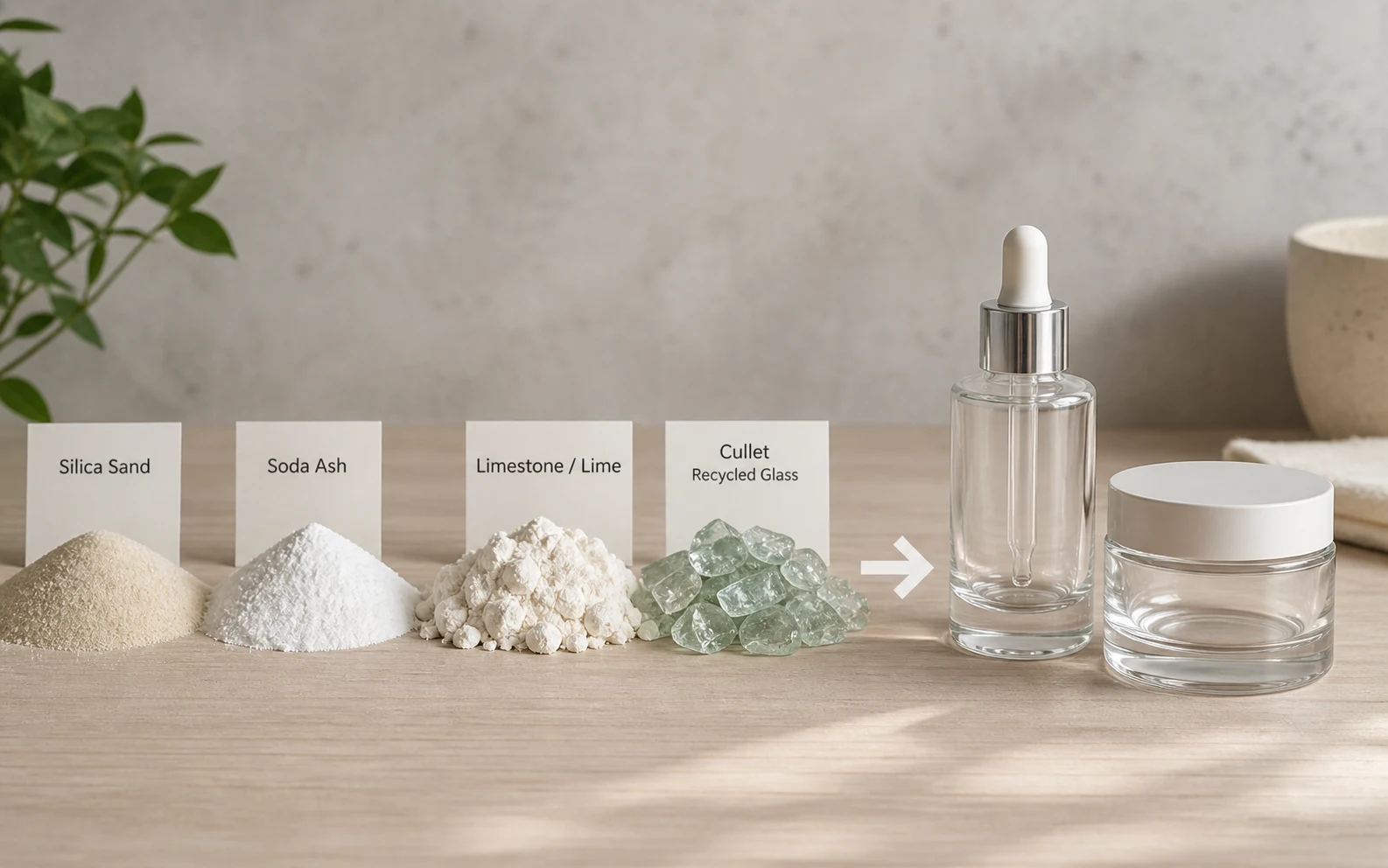
Common container glass starts with material inputs such as silica sand, soda ash, limestone or lime, and cullet before it becomes cosmetic bottles and jars.
| Material input | Plain-English role | Buyer note |
| Silica / sand | Main glass former. | Useful for explaining material basics, not a package performance claim. |
| Soda ash | Helps the glass batch melt at a lower temperature. | Part of common soda-lime glass background. |
| Limestone / lime | Helps stabilize the finished glass. | Keep this as general glass material education. |
| Cullet | Recycled glass added to the batch when suitable material is available. | Use recycled-content language only when supplier documents support it for the final package. |
Why cosmetic brands use glass packaging
Glass is chosen when the package needs to feel substantial, show product color, support a premium position, or avoid some plastic-contact concerns. It is common in serums, face oils, eye treatments, creams, masks, balms, fragrance-adjacent products, and prestige skincare sets.
| Buyer goal | Why glass can help | What still needs checking |
| Premium feel | Glass has weight, clarity, and shelf presence. | More weight can raise freight cost and breakage risk. |
| Product visibility | Clear glass shows color, texture, and fill level. | Some formulas need light protection instead of full visibility. |
| Formula compatibility | Glass is often used for oils, fragrances, and active-heavy skincare. | The closure, liner, dropper, pump, seal, and decoration still need compatibility review. |
| Color or light control | Amber, frosted, opal, or coated glass can reduce visibility or change the brand look. | Color and coatings may affect MOQ, lead time, cost, and recycling claims. |
| Decoration quality | Glass can support screen printing, hot stamping, labels, frosting, coating, and embossing. | Decoration should be tested for adhesion, abrasion, alignment, and claim risk. |
| Recyclability story | Glass as a material has strong recyclability potential. | Local collection, coatings, caps, droppers, pumps, residue, and small format size can change the package-level claim. |
Formula protection and shelf-life claims
Glass can support formula protection because it is nonporous, rigid, and often low-interaction compared with some packaging materials. That does not mean a glass bottle or jar automatically extends shelf life. Shelf life depends on the formula, preservative system, light exposure, oxygen exposure, headspace, closure, liner, pump or dropper parts, filling process, and storage conditions.
For sensitive skincare, the right question is not only "Should this be glass?" It is "Which glass color, closure system, liner, carton, and test plan fit this formula?"
| Formula concern | Glass packaging decision | What to verify before approval |
| Light-sensitive actives | Amber, coated, opal, frosted, or secondary carton protection may be considered. | Confirm whether the selected package protects the real formula under expected storage conditions. |
| Oils, fragrance, or alcohol | Glass may be a good container candidate. | Test the formula with the cap, dropper bulb, liner, gasket, pump, label, and decoration. |
| Thick creams or masks | A glass jar may fit better than a narrow-neck bottle. | Review hygiene, spatula need, liner, seal disc, lid torque, and filled weight. |
| Dropper or pump dosing | Glass bottle shape and neck finish must match the closure. | Check output, priming, pipette length, leakage, and compatibility with the formula. |
Glass bottles vs glass jars
The first sourcing decision is not "glass or plastic." It is usually "which glass format fits the formula and the user experience?"
| Format | Common cosmetic use | Buyer checks |
| Glass dropper bottle | Serums, oils, facial treatments, liquid actives, fragrance-adjacent formulas. | Neck finish, pipette length, bulb material, dosage, wiper fit if used, leakage, light exposure, and carton protection. |
| Glass pump bottle | Toners, lotions, treatments, lightweight emulsions, premium body care. | Pump output, dip tube length, actuator feel, lockable pump need, priming, formula viscosity, and closure compatibility. |
| Glass spray or mist bottle | Facial mist, setting spray, fragrance-adjacent products, hair or body mist. | Spray pattern, pump output, dip tube, cap fit, alcohol compatibility, leakage, and shipping orientation. |
| Glass jar | Creams, balms, masks, scrubs, solid or semi-solid skincare. | Wide-mouth access, lid material, liner, seal disc, spatula need, inner cap, product hygiene, and filled weight. |
| Small vial or ampoule | Samples, concentrates, single-use or travel-size formats. | Filling equipment, breakage, sharp-edge handling, secondary packaging, and recycling practicality. |
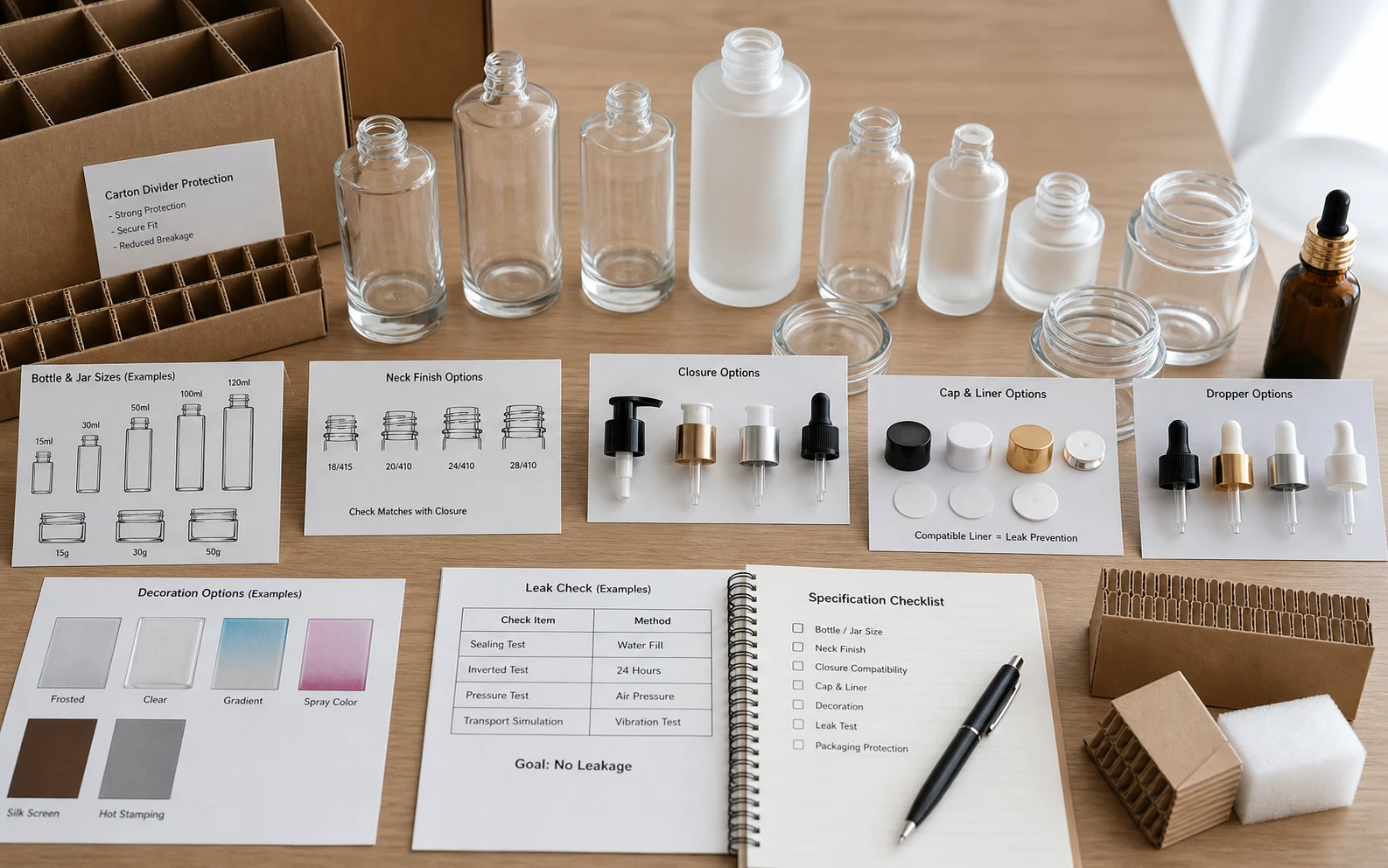
Glass bottle and jar sourcing should compare capacity, neck finish, closure fit, pump or dropper options, decoration proof, leak checks, and carton protection before production approval.
For a product line that includes both serums and creams, it may be better to use glass bottles for liquid formulas and glass jars for thicker formulas. For a travel line, a lighter plastic or airless route may be more practical. The right answer depends on the product, channel, carton, and testing plan.
Color, finish, and decoration choices
Glass packaging can look simple in a catalog, but the decoration route changes cost, production control, and claim wording.
| Choice | Typical use | Risk to check |
| Clear glass | Shows formula color and fill level. | Light-sensitive formulas may need secondary protection or another glass color. |
| Amber glass | Often used for oils or formulas where reduced light exposure is desired. | The bottle still needs formula testing; amber color alone is not a shelf-life guarantee. |
| Frosted glass | Gives a soft matte finish for skincare and personal care packaging. | Frosting can affect decoration behavior and may complicate recycling claims. |
| Coated or sprayed glass | Adds custom color, opacity, or premium finish. | Coatings need adhesion, rub, scratch, and recyclability review. |
| Screen printing | Direct logo and text decoration. | Ink adhesion, registration, rub resistance, and color match must be proofed. |
| Hot stamping | Metallic effect for premium branding. | Foil placement, abrasion, and surface compatibility need sample approval. |
| Label | Flexible for small runs and multi-language copy. | Label stock, adhesive, oil resistance, and curved-surface fit need testing. |
| Embossing or molded details | Permanent brand detail or texture. | Requires mold planning; changes after tooling are slow and costly. |
For custom cosmetic packaging options, decoration should be reviewed with artwork, bottle or jar finish, fill process, and carton handling. A beautiful glass package is not ready for production until the decoration survives filling, transport, shelf handling, and use.
Cost, MOQ, and lead time depend on the route
Glass packaging can cost more than some plastic routes after freight, decoration, secondary packaging, and breakage protection are included. The unit price is only one part of the decision. A stock clear bottle with a standard cap is a different project from custom-colored glass, a private mold, a decorated jar set, or a package that needs multiple closures and carton inserts.
Exact MOQ and lead time depend on the project route. Use these as planning variables:
| Project route | What usually changes | Buyer question |
| Stock glass bottle or jar | Lower complexity when the size, color, neck finish, and closure already exist. | Is the exact bottle or jar available with the right closure and sample quantity? |
| Stock mold with decoration | Decoration setup, proofing, color match, label fit, and carton abrasion checks add time. | What artwork files, proof samples, and approval steps are needed before production? |
| Custom color, frosting, coating, or hot stamping | Finish development, adhesion checks, rub tests, and claim review may add complexity. | Can JPS Packaging confirm sample timing, finish tolerance, and decoration durability before bulk order? |
| Private mold or special component set | Tooling, validation, repeat volume, closure compatibility, and carton protection become central. | Is the expected order volume and timeline realistic for a custom route? |
If a buyer needs pricing, the useful brief includes formula type, fill volume, target capacity, glass color, neck finish, closure preference, decoration target, artwork status, sample deadline, destination market, and any sustainability wording the brand wants to use.
Weight, breakage, and shipping protection
Glass usually feels more premium because it has weight. That same weight can increase freight cost, carton strength requirements, and damage risk. Brands selling through ecommerce or shipping sample kits should review breakage more carefully than brands selling only through controlled retail channels.
Useful checks include:
Filled weight and finished pack weight.
Drop test and vibration test expectations.
Inner tray, divider, sleeve, or carton requirements.
Cap or pump protection during transport.
Whether glass-on-glass contact is possible in a set box.
Label or decoration abrasion after carton movement.
Replacement policy or acceptable defect level for broken units.
If the launch has tight margins or direct-to-consumer shipping, ask for packaging samples early. A glass jar that looks right on a studio table may need a stronger carton, inner tray, or shipper to work in real distribution.
Recyclability and environmental claims
Glass is often described as recyclable, and glass containers can be recycled repeatedly as a material. For packaging copy, that is only the starting point. EPA's U.S. data shows glass recycling varies in practice, and EPA recycling guidance repeatedly points readers back to local program rules. A cosmetic package also includes caps, droppers, pumps, labels, coatings, and product residue.
Local recycling rules can also conflict. One local program may ask consumers to remove metal caps, while another may ask for caps and lids to stay on. That is why brands should avoid universal disposal instructions for every U.S. buyer. Package copy should be checked against the selling market and the final package.
Before using a glass recyclability claim, check:
Whether the selling market commonly accepts that type and size of glass container.
Whether the cap, dropper, pump, collar, or liner should be separated.
Whether frosting, coating, metallization, label coverage, or adhesive changes the claim.
Whether product residue can be rinsed or removed.
Whether the glass is too small for typical sorting equipment.
Whether carton, website, retailer page, and on-pack wording all say the same thing.
Avoid broad wording such as "eco-friendly glass packaging" or "100% recyclable everywhere." Safer wording is usually more specific, such as "glass bottle with local recyclability depending on decoration, closure, residue, and municipal program rules." The final claim should be reviewed against FTC guidance and the brand's own supporting documents.
Supplier checklist before ordering glass bottles or jars
Use this checklist before approving samples, artwork, or production.
| Review area | Questions to ask | Why it matters |
| Formula fit | Is the formula oil-based, alcohol-based, fragranced, active-heavy, high-viscosity, or light-sensitive? | Formula behavior affects glass color, closure, liner, pump, dropper, and testing. |
| Format | Should the product use a bottle, jar, pump bottle, dropper bottle, mist bottle, vial, or set? | Format controls filling, dispensing, hygiene, and user experience. |
| Capacity and neck finish | What size, thread, opening, and closure finish are required? | A good bottle body can still fail if the neck finish does not fit the selected closure. |
| Closure system | Which pump, cap, dropper, liner, seal disc, spatula, or overcap is needed? | Glass packaging works as an assembly, not as the container alone. |
| Decoration | Will the package use screen print, hot stamp, label, coating, frosting, or embossing? | Decoration changes cost, lead time, appearance, durability, and claim risk. |
| Quality checks | What sample checks are required before approval? | Leak, rub, drop, fill, cap torque, and carton checks reduce production surprises. |
| MOQ and timeline | Is the route stock glass, stock mold with decoration, custom color, or private mold? | MOQ and lead time can change sharply by route. |
| Sustainability claim | What claim can be supported for the exact final package? | Prevents unsupported recyclable, recycled-content, refillable, or "green" claims. |
When a project is ready, send formula, bottle or jar format, artwork status, and sample deadline to the JPS Packaging team. JPS Packaging can review glass bottles, glass jars for creams and balms, glass bottles for serums and oils, decoration options, and sample requirements before the brand locks the packaging brief.
FAQ
What is glass packaging material made from?
Most cosmetic glass packaging is soda-lime glass made from silica sand, soda ash, limestone, and cullet, which is recycled glass. Minor ingredients can adjust color, clarity, melting behavior, and other production properties.
Is glass good for cosmetic packaging?
Glass can be a good fit for serums, oils, creams, balms, masks, fragrance-adjacent products, and premium skincare. It offers clarity, weight, decoration options, and strong material-level recyclability potential. It still needs formula, closure, breakage, shipping, and claim review.
Is glass better than plastic for skincare packaging?
Not always. Glass can feel premium and work well for some formulas, but it is heavier and more fragile. Plastic can be lighter, squeezable, shatter-resistant, and better for travel or ecommerce. The better choice depends on formula, channel, dispensing, cost, decoration, and claim support.
Are glass cosmetic bottles recyclable?
Glass cosmetic bottles may be recyclable, but the package should be checked as a complete system. Local programs, small sizes, coatings, labels, caps, droppers, pumps, and residue can affect the practical claim. Check local rules and avoid unqualified claims.
What glass color is best for skincare formulas?
Clear glass works when product visibility matters and light exposure is not a concern. Amber or darker glass may be preferred for formulas where reduced light exposure is part of the packaging brief. Frosted, coated, or opal finishes are usually brand and finish choices, but they still need compatibility and claim review.
Does glass packaging affect shelf life?
Glass can support shelf-life goals because it is nonporous and can be paired with clear, amber, frosted, coated, or carton-protected formats. It does not prove shelf life by itself. The formula, closure, liner, pump or dropper, headspace, filling process, storage condition, and finished-package test results matter.
Is glass packaging more expensive than plastic?
Often, but not always. Glass can add cost through weight, freight, breakage protection, carton inserts, decoration, and handling. Some stock glass routes may still be practical for premium skincare. Compare the full packed product, not only the empty container price.
What is the MOQ or lead time for glass cosmetic packaging?
As a general industry planning range, stock glass bottles or jars may start around 5,000 to 10,000 pieces when the container, closure, and color are already available. Decorated stock packaging often moves into the 10,000 to 30,000 piece range, while custom color, custom finish, or private mold projects can require higher MOQs. Lead time is often a few weeks for available stock, about 3 to 6 weeks for stock items with decoration after artwork approval, and 8 to 12 weeks or longer for private mold or complex custom work. Actual MOQ and timing still depend on bottle or jar format, closure, decoration, sample approval, factory schedule, and destination market.
What should buyers check before ordering glass bottles or jars?
Check formula compatibility, bottle or jar format, capacity, neck finish, closure fit, decoration method, filled weight, breakage protection, carton design, sample testing, MOQ, lead time, and any environmental claim the brand wants to make.