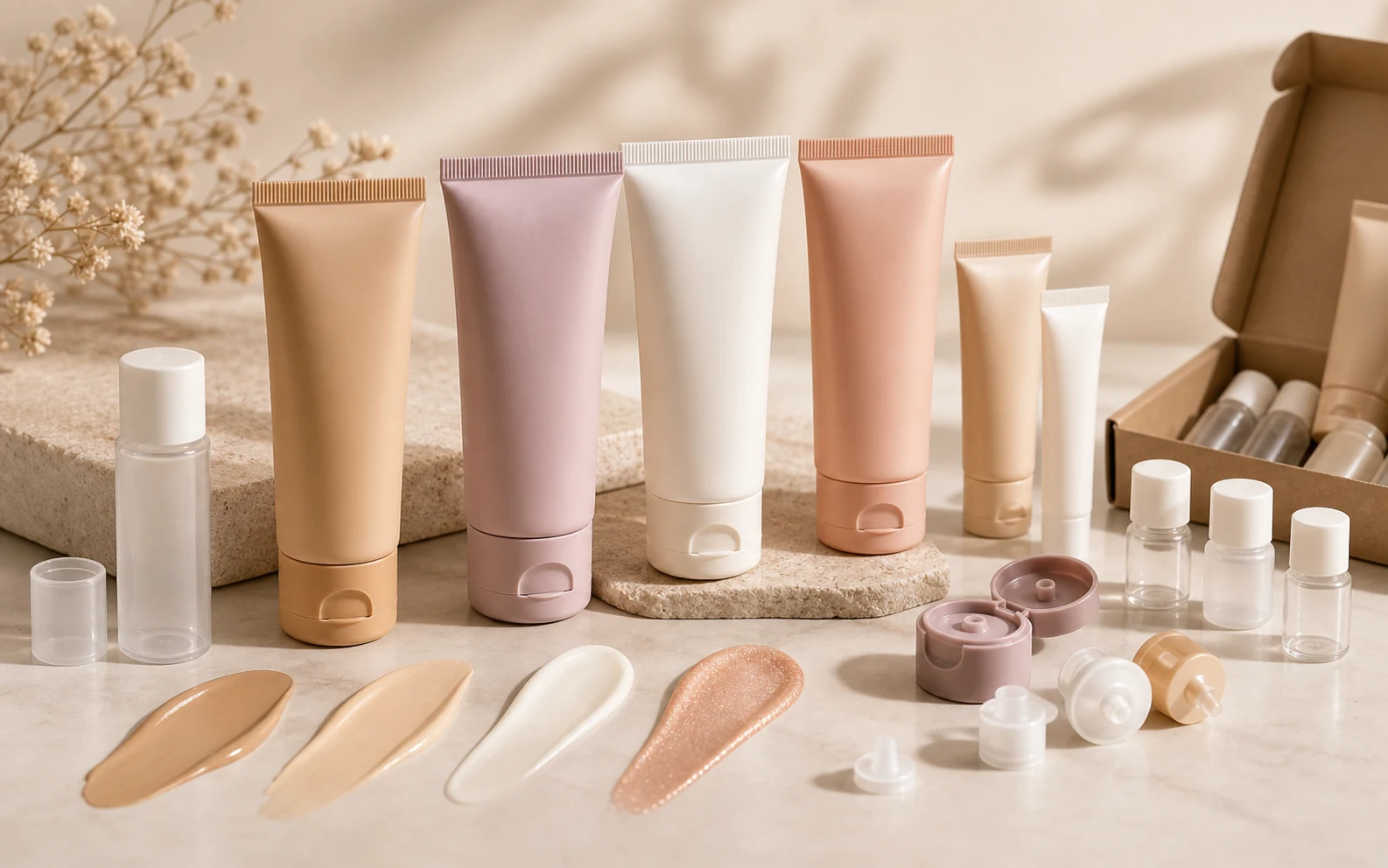
Tottle Packaging is not a single container choice; it is the container, closure, fit, decoration and carton plan working as one approved pack.
For sunscreen, primer, cleanser, lotion, squeeze recovery, shoulder fit, cap hinge, orifice size and leakage checks matter more than the tube shape alone.
The definition matters because each visible part has an approval point: flip cap, disc-top cap, screw cap, finish, label or carton.
A useful definition of tottle packaging should explain the parts, the applications and the checks needed before the package becomes production-ready.
What Tottle Packaging Includes
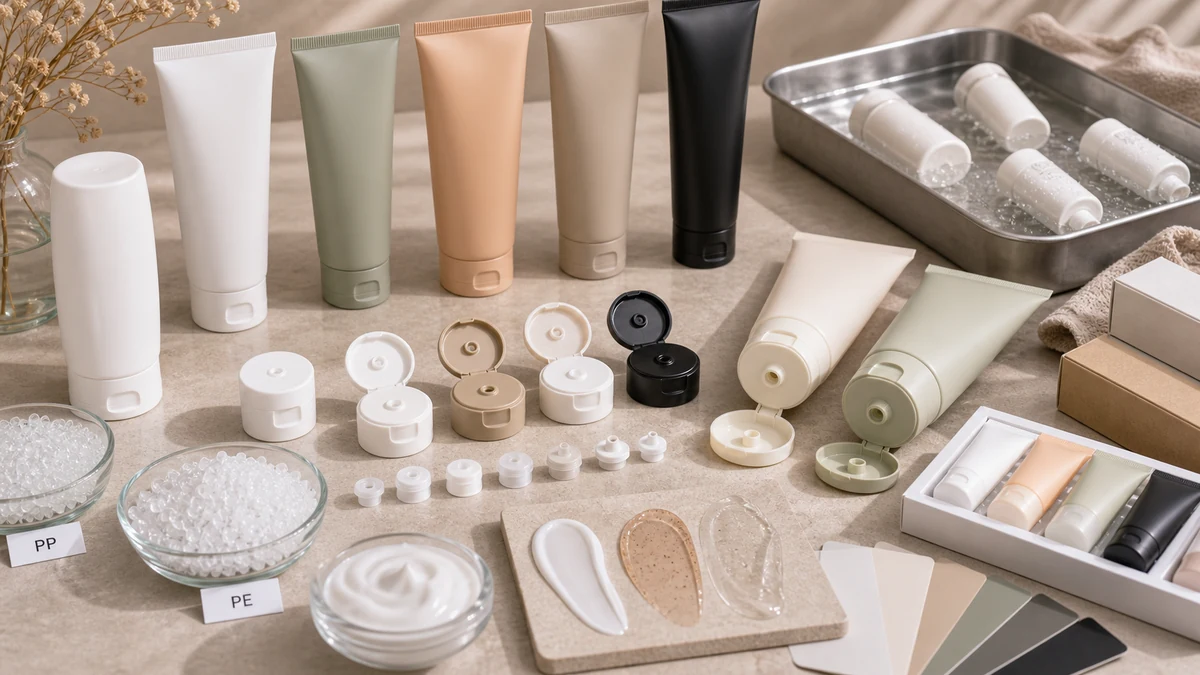
| Part | Function | Approval check |
| Main container | Holds the formula and defines the main format. | Confirm material, capacity, formula contact and decoration route. |
| Closure or mechanism | Controls dispensing, sealing or movement through flip cap, disc-top cap, screw cap. | Check fit and repeated handling with real samples. |
| Decoration | Carries color, label, print, coating, metal effect or carton design. | Check color tolerance, rub and packed-carton handling. |
| Export packing | Protects the finished pack during storage and shipment. | Review carton, divider, label and shipping assumptions before production. |
Application and Formula Fit
| Use case | Packaging direction | Sample check |
| sunscreen | Use a stable cap, comfortable grip and heat-aware formula test. | Check warm storage, cap retention and decoration rub. |
| primer | Choose material and closure by formula viscosity, filling route and user handling. | Check filled sample, closure operation and packed carton fit. |
| cleanser | Choose material and closure by formula viscosity, filling route and user handling. | Check filled sample, closure operation and packed carton fit. |
| lotion | Choose material and closure by formula viscosity, filling route and user handling. | Check filled sample, closure operation and packed carton fit. |
| travel product | Choose material and closure by formula viscosity, filling route and user handling. | Check filled sample, closure operation and packed carton fit. |
MOQ and Lead Time Planning Range
For What Is a Tottle for Skincare? Materials, Caps and Use Cases, JPS can use the following early quotation ranges for tottle packaging. The final quantity for What Is a Tottle for Skincare? Materials, Caps and Use Cases should be confirmed after checking mold availability, finish route, component stock, artwork status and SKU count.
| Route | Planning range | When it makes sense |
| Stock tottle or tube structure | 3,000-5,000 pcs | Useful for sunscreen, primer, cleanser, lotion or travel-size testing. |
| Custom color, print or cap bundle | 5,000-10,000 pcs | Best when the structure is approved and the brand needs decoration. |
| Private mold, special shoulder or cap change | 10,000-30,000+ pcs | Needed when squeeze feel, shape or dispensing route is custom. |
| Step | Typical planning time |
| Stock dry samples | 3-7 working days |
| Decoration or color proof | 7-15 working days |
| Bulk production after approval | 25-45 working days |
| Private mold route | 45-90+ working days |
Sample Approval Criteria Before Bulk Production
For What Is a Tottle for Skincare? Materials, Caps and Use Cases, a good-looking dry sample is only the first check. The buyer should approve the filled pack, component fit, decoration proof and packing method before releasing tottle packaging for bulk production.
| Check | Pass signal |
| Squeeze recovery | Check body softness and recovery with the real formula after repeated use. |
| Cap and orifice fit | Approve flip cap, disc-top cap, reducer and orifice size with the formula viscosity. |
| Leak and residue check | Test cap-down storage, pocket use and carton packing for leakage or residue. |
| Decoration durability | Approve print, label, soft-touch or coating after squeeze and rub checks. |
Common Failure Points to Catch Early
| Failure point | What it looks like |
| Wrong squeeze feel | The body is too stiff for thick formula or too soft for shelf presentation. |
| Cap residue | Formula collects around the orifice or inside the cap. |
| Leakage cap-down | The pack leaks when stored upside down or shipped under pressure. |
| Label wrinkling | Decoration looks good flat but fails after squeezing. |
Specification Details
Before comparing unit price, the purchase order should identify the parts that affect function, decoration and shipment. That makes supplier quotes easier to compare because every quote is tied to the same component set.
| Specification item | What to define | Why it matters |
| Formula and fill volume | sunscreen, primer, cleanser, lotion or sample pack; 15 ml to 150 ml range | Confirms body softness and orifice size. |
| Tottle system | body, shoulder, flip cap, disc-top cap, reducer and orifice | Controls squeeze feel and dispensing behavior. |
| Decoration | label, screen print, soft-touch, color match or carton | Checks whether decoration survives squeezing. |
| Packing | cap-down storage, carton protection and shipment route | Catches leakage and residue before launch. |
Quote Review Points
| Quote line | What to check | Reason to check it |
| Quantity route | Confirm whether What Is a Tottle for Skincare? Materials, Caps and Use Cases uses stock parts, decorated parts or tooling parts. | Each route changes MOQ, unit cost and approval time. |
| Included components | Check whether the quote includes every tottle packaging part, matched closure, insert, carton and decoration proof. | A low unit price for What Is a Tottle for Skincare? Materials, Caps and Use Cases is not useful if key parts are quoted later. |
| Sample revisions | Ask how many What Is a Tottle for Skincare? Materials, Caps and Use Cases sample revisions are included before extra proof charges apply. | Sample changes for What Is a Tottle for Skincare? Materials, Caps and Use Cases often decide whether the launch calendar stays realistic. |
| Packing and shipment | Confirm carton count, inner packing and shipping assumptions for What Is a Tottle for Skincare? Materials, Caps and Use Cases. | Packing method changes landed cost and visible defect risk. |
When to Change Route
Not every brief should stay on the first quoted route. For What Is a Tottle for Skincare? Materials, Caps and Use Cases, the buyer should change route when the formula, finish, MOQ or calendar no longer fits the selected component family. This avoids forcing a stock component to behave like a custom mold for What Is a Tottle for Skincare? Materials, Caps and Use Cases, or paying for tooling before the product-market test is clear.
| Signal | Better route | Reason |
| Several shade or SKU tests are still uncertain | Start with available stock components and simple decoration | Keeps What Is a Tottle for Skincare? Materials, Caps and Use Cases flexible while the brand tests demand. |
| The formula fails filled-sample checks | Change material, closure, liner, wiper, mechanism or coating before artwork approval | Fixing function after artwork approval delays What Is a Tottle for Skincare? Materials, Caps and Use Cases and creates avoidable cost. |
| The pack shape is central to brand identity | Move to private mold only after forecast, tooling budget and pilot sample approval are clear | Custom tooling for What Is a Tottle for Skincare? Materials, Caps and Use Cases should be tied to repeat-order expectations. |
For a faster review of What Is a Tottle for Skincare? Materials, Caps and Use Cases, separate must-have requirements from optional finish ideas. Must-have items for What Is a Tottle for Skincare? Materials, Caps and Use Cases should cover formula compatibility, component fit, MOQ, lead time and shipment protection; optional finish ideas can wait until the first sample route is technically workable.
Approval Record
Keep a short approval record
| Record item | Keep in the file | Decision value |
| Approved component sample | tottle packaging sample for What Is a Tottle for Skincare? Materials, Caps and Use Cases, labeled with version, date and supplier reference | Prevents similar samples being mixed after revisions. |
| Filled sample notes | Formula, fill weight, storage condition and pass/fail observations for What Is a Tottle for Skincare? Materials, Caps and Use Cases | Shows why the selected pack works for the real product. |
| Decoration proof | Color standard, artwork proof, print position and rub check notes for What Is a Tottle for Skincare? Materials, Caps and Use Cases | Reduces disputes between proof and bulk production. |
| Packing sample | Inner packing, carton count, carton mark and shipment assumption for What Is a Tottle for Skincare? Materials, Caps and Use Cases | Connects appearance approval with delivery risk. |
Reference Standards Buyers Can Use
For What Is a Tottle for Skincare? Materials, Caps and Use Cases, transport and carton approval can reference ASTM D4169 or ISTA test procedures when the shipping route needs a formal distribution test. For filling and handling controls related to What Is a Tottle for Skincare? Materials, Caps and Use Cases, ISO 22716 gives the buyer a GMP reference point. These references do not replace the buyer's own What Is a Tottle for Skincare? Materials, Caps and Use Cases specification; they give the purchasing team clearer language for supplier approval.
Example RFQ Brief
The example below shows how a tottle packaging request becomes quotation-ready. It is a planning scenario for What Is a Tottle for Skincare? Materials, Caps and Use Cases, not a guarantee for every material, finish or market.
| Brief item | Example detail |
| Product | 50 ml sunscreen, primer or cleanser tottle |
| Recommended route | Existing PE/PP tottle with tested flip cap and simple decoration |
| Planning quantity | 3,000-5,000 pcs for stock route; 5,000-10,000 pcs for custom print or cap |
| Approval samples | Filled squeeze sample, cap/orifice test, decoration proof and carton sample |
Send formula viscosity, target size, cap style, squeeze feel preference, artwork, MOQ and shipment route so JPS can test the tottle before production.
MOQ, Lead Time and Quote Brief
For understanding tottle packaging, send product type, formula notes, fill weight, target material, preferred component, finish reference, artwork, SKU count, MOQ target, sample deadline, production deadline and destination market.