Caps and closures control more than how a cosmetic package opens. They affect dispensing, leakage risk, label space, shelf presentation, carton protection and how easily a brand team can approve samples before production. For skincare, makeup and personal care packaging, the right closure starts with the formula, the container neck or tube finish, the way the consumer will use the product, and the tests the supplier can run on filled samples.
This guide is for packaging teams comparing closures for bottles, tubes, jars and small personal care formats. It focuses on cosmetic packaging, not food canning lids, beverage caps or industrial closures.
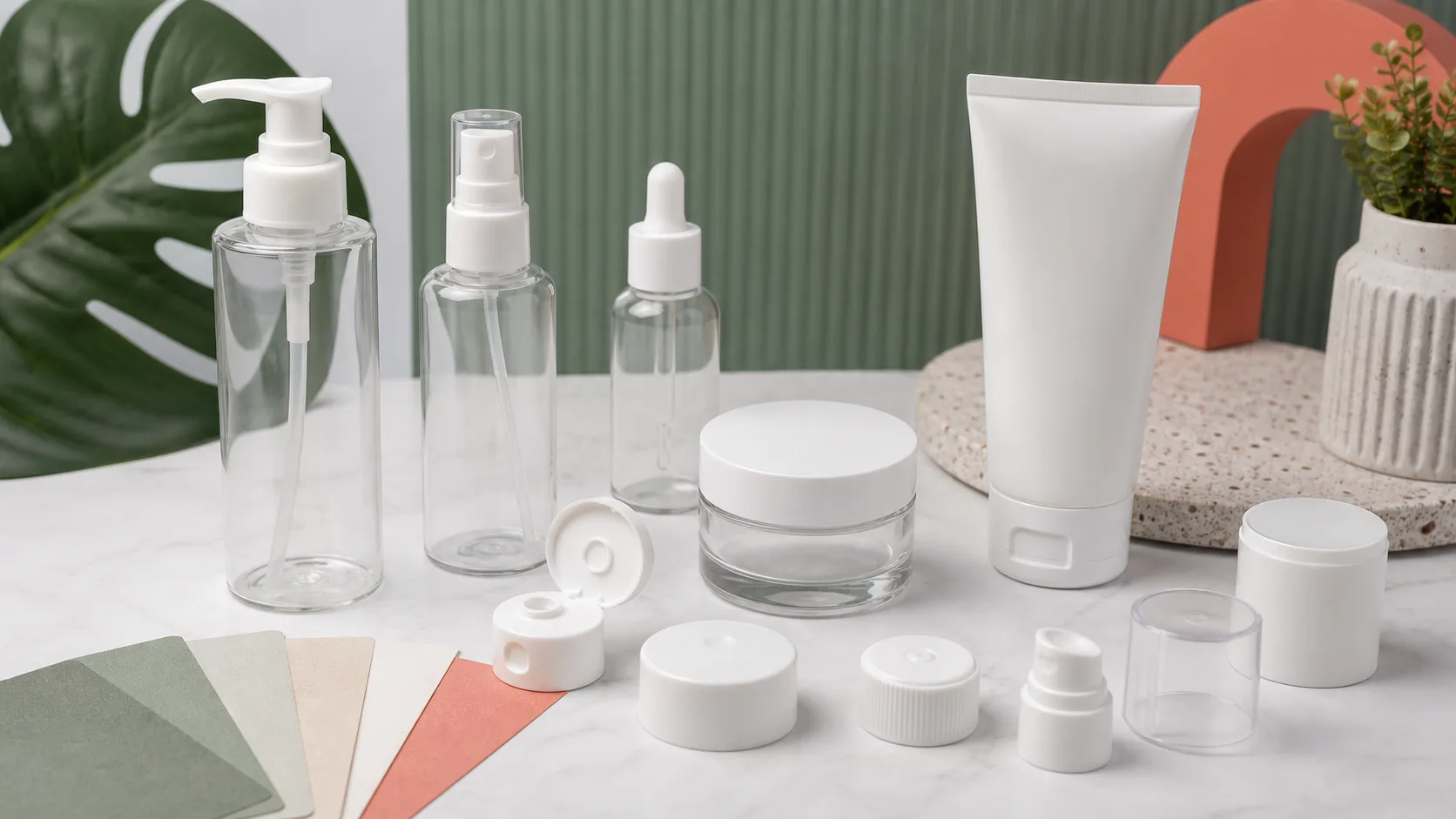
Caps and closures should be reviewed with the package format, formula route, and sample approval plan.
Quick Answer: Match the Closure to the Formula and Use Case
| Package situation | Closure or component to consider | Fit checks before approval |
| Shampoo, lotion or body care in a squeezable bottle | Flip-top cap, disc-top cap or lotion pump | Neck finish, viscosity, one-hand use, leakage after squeezing, overcap or carton fit |
| Toner, mist or lightweight liquid | Fine mist sprayer or treatment pump | Spray pattern, dip tube length, actuator feel, cap protection, leakage in transit |
| Serum or oil | Dropper, treatment pump or small orifice reducer | Dosage control, formula compatibility, glass/plastic bottle fit, wiping and closure seal |
| Cream, balm or mask jar | Screw cap, inner liner, seal disc or airless jar route | Liner fit, torque feel, product protection, decoration space, filled-sample testing |
| Tube packaging for cleanser, hand cream or sunscreen | Flip-top cap, screw cap or nozzle cap | Tube shoulder fit, orifice size, standing stability, cap hinge strength, decoration alignment |
| Travel or sample packaging | Small screw cap, snap cap, plug or compatible mini pump | Leakage, user opening force, carton fit, sample quantity, label area |
If the package will be carried in a bag, shipped through ecommerce, used around water or squeezed repeatedly, do not approve the cap from an empty component alone. Ask for filled samples and check how the closure behaves after storage, shaking, squeezing, opening and reclosing.
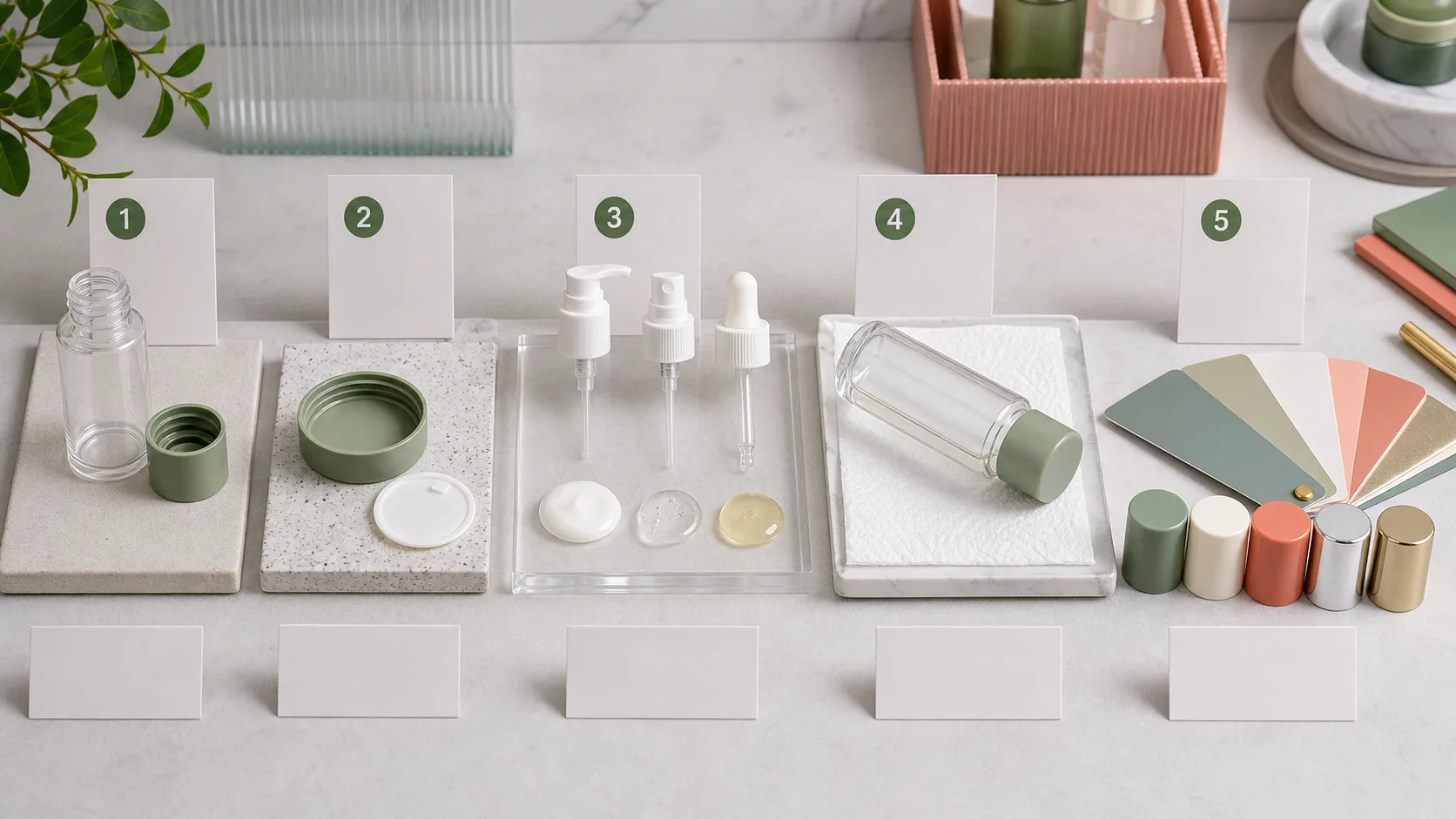
A closure check should include neck fit, liner route, dispensing style, leakage review, and decoration proof.
What Counts as a Cap or Closure in Cosmetic Packaging?
In cosmetic packaging, "caps and closures" can include simple screw caps, flip-top caps, disc-top caps, jar lids, overcaps, plugs, liners, reducers, droppers, pumps and sprayers. The word can be broad, so the practical question is not "Which cap looks best?" but "Which closure controls the formula, fits the container and survives the sales channel?"
For JPS Packaging projects, closures usually connect to cosmetic packaging closures and dispensers for bottles, tubes, jars, droppers, pumps, sprayers, beauty sticks and roll-on formats.
The closure should be selected with the container, not after it. A cap that looks correct on a sample table can still fail if the thread, liner, formula viscosity or carton allowance is wrong.
Start with the Product Format
Bottles
Bottle closures depend on how the formula leaves the package. A lightweight toner may need a fine mist sprayer. A lotion may need a pump or flip-top cap. A cleansing oil may need a closure route that limits mess around the shoulder and protects the label from residue.
For bottle projects, define the bottle material, capacity, fill volume, neck finish, formula viscosity, whether the bottle will be squeezed, the target dispensing style and the expected storage or shipping route.
If the team is still comparing bottle families, review plastic bottles for cosmetic packaging, fine mist pump bottles for toner spray or cosmetic droppers and pipettes.
Tubes and Tottles
Tubes need closures that fit the shoulder, orifice and product texture. A hand cream tube may use a flip-top cap for one-hand opening. A treatment product may use a smaller nozzle to control dosage. A tottle often needs a closure that supports inverted storage without making the package feel unstable.
The main checks are simple but easy to miss: does the cap close cleanly after formula gets near the opening, does the hinge feel firm after repeated opening, does the closure keep the package standing if the tube is displayed cap-down, and does the cap shape leave enough room for decoration, color matching or label layout?
For squeezable formats, review the closure with the tube body. A cap cannot rescue a tube that is too stiff for the formula, and a soft tube can expose a weak closure during squeeze testing.
Jars
Jar closures do less dispensing work, but they still affect product protection and user experience. Cream jars, balm jars and mask jars often need the right lid, liner or seal disc route so the package feels secure before first use and clean enough after repeated opening.
For jar projects, confirm cap thread and torque feel, liner or seal compatibility, whether the formula touches the lid during shipping, decoration on the cap or top surface, and carton or insert protection if the jar is glass or heavy-wall plastic.
A jar lid should be checked with the filled product, especially for thick formulas that can shift in transit.
Neck Finish, Thread Fit and Liner Fit
The neck finish is the interface between the container and the closure. It affects whether the cap can be applied, tightened and reopened consistently. Packaging teams do not need to memorize every thread specification, but they do need to give the supplier enough information to match the components.
Ask for the bottle or jar neck size, the matching closure size and thread style, whether the closure is supplier-matched or sourced separately, liner or plug requirements, and torque or application guidance if the project will be filled by a contract filler.
Liners and seals are not interchangeable decoration details. They can affect compression, formula contact, opening feel and leakage risk. If the formula contains oil, alcohol, fragrance or a high level of active ingredients, ask the supplier and filler to review liner compatibility before production.
Choosing Between Flip Caps, Disc Tops, Pumps, Sprayers and Droppers
| Closure route | Works well for | Watch-outs |
| Flip-top cap | Lotion, cleanser, sunscreen, body care and many tubes | Hinge strength, one-hand opening, cap-down stability, residue near opening |
| Disc-top cap | Shampoo, conditioner, body lotion, hand wash | Actuator feel, leakage after squeezing, label and carton clearance |
| Screw cap | Jars, samples, travel sizes, simple bottles | User convenience, liner choice, torque feel, slower dispensing |
| Fine mist sprayer | Toner, facial mist, lightweight liquids | Spray pattern, dip tube length, overcap fit, formula clogging risk |
| Lotion or treatment pump | Lotion, serum, gels and controlled-dose liquids | Output amount, lock type, bottle neck fit, priming, actuator protection |
| Dropper | Serums, oils and small-dose formulas | Bulb material, pipette length, dosage accuracy, compatibility with glass or plastic bottle |
| Orifice reducer or plug | Oils, thin liquids, travel/sample packs | Flow rate, user control, plug retention, cleaning after use |
Do not choose the closure only by appearance. A matte black cap, metallic shell or clear overcap may fit the brand direction, but the package still has to open, close, dispense and ship reliably.
Leakage and Filled-Sample Checks
No supplier should be expected to promise that one closure will prevent leakage across every formula and route. The safer approach is to test the selected closure with the actual formula or a close fill simulation.
Before approving caps and closures, request samples that let the team check closure fit on the final container, formula residue around the opening after normal use, leakage after shaking or side storage, cap security after repeated opening and closing, carton or ecommerce protection, and whether the cap scratches, loosens or changes appearance after handling.
For projects with pumps, sprayers or droppers, include priming, output and dispensing feel in the sample review. For tubes, test the closure after the tube has been squeezed several times.
Decoration and Brand Fit
Closures carry a lot of visual weight. Cap color, finish, material, height and shoulder alignment can make a standard bottle feel more premium or make a custom package look mismatched.
Common decoration choices include molded color, matte or glossy finish, frosted effects, metallic color effects, hot stamping or printed marks on suitable cap surfaces, color matching between cap and container, and matching overcaps for pumps, sprayers or droppers.
The practical issue is tolerance. Cap color, bottle color and label color may come from different materials or processes. Ask for color standards, physical samples and proof approval steps before production, especially when cap color is part of the brand system.
For custom decoration or color matching, use a project brief that includes package format, formula type, target fill volume, artwork status, desired finish and sample deadline. JPS Packaging can review those details through custom cosmetic packaging options or a direct project inquiry.
What to Send in an RFQ
A supplier can respond faster when the closure brief is specific. Instead of asking for "caps for cosmetic bottles," send the details that control component fit.
Package type: bottle, jar, tube, tottle, stick or roll-on.
Container material and capacity.
Selected or target neck finish.
Formula type and viscosity.
Desired dispensing style.
Cap or closure finish.
Decoration requirements.
Whether the project uses stock components, semi-custom decoration or a custom mold.
Sample quantity and sample deadline.
Filling route if known.
Destination market and shipping route if relevant.
After the article has helped the team define those inputs, the next step is reasonable: share artwork and sample requirements with JPS so the packaging team can review component fit, decoration feasibility and sample options.
Common Mistakes to Avoid
Approving the closure without the final container
Caps and closures should be checked on the actual bottle, jar or tube route. A closure that fits one component line may not fit another supplier's neck finish.
Treating the liner as a small detail
The liner or seal route can affect product contact, compression and opening feel. Review it early, especially for oil-based or fragrance-adjacent formulas.
Forgetting carton and shipping clearance
Tall pumps, overcaps and bulky jar lids can change carton height and insert design. Check the full packed set, not only the loose component.
Choosing finish before function
A premium cap finish helps the shelf impression, but function comes first. Lock type, fit, leakage checks and formula compatibility should be approved before final decoration.
FAQ
What is the difference between caps and closures?
In packaging, "closure" is the broader term. It can include caps, lids, liners, plugs, pumps, sprayers, droppers and other components that close or dispense from a package. A cap is one type of closure.
How do I choose the right closure for a cosmetic bottle?
Start with the formula and use case. Define viscosity, dispensing style, bottle material, capacity, neck finish, shipping route and decoration needs. Then test the closure on filled samples before approving production.
Are flip-top caps better than pumps for lotions?
Not always. Flip-top caps can work well for squeezable lotions, body care and tubes. Pumps are better when the brand wants more controlled output or less direct contact with the opening. The right choice depends on formula viscosity, bottle stiffness, user experience and cost target.
Do cosmetic caps need liners?
Some caps and jars need liners, plugs or seal discs; others do not. The decision depends on formula contact, closure design, opening feel, leakage risk and filling process. Ask the packaging supplier and filler to review liner compatibility before production.
Can the same closure be used on plastic, glass and aluminum bottles?
Sometimes, but it should not be assumed. The closure must match the neck finish, thread, sealing surface and decoration route of the selected container. Always check physical samples before production.
What should I ask a supplier before ordering caps and closures?
Ask which container the closure matches, whether the liner or seal is included, what filled-sample checks are recommended, what decoration options are available, and what information the supplier needs for a quote.