Insights

Blogs

Aluminum Bottle for Skincare: Size Range, Pumps and Sample Tests

Aluminum Bottle for Skincare: Size Range, Pumps and Sample Tests

Published
Last Updated
Read Time
10 min read

For a skincare brand, an aluminum bottle should be evaluated as a complete packaging system: bottle body, inner coating, neck finish, pump or cap, decoration, carton protection and the formula that will sit inside it.

Use the main aluminum skincare bottle brief to settle sizes, closures, MOQ and sample testing. Finish trends, custom shapes, product-protection benefits and toner-specific projects should be treated as separate decisions so the quote brief stays clear.

Common Aluminum Bottle Specifications for Skincare

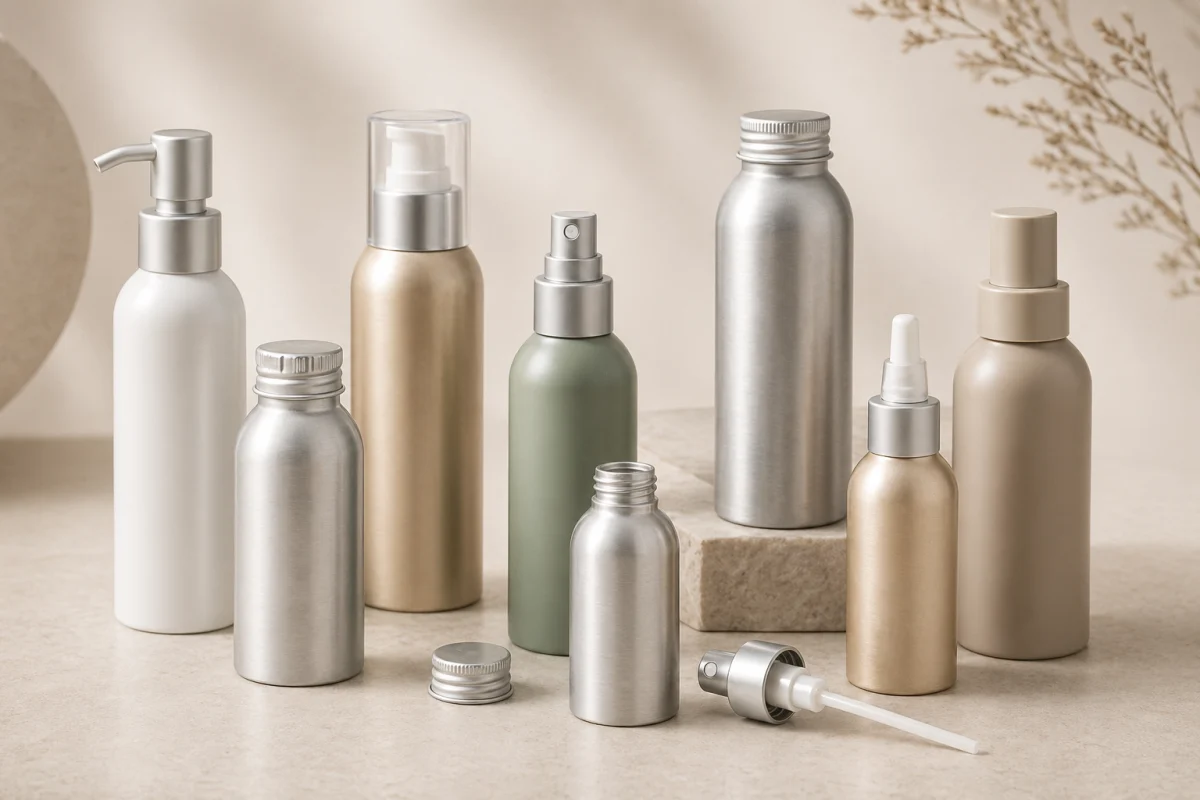
Aluminum skincare bottle size range with pumps, sprayers and cap options for MOQ planning

Project typeTypical capacityClosure routeKey approval point
Facial mist or toner50 ml, 100 ml, 120 ml, 150 ml, 200 mlFine mist sprayer, disc cap or screw capSpray pattern, dip tube length, cap fit and carton rub marks
Lotion or body care100 ml, 150 ml, 200 ml, 250 mlLotion pump, treatment pump or screw pumpPump output, priming count, viscosity fit and actuator lock
Serum or oil15 ml, 30 ml, 50 mlDropper, reducer, screw cap or treatment pumpCoating compatibility, leakage, torque and formula contact surface
Refill or travel line30 ml, 50 ml, 100 mlScrew cap, pump, sprayer or refill capThread strength, repeated opening, decoration durability and dent risk

Material, Liner and Closure Decisions

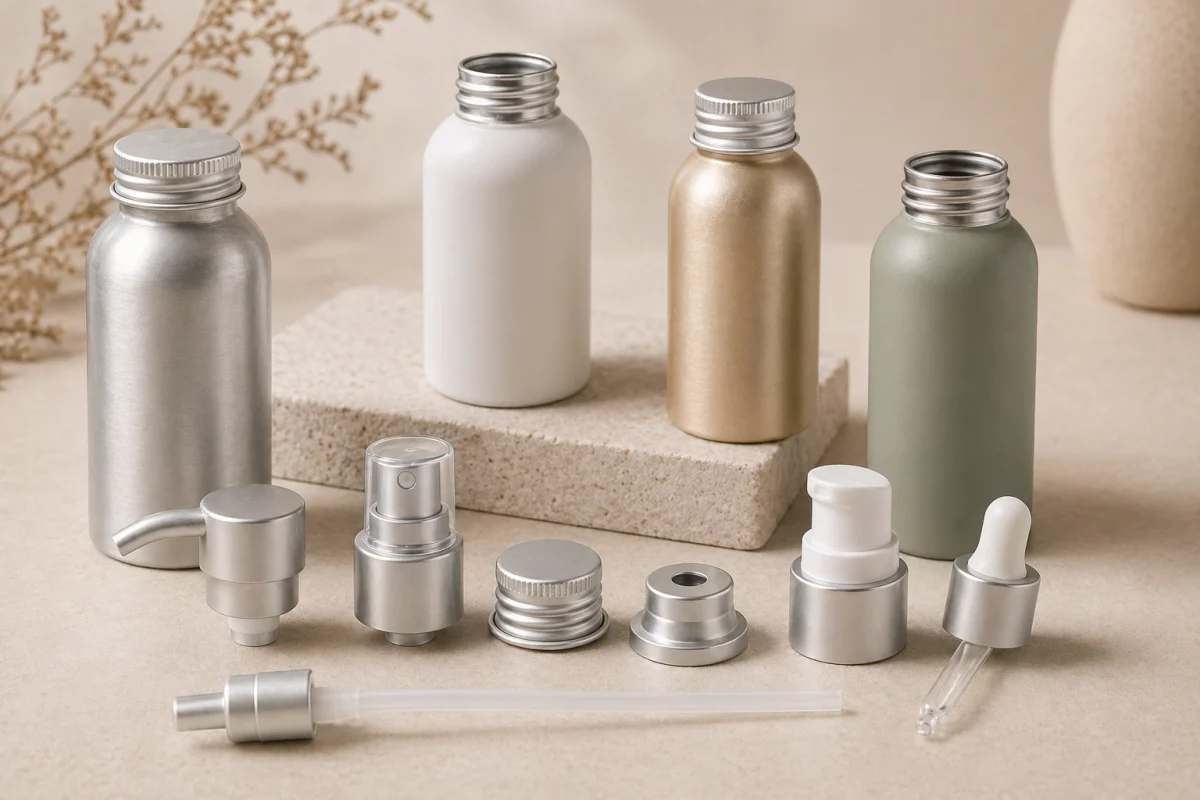
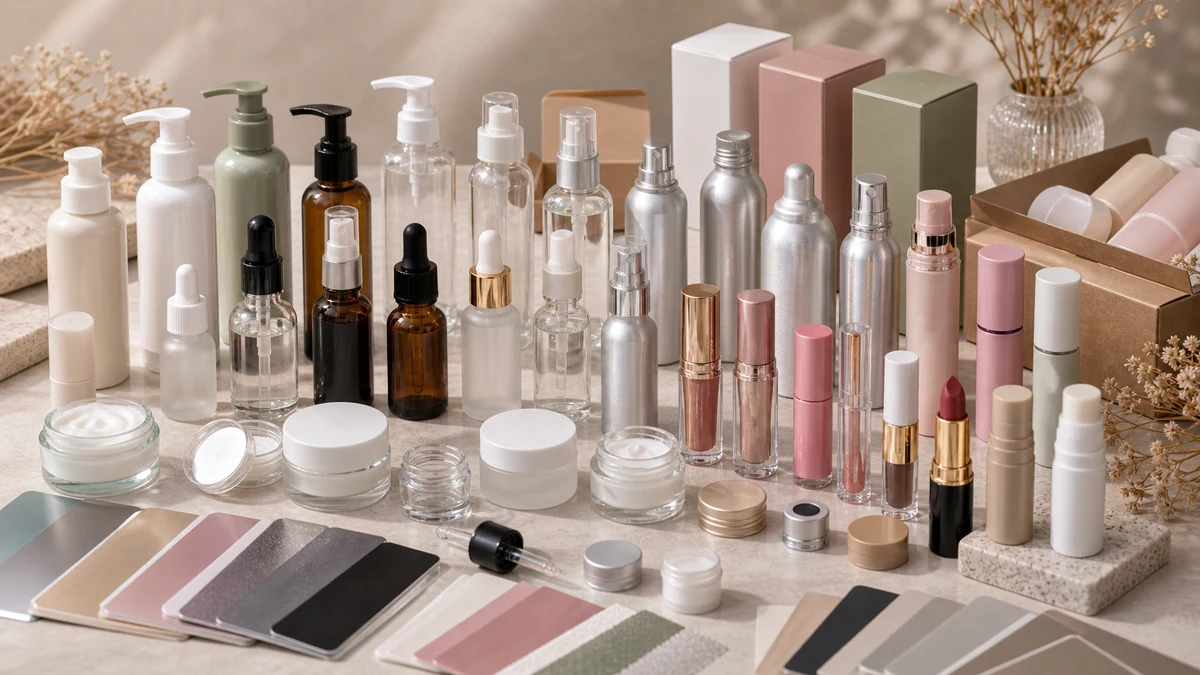
Aluminum skincare bottles with coating strips, pumps, sprayers, finish swatches and carton protection checks

Most skincare aluminum bottles are built from an aluminum body with an internal coating. The coating matters because the formula does not contact raw aluminum in a well-designed pack. Ask the supplier to confirm the coating route and provide filled sample testing before production approval, especially for formulas with essential oils, fragrance, alcohol, acids or active ingredients.

  • Body: confirm diameter, shoulder shape, wall feel, dent tolerance and available mold before discussing decoration.
  • Neck finish: match the thread to the actual pump, sprayer, cap or reducer that will ship with the order.
  • Pump or sprayer: check output, priming count, lock type, actuator feel, dip tube cut and compatibility with the formula viscosity.
  • Finish: matte coating, gloss coating, brushed metal look, screen printing, hot stamping and labels all need rub and carton contact checks.

MOQ, Lead Time and Quote Breakdown

Buying routePlanning MOQLead time guideQuote lines to request
Stock bottle with standard closure1,000 to 5,000 pcs when availableSamples in about 5 to 10 days; bulk often 20 to 30 days after approvalBottle, closure, carton, sample fee and freight
Custom color or logo5,000 to 10,000 pcs is commonProofing about 7 to 14 days; bulk often 30 to 45 daysCoating, print plate, setup fee, color tolerance and approved sample cost
Private mold or special componentUsually tied to annual forecastTooling and pilot sample timing must be quoted separatelyTooling, drawing, pilot sample, spare parts, mold ownership and repeat price

Low MOQ is possible when the project uses an existing bottle and standard closure. MOQ rises quickly when the brand needs a custom coating, matched metalized pump, special shoulder shape or a private mold. A transparent quote should separate the base component price from decoration, tooling, packing, testing and freight assumptions.

Testing Protocol Before Bulk Production

For packaging validation, buyers can align carton transit checks with ISTA test procedures or ASTM D4169 style distribution testing. Production, filling, storage and shipment controls can also be reviewed against ISO 22716 cosmetic GMP expectations when the buyer needs a stricter audit trail.

Approve the aluminum bottle with the real formula, not only water. A practical approval protocol includes filled sample storage for 7 to 14 days, upright and horizontal leakage checks, 10 to 30 open-close or pump cycles, wet and dry rub checks for decoration, and a packed carton review. For export or e-commerce programs, add drop or vibration testing based on the shipping route.

Pass criteria should be written before testing: no leakage at the neck, no coating swelling, no odor transfer, no pump blockage, no actuator loosening, no unacceptable dents and no visible decoration failure after normal handling.

Supplier Evidence to Ask For

  • Physical samples of the exact bottle, pump, sprayer or cap being quoted.
  • Capacity and neck finish confirmation, including closure fit notes.
  • Decoration proof with color target, print area and tolerance.
  • Packing plan showing inner tray, divider, master carton and carton quantity.
  • Pre-production sample approval record before mass production starts.

Case Example: Toner and Lotion Line

A skincare buyer planning a 100 ml toner and 150 ml lotion can use the same aluminum design language while changing the closure. The toner uses a fine mist sprayer with a cut-to-length dip tube. The lotion uses a 1.0 ml output pump with a lock. Both SKUs need the same matte coating and logo color, but the supplier should test the sprayer and pump separately because the failure risks are different.

For this type of order, the buyer should request two filled samples per SKU, a rub-tested coating proof, carton packing photos and a quote that separates the bottle, closure, coating, printing and export carton.

Coating and Closure Evidence

Aluminum bottle approval should not stop at the outside finish. The inner coating, thread, closure seal and carton protection decide whether the pack survives filling and shipping. Buyers should request coating information, neck finish confirmation, closure samples from the same production route and a carton packing plan before approving decoration.

Evidence itemWhy it mattersPass signal
Internal coating sampleFormula contacts the coating, not bare aluminumNo odor, discoloration, swelling or coating lift after filled-sample storage.
Closure fit samplePumps, sprayers and screw caps need different seal surfacesStable torque, no leakage and correct dip tube length for the fill volume.
Finish panelMatte, brushed and metallic finishes can scuff in cartonsNo unacceptable rub marks after packed sample handling.
Export carton layoutAluminum dents more easily than rigid glassDivider or tray protects shoulder, cap and printed surface.

Acceptance Criteria for Aluminum Skincare Bottles

Before a purchase order is placed, the approval should move from appearance review to measured package behavior. The points below are practical RFQ checkpoints rather than universal limits, because the formula, fill volume, closure and destination market can change the final tolerance.

Approval checkBuyer acceptance signalWhy it matters
Internal coating and formula contactFilled samples show no odor shift, color change, swelling, coating lift or visible residue after agreed storage conditions.Aluminum skincare bottles rely on the liner; visual approval of the outside does not prove formula compatibility.
Pump or sprayer fitOutput stays consistent, dip tube length reaches the usable fill, actuator locks correctly and the neck seal does not leak after handling.A bottle can pass decoration review and still fail if the closure route is not tested as one component set.
Finish and carton rubMatte, brushed, printed or coated panels keep an acceptable appearance after packed sample handling and carton contact.Premium aluminum finishes can show rub marks faster than buyers expect if carton protection is not defined.
Export packingSupplier confirms inner tray, divider, master carton weight, carton mark and packed sample review before bulk shipment.Many visible defects happen after production, during packing and transport.

Quote Evidence to Request From the Supplier

EvidenceWhat to requestDecision value
Component drawingBottle capacity, neck finish, closure match, overflow capacity and decoration area.Prevents mismatch between design artwork and actual production limits.
Material and coating statementAluminum grade route, internal coating type and available compliance documents for the chosen component.Supports a more credible product file and reduces vague sustainability or safety claims.
Sample reportPhotos, filled sample notes, leakage check, pump output notes and carton packing photos.Creates a record for approval instead of relying only on a catalog image.

MOQ and Lead Time Planning Range

For early quotation, JPS can use the following early quotation ranges for the aluminum skincare bottle project. The final quantity should be confirmed after checking mold availability, finish route, component stock, artwork status and SKU count.

RoutePlanning rangeWhen it makes sense
Stock aluminum bottle with standard closure3,000-5,000 pcsUseful for serum, toner, mist or lotion projects that need a fast sampling route.
Custom color, logo, matte or brushed finish5,000-10,000 pcsTypical early quotation range when the bottle shape is existing but the finish is branded.
Special coating, unique shoulder or full custom route10,000-30,000+ pcsNeeded when the project changes structure, coating route or component tooling.
StepTypical planning time
Stock dry samples3-7 working days
Finish or closure proof10-20 working days
Bulk production after approval35-50 working days
Private mold or special coating route60-90+ working days

Sample Approval Criteria Before Bulk Production

For the aluminum skincare bottle project, a good-looking dry sample is only the first check. The buyer should approve the filled pack, component fit, decoration proof and packing method before releasing aluminum bottle for skincare for bulk production.

CheckPass signal
Internal coating fitCheck the real formula against the liner or internal coating before approving bulk bottles.
Closure matchApprove neck finish, gasket, dip tube, pump output and cap torque as one system.
Finish durabilityReview rub marks, dents and packed-sample scuffing before final carton approval.
Transport protectionUse packed-sample review and, when needed, ISTA or ASTM-style distribution testing for the shipping route.

Common Failure Points to Catch Early

Failure pointWhat it looks like
Coating incompatibilityAlcohol, fragrance, acidic or oil-heavy formulas can stress the internal coating.
Pump mismatchOutput, dip tube length or gasket fit fails after filled testing.
Denting and scuffingThe bottle looks acceptable loose but marks inside the carton.
Claim overreachAluminum or refillable claims are used without a material and refill evidence file.

Specification Details

Before comparing unit price, the purchase order should identify the parts that affect function, decoration and shipment. That makes supplier quotes easier to compare because every quote is tied to the same component set.

Specification itemWhat to defineWhy it matters
Formula and fill volumemist, toner, serum, lotion or refill pack; 30 ml to 250 ml rangeConfirms coating, closure and dip tube requirements.
Bottle structurealuminum body, internal coating, neck finish, cap, sprayer or pumpKeeps bottle and closure approval together.
Finishmatte, brushed, glossy, soft-touch, printed or color-coated surfaceConnects shelf look with rub and carton checks.
Packinginner tray, divider, carton weight, carton mark and export routeReduces denting and scuffing after production.

Quote Review Points

Quote lineWhat to checkReason to check it
Quantity routeConfirm whether the supplier is quoting stock parts, decorated parts or tooling parts.Each route changes MOQ, unit cost and approval time.
Included componentsCheck whether the quote includes every aluminum bottle for skincare part, matched closure, insert, carton and decoration proof.A low unit price is not useful if key parts are quoted later.
Sample revisionsAsk how many sample revisions are included before extra proof charges apply.Sample changes often decide whether the launch calendar stays realistic.
Packing and shipmentConfirm carton count, inner packing and shipping assumptions.Packing method changes landed cost and visible defect risk.

When to Change Route

Not every brief should stay on the first quoted route. Change route when the formula, finish, MOQ or calendar no longer fits the selected component family. This avoids forcing a stock component to behave like a custom mold or paying for tooling before the product-market test is clear.

SignalBetter routeReason
Several shade or SKU tests are still uncertainStart with available stock components and simple decorationKeeps the project flexible while the brand tests demand.
The formula fails filled-sample checksChange inner coating, pump, cap, closure or carton route before artwork approvalFixing function after artwork approval delays approval and creates avoidable cost.
The pack shape is central to brand identityMove to private mold only after forecast, tooling budget and pilot sample approval are clearCustom tooling should be tied to repeat-order expectations.

For a faster review, separate must-have requirements from optional finish ideas. Must-have items should cover formula compatibility, component fit, MOQ, lead time and shipment protection; optional finish ideas can wait until the first sample route is technically workable.

Approval Record

Keep a short approval record for samples, proofs and packing decisions.

Record itemKeep in the fileDecision value
Approved component samplealuminum bottle for skincare sample, labeled with version, date and supplier referencePrevents similar samples being mixed after revisions.
Filled sample notesFormula, fill weight, storage condition and pass/fail observationsShows why the selected pack works for the real product.
Decoration proofColor standard, artwork proof, print position and rub check notesReduces disputes between proof and bulk production.
Packing sampleInner packing, carton count, carton mark and shipment assumptionConnects appearance approval with delivery risk.

Reference Standards Buyers Can Use

For transport and carton approval, buyers can reference ASTM D4169 or ISTA test procedures when the shipping route needs a formal distribution test. For filling and handling controls related to this packaging project, ISO 22716 gives the buyer a GMP reference point. These references do not replace the buyer's own packaging specification; they give the purchasing team clearer language for supplier approval.

Example RFQ Brief

The example below shows how a aluminum bottle for skincare request becomes quotation-ready. It is a planning scenario for the project, not a guarantee for every material, finish or market.

Brief itemExample detail
Product100 ml toner or mist bottle
Recommended routeExisting aluminum bottle with mist sprayer or lotion pump and custom matte finish
Planning quantity5,000-10,000 pcs for branded finish; 10,000+ pcs for special coating or structure changes
Approval samplesCoating sample, closure sample, filled sample, rub check photos and carton packing sample

Send capacity, closure type, formula notes, finish reference, artwork, MOQ target and destination market so JPS can check bottle, coating and closure compatibility together.

Quote Brief

For aluminum skincare bottle sampling, send the project brief with formula, capacity, closure choice, target MOQ and destination market.

JPS Packaging
Email
Email
sales@jpspackaging.com
Leave a message
Leave a message
Form
Ready to Request a Quote for Custom Skincare Packaging?

Ready to Request a Quote for Custom Skincare Packaging?

Request Quote

Request a Quote for Custom Skincare Packaging

Share your product type, preferred packaging format, customization depth, decoration needs, and target launch timing. Our team will reply with a practical next step for your project.

We use your details only to prepare a relevant packaging quote and follow-up response. By submitting this form, you agree to our Privacy Policy.